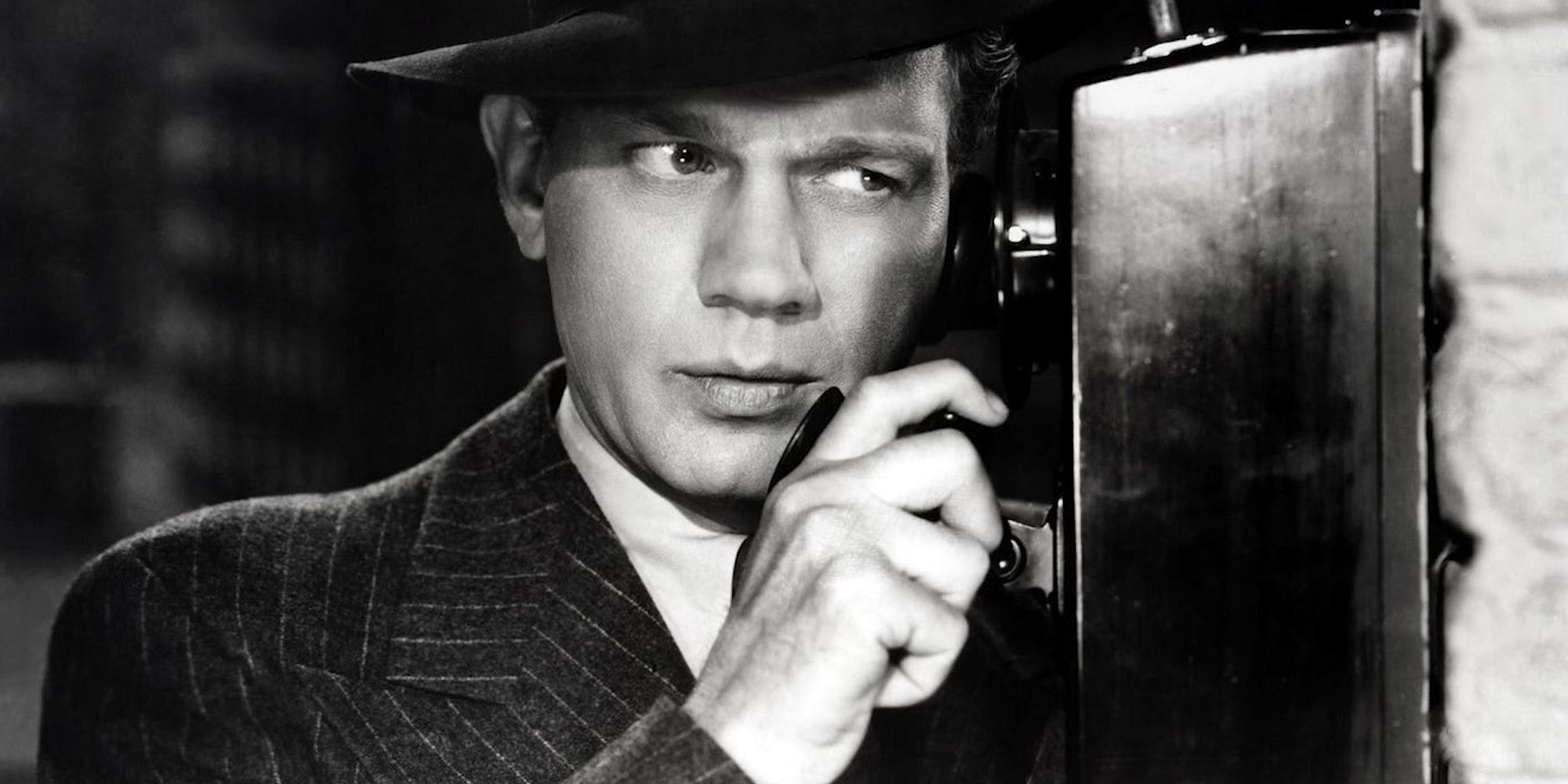
 Joseph Cotten as Uncle Charlie on a payphone in Shadow of a DoubtImage via Universal Pictures
 By
Gabrielle Ulubay
Published Feb 1, 2026, 7:35 PM EST
Gabrielle Ulubay is a Music writer at Collider. She has previously been published in The New York Times, Bustle, HuffPost Personal, and other magazines, and wrote at Marie Claire for nearly three years. Her interests have spanned film, politics, women's lifestyle, and, of course, music. She has a BA in history from Northeastern University and a MA in Film and Screen Media from University College Cork, Ireland, which have facilitated her passion for using art and media to analyze the sociopolitical landscape. Born and raised in New Jersey, she has since spent time in Boston, Ireland, Cuba, and Montreal, and currently lives in New York City. You can find highlights of her work at gabrielleulubay.com.
Sign in to your Collider account
Add Us On
Summary
Generate a summary of this story
follow
Follow
followed
Followed
Like
Like
Thread
Log in
Here is a fact-based summary of the story contents:
Try something different:
Show me the facts
Explain it like I’m 5
Give me a lighthearted recap
By
Gabrielle Ulubay
Published Feb 1, 2026, 7:35 PM EST
Gabrielle Ulubay is a Music writer at Collider. She has previously been published in The New York Times, Bustle, HuffPost Personal, and other magazines, and wrote at Marie Claire for nearly three years. Her interests have spanned film, politics, women's lifestyle, and, of course, music. She has a BA in history from Northeastern University and a MA in Film and Screen Media from University College Cork, Ireland, which have facilitated her passion for using art and media to analyze the sociopolitical landscape. Born and raised in New Jersey, she has since spent time in Boston, Ireland, Cuba, and Montreal, and currently lives in New York City. You can find highlights of her work at gabrielleulubay.com.
Sign in to your Collider account
Add Us On
Summary
Generate a summary of this story
follow
Follow
followed
Followed
Like
Like
Thread
Log in
Here is a fact-based summary of the story contents:
Try something different:
Show me the facts
Explain it like I’m 5
Give me a lighthearted recap
Known as the “Master of Suspense,” Alfred Hitchcock is one of the most beloved directors in the history of American cinema, boasting legendary films such as North by Northwest, Psycho, and The Birds in his portfolio. His innovative methods set the stage for contemporary thriller and horror films, with Martin Scorsese, Brian De Palma, David Lynch, M. Night Shyamalan, and other modern auteurs citing him as an influence.
While other horror directors focused on the supernatural, Hitchcock homed in on the dark deeds human beings commit against each other. Thus, film buffs have Hitchcock to thank for several popular film tropes, including the serial killer subgenre. Movies such as The Silence of the Lambs and Zodiac, for example, draw from Hitchcock’s masterful depiction of growing dread and general uneasiness. The former was even described as “a curdling Psycho-drama in the highest Hitchcock order” by The Hollywood Reporter when it was first released in 1991. But given Hitchcock’s extensive filmography, which of his movies gave birth to the serial killer category as we know it? Ahead, Hitchcock’s full serial killer portfolio, ranked.
4 'Psycho' (1960)
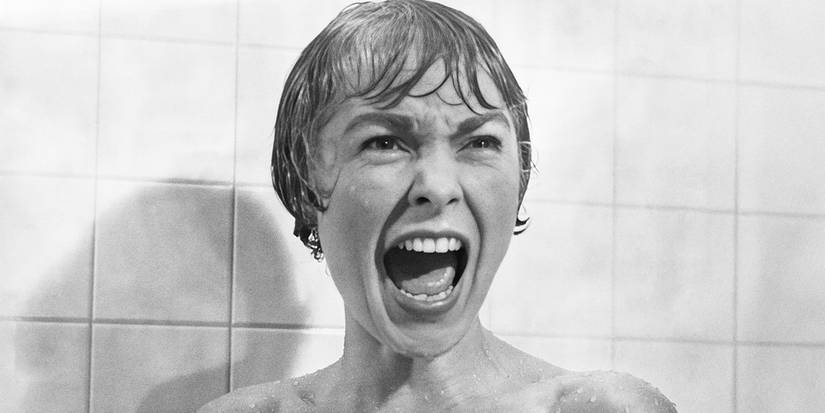 Janet Leigh as Marion Crane screaming in the shower in Psycho.Image via Paramount Pictures
Admittedly, Psycho is not a serial killer film. Its antagonist, Norman Bates (Anthony Perkins), kills a number of people, but he lacks the systematic methodology that serial killers tend to have. Furthermore, does not hunt down his victims as a serial killer would. His first murders, presumably his mother and her lover, are committed because the latter gets in the way of Bates’ relationship with the former. Afterwards, Bates is so stricken by what he’s done that he periodically slips into the personality of his possessive, cruel mother. While dressed like her, he proceeds to kill any woman that he’s attracted to, including Marion Crane (Janet Leigh). Thus, Bates happens upon his victims rather than searching them out the way the Zodiac killer or the Golden State Killer did.
However, Psycho—and Bates as a character—undeniably impacted the slasher and serial killer subgenres. Bates’ psychological instability, unsettling demeanor, and targeting of young women all mimic the tendencies of the quintessential serial killer. Furthermore, Bates was loosely based on the notorious serial killer Ed Gein, whose life and crimes were recently revisited in the third season of Ryan Murphy’s Netflix anthology series, Monster. Like Bates, Gein supposedly harbored an obsession for his mother and, after her death, he attempted to revive her through his killings. Thus, Psycho was both inspired by a serial killer and the inspiration for a litany of films about serial killers.
3 'Frenzy' (1972)
 Image via Universal Pictures
Of all Hitchcock’s movies, Frenzy is undoubtedly the most controversial. In the 1972 film, the director returns to his native London to tell the story of a serial killer who brutally rapes and murders his victims. While Hitchcock’s violent scenes were previously suggested (the shower scene in Psycho was famously cut in a way that obscures actual violence and nudity), Frenzy is heavy-handed in portraying its crimes, leading to controversy that persists even today. In The Women Who Knew Too Much, film scholar Tania Modleski writes that, after seeing Frenzy, many dismissed Hitchcock as a “dirty old man” obsessed with violence against women. Even Hitchcock’s biographer, Donald Spoto, opined that Hitchcock spent his career fixated on rape, yet was unable to truly depict the act until censors relaxed in the early 1970s—enabling Frenzy.
However, Modleski offers a more complex view of this film. On one hand, she admits that Hitchcock’s filmography consistently displays a reticence and even contempt for femininity. However, she also points out that Hitchcock’s female characters are often the kindest and most innocent, leading viewers to identify with them above all. Thus, by making the serial killer the main character, and thereby forcing audiences to identify with him (as Vladimir Nabokov and Fyodor Dostoevsky do in Lolita and Crime and Punishment, respectively), Hitchcock not only ignites discomfort in viewers, but it turns that disgust within. In sum, Frenzy is his most brutal film, highlighting even the most grotesque aspects of the human propensity for evil.
2 'The Lodger: A Story of the London Fog' (1927)
 Ivor Novello, June Tripp, and Malcolm Keen in Alfred Hitchcock's The Lodger A Story of the London FogImage via Woolf & Freedman Film Service
Hitchcock is so famous for his later work that it’s easy to forget his first few features were silent films. Along with Champagne (1928) and Blackmail (1929), The Lodger: A Story of the London Fog remains one of the best-known of the director’s nine surviving silent films (the tenth, The Mountain Eagle [1926], is considered a “lost film”). This 1927 horror-thriller revisits the story of Jack the Ripper, the notorious serial killer who haunted the Whitechapel district of London in 1888.
While The Lodger doesn’t explicitly identify its main character as Jack the Ripper, the parallels are uncanny. Just as the real-life, still-unidentified serial killer primarily targeted sex workers and vulnerable women (indeed, historian Hallie Rubenhold has provided compelling evidence that not all of Ripper’s victims were sex workers, contrary to the long-held assumption), the killer in Hitchcock’s film—known only as “the lodger”—targets showgirls, who were often conflated with sex workers at the time. Furthermore, The Lodger is based on a novel and a play, by Marie Belloc Lowndes and Horace Annesley Vachell, respectively, about the Jack the Ripper murders.
The Lodger displays a number of Hitchcock’s trademarks, including suspenseful pacing, creative editing, and even the director’s notorious fixation on blonde women. However, while Hitchcock himself called The Lodger “the first true Hitchcock movie,” one of the most remarkable aspects of the film is the way it displays Hitchcock’s creative exploration as he grappled for a style all his own. In addition to his aforementioned tendencies, Hitchcock also pulled extensively from German Expressionism when crafting The Lodger’s most notorious shots. Indeed, it’s difficult to watch the lodger stalk into the rooming house without recalling the likes of Fritz Lang and F.W. Murnau. Thus The Lodger is essential viewing for any Hitchcock fan, not only because it was the beginning of an era, but because it provides insight into the artists that inspired this titan of cinema.
1 'Shadow of a Doubt' (1943)
 Charlie (Teresa Wright) looks frightened in Shadow of a Doubt.Image via Universal Pictures
In Shadow of a Doubt, Charlotte “Charlie” Newton (played by Teresa Wright) suspects that her beloved Uncle Charlie (Joseph Cotten) is the Merry Widow Murderer, a serial killer who strangles elderly, wealthy widows for their money. After Uncle Charlie confesses to Young Charlie that he is the murderer, his trust in her wanes, and he embarks on a series of murder attempts against her that are orchestrated to look like accidents. The story is based on the crimes of Earle Nelson, a real-life serial killer from the late 1920s better known as “Gorilla Man.”
CL Report: Subscribe and never miss what matters
Dive into the world of entertainment with Collider, delivering the latest news, reviews, and exclusive updates from movies, TV, and pop culture Subscribe By subscribing, you agree to receive newsletter and marketing emails, and accept Valnet’s Terms of Use and Privacy Policy. You can unsubscribe anytime.Whereas Frenzy is unnerving for its grotesque, in-your-face brutality, Shadow of a Doubt unsettles its audience because of its unceasing tension. The viewer, situated to identify with Young Charlie, senses her fear that Uncle Charlie could exact violence on her at any moment. The entire film seeps with the same suspense as the tennis scene in Strangers on a Train (1951), inciting terror not for what is happening, but for what may be about to happen.
Hitchcock’s directorial skills shine in this film, illustrating why he’s known, above all, as the “master of suspense.” It’s easy to see why this film was reportedly his favorite and his favorite to make: It’s filled with smart lines, heart-pounding visual suggestion, and symbolic parallels, such as the fact that the antagonist and protagonist share the same name. Shadow of a Doubt is also a rare marriage of two storytelling greats: While Hitchcock directed, National Book Award-winning writer Thornton Wilder co-wrote the screenplay.

Shadow of a Doubt
Like Follow Followed Passed Thriller Film Noir Release Date January 15, 1943 Runtime 108 Minutes Director Alfred Hitchcock Writers Thornton Wilder, Sally Benson, Alma Reville, Gordon McDonellCast
See All-
 Teresa Wright
-
Joseph Cotten
 Expand
Collapse
Expand
Collapse
Shadow of a Doubt
-
 Movie
Movie
-
 Alfred Hitchcock
What To Watch
 July 20, 2025
The 72 Best Movies on Netflix Right Now
Trending Now
July 20, 2025
The 72 Best Movies on Netflix Right Now
Trending Now
 'Steal' Review: Sophie Turner's Prime Video Heist Thriller Miniseries Is an Imperfect but Addictive Binge-Watch
1:51
'Steal' Review: Sophie Turner's Prime Video Heist Thriller Miniseries Is an Imperfect but Addictive Binge-Watch
1:51
 30 Steamy Movies to Get You in the Mood on Date Night
 The 35 Best Psychological Thriller TV Shows, Ranked