- Home
Edition
Africa Australia Brasil Canada Canada (français) España Europe France Global Indonesia New Zealand United Kingdom United States Edition:
Global
Edition:
Global
- Africa
- Australia
- Brasil
- Canada
- Canada (français)
- España
- Europe
- France
- Indonesia
- New Zealand
- United Kingdom
- United States
Academic rigour, journalistic flair
Texas cities have some of the highest preterm birth rates in the US, highlighting maternal health crisis nationwide
Published: December 1, 2025 1.15pm GMT
Kobi V. Ajayi, Texas A&M University
Author
-
 Kobi V. Ajayi
Research Assistant Professor of Maternal and Child Health, Texas A&M University
Disclosure statement
Kobi Ajayi founded and remains affiliated with EDEN Foundation, Nigeria, a local non-profit organization with a mission to improve preterm infant outcomes.
Partners

Texas A&M University provides funding as a founding partner of The Conversation US.
View all partners
DOI
https://doi.org/10.64628/AAI.kquwa6smr
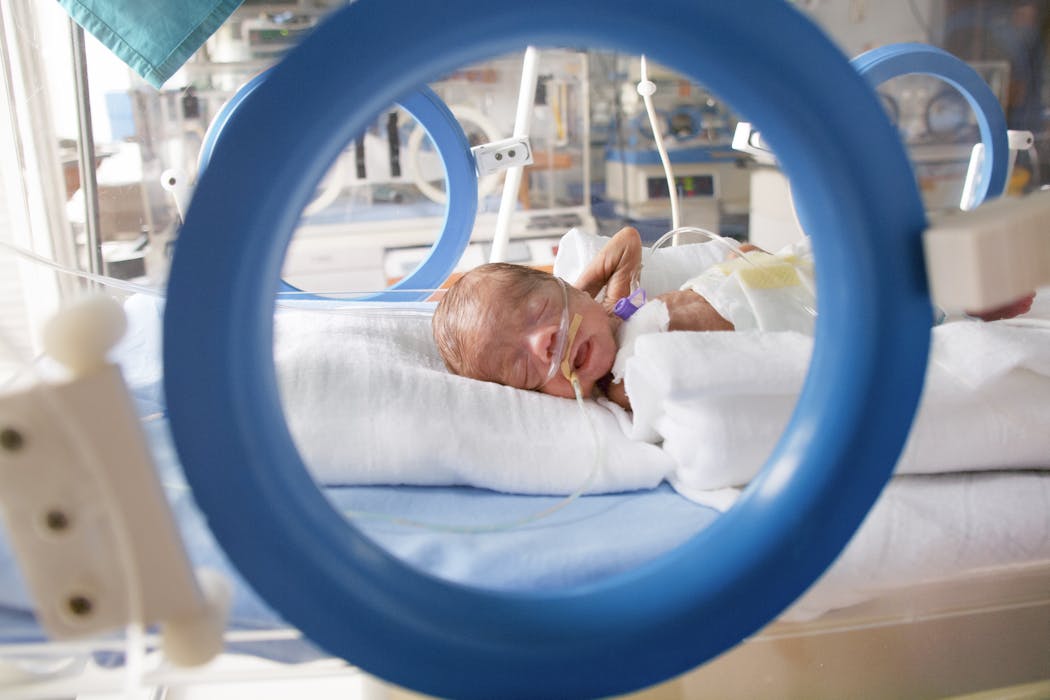
 The newest March of Dimes report gives the U.S. a D+ rating on preterm birth rates.
IvanJekic/E+ via Getty Images
https://theconversation.com/texas-cities-have-some-of-the-highest-preterm-birth-rates-in-the-us-highlighting-maternal-health-crisis-nationwide-270251
https://theconversation.com/texas-cities-have-some-of-the-highest-preterm-birth-rates-in-the-us-highlighting-maternal-health-crisis-nationwide-270251
Link copied
Share article
The newest March of Dimes report gives the U.S. a D+ rating on preterm birth rates.
IvanJekic/E+ via Getty Images
https://theconversation.com/texas-cities-have-some-of-the-highest-preterm-birth-rates-in-the-us-highlighting-maternal-health-crisis-nationwide-270251
https://theconversation.com/texas-cities-have-some-of-the-highest-preterm-birth-rates-in-the-us-highlighting-maternal-health-crisis-nationwide-270251
Link copied
Share article
Share article
Copy link Email Bluesky Facebook WhatsApp Messenger LinkedIn X (Twitter)Print article
Seven years ago, at 30 weeks into a seemingly low-risk pregnancy, I unexpectedly began to bleed. Doctors diagnosed me with complete placenta previa. Then, while on bed rest at 32 weeks, my placenta suddenly ruptured, leading to an immediate emergency cesarean section.
I became one of about 10% of women giving birth in Nigeria to experience a preterm birth, which means before 37 weeks of pregnancy.
Now, as a maternal and child health researcher in the U.S., I’m struck by the stubbornly high preterm birth rate here. According to the most recent March of Dimes Report Card on maternal and infant health, released on Nov. 17, 2025, 10.4% of babies in the U.S. were born prematurely in 2024.
Preterm birth is the second-leading cause of infant deaths in the U.S., contributing to over 20,000 infant deaths each year. Some who survive are at increased risk of immediate and long-term health problems, with substantial emotional and financial tolls.
That rate has not budged for three years, according to the report – and it is consistently higher than in many other countries, particularly those in the Global North. That’s also true for other crucial aspects of maternal and infant health, such as cardiovascular diseases and mental health needs.
One key factor underlying the problem of preterm birth in the U.S. is extensive disparities in health care access for expectant mothers. In Texas, where I conduct my research and where I managed the state’s maternal mortality and morbidity review committee in 2023 and 2024, this issue plays out very clearly.
Revealing disparities that drive preterm birth rates
The March of Dimes report scored the U.S. overall a D+ grade on preterm birth rate at 10.4%, but states differ dramatically in their scores. New Hampshire, for example, scored an A- with 7.9% of infants born prematurely, while Mississippi, where 15% of infants are born prematurely, scored an F.
Texas’ rates aren’t the worst in the country, but it scores notably worse than the national rate of 10.4%, with 11.1% of babies – 43,344 in total – born prematurely in 2024. And Texas has an especially large effect on the low national score because 10 of the 46 cities that receive a D or F grade – defined in the report as a rate higher than the national rate of 10.4% – are located there. In 2023, Texas had the highest number of such cities in the U.S.
That may be in part because access to maternal care in Texas is so limited. Close to half of all counties across the state completely lack access to maternity care providers and birthing facilities, compared with one-third of counties across the U.S. Moreover, more counties in Texas are designated as health professional shortage areas, meaning they lack enough doctors for the number of people living in these areas. Shortages exist in 257 areas in Texas for primary care doctors, 149 for dentists and 251 for mental health providers.
But even against the backdrop of geographic differences in health care access, the starkest contribution to the state’s preterm birth rates comes from ethnic and racial disparities. Mothers of non-Hispanic Black (14.7%), American Indian/Alaskan Native (12.5%), Pacific Islander (12.3%) and Hispanic (10.1%) descent have babies prematurely much more often than do mothers who are non-Hispanic white (9.5%) or Asian (9.1%).
These numbers reflect the broader landscape of maternal health in the U.S. Although nationwide maternal mortality rates decreased from 22.3 to 18.6 deaths per 100,000 live births from 2022 to 2023, Black women died during pregnancy or within one year after childbirth at almost three times the rate (50.3%) of white (14.5%), Hispanic (12.4%) and Asian (10.7%) women.
 Adequate prenatal birth care in the U.S. is critical to reversing preterm birth trends.
Ratchat/iStock via Getty Images Plus
Adequate prenatal birth care in the U.S. is critical to reversing preterm birth trends.
Ratchat/iStock via Getty Images Plus
Preterm birth in context
Having a baby early is not the normal or expected outcome during pregnancy. It occurs due to complex genetic and environmental factors, which are exacerbated by inadequate prenatal care. According to the World Health Organization, women should have eight or more doctor visits during their pregnancy. Without adequate and quality prenatal care, the chances of reversing the preterm birth trends are slim.
Yet in Texas, unequal access to prenatal care remains a huge cause for concern. As the March of Dimes report documents, women of color in Texas receive adequate prenatal care at vastly lower rates than do white women – a fact that holds true in several other states as well. In addition, Texas has the highest uninsured rate in the nation, with 17% of women uninsured for health coverage, compared with a national average of 8%.
Nationwide, public health experts, community advocates and families are calling for comprehensive health insurance to help cover the costs of prenatal care, particularly for low-income families that primarily rely on Medicaid for childbirth. Cuts to funding for the Affordable Care Act and Medicaid outlined in the 2025 Budget Reconciliation Act make it likely that more Americans will lose access to care or see their health care costs balloon.
But state-level action may help reduce access barriers. In Texas, for example, a set of laws passed in 2025 may help improve access to care before, during and after pregnancy. Texas legislators funded initiatives targeted at workforce development in rural areas – particularly for obstetrician-gynecologists, emergency physicians and nurses, women’s preventive safety net programs, and maternal safety and quality improvement initiatives.
Rising rates of chronic diseases, such as hypertension, obesity and diabetes, also contribute to women giving birth prematurely. While working with the state maternal mortality and morbidity review committee, my team and I found that cardiovascular conditions contributed to the 85 pregnancy-related deaths that occurred in 2020.
An upward trend in obesity, diabetes and hypertension before pregnancy are pressing issues in the state, posing a serious threat to fetal and maternal health.
Learning from other countries
These statistics are grim.
But proven strategies to reduce these and other causes of maternal mortality and morbidity are available. In Australia, for instance, maternal deaths have significantly declined from 12.7 per 100,000 live births in the early 1970s to 5.3 per 100,000 between 2021 and 2022. The reduction can be linked to several medical interventions that are based on equitable, safe, woman-centered and evidence-based maternal health services.
In Texas, some of my colleagues at Texas A&M University use an equitable, woman-centered approach to develop culturally competent care centered on educational health promotion, preventive health care and community services.
Utilizing nurses and nonmedical support roles such as community health workers and doulas, my colleagues’ initiatives complement existing state efforts and close critical gaps in health care access for rural and low-income Texas families.
Across the country, researchers are using similar models, including the use of doulas, to address the Black maternal health crisis.
Research shows the use of doulas can improve access to care during pregnancy and childbirth, particularly for women of color.
 Doulas, nonmedical providers who may assist parents before, during and after delivery, can play an important role in improving maternal health outcomes.
AndreyPopov/iStock via Getty Images Plus
Doulas, nonmedical providers who may assist parents before, during and after delivery, can play an important role in improving maternal health outcomes.
AndreyPopov/iStock via Getty Images Plus
It’s all hands on deck
There isn’t one, single risk factor that leads to a preterm birth, nor is there a universal approach to its prevention.
Results from my work with Black mothers who had a preterm birth aligns with what other experts are saying: Addressing the maternal health crisis in the U.S. requires more than policy interventions. It involves the dismantling of system-level and policy-driven inequities that lead to high rates of preterm births and negative pregnancy and childbirth outcomes, particularly for women of color, through funding, research, policy changes and community voices.
Although I had my preterm birth in Nigeria, my story and those shared by the Black mothers I have worked with in the U.S. show eerily similar underlying challenges across different settings.
- Children's health
- Public health
- Pregnancy
- Infant health
- Maternal health
- Maternal deaths
- Maternal mortality
- Preterm birth
- Health disparities
- Prenatal care
- March of Dimes
Events
Jobs
-
 Senior Lecturer, Clinical Psychology
-
University Lecturer in Early Childhood Education
-
Case Specialist, Student Information and Regulatory Reporting
-
Lecturer in Paramedicine
-
Associate Lecturer, Social Work
 Senior Lecturer, Clinical Psychology
 University Lecturer in Early Childhood Education
 Case Specialist, Student Information and Regulatory Reporting
 Lecturer in Paramedicine
 Associate Lecturer, Social Work
- Editorial Policies
- Community standards
- Republishing guidelines
- Analytics
- Our feeds
- Get newsletter
- Who we are
- Our charter
- Our team
- Partners and funders
- Resource for media
- Contact us
-
-
-
-
Copyright © 2010–2025, The Conversation