 @charli_xcx / InstagramDecember
3,
2025Life & CultureSpeakerboxHas Substack entered its slop era?
@charli_xcx / InstagramDecember
3,
2025Life & CultureSpeakerboxHas Substack entered its slop era?As everyone, from influencers, brands and celebrities, flock to the online publishing platform, 5 writers weigh in on the celebrification (and potential slop-ification) of Substack
ShareLink copied ✔️December 3, 2025Life & CultureSpeakerboxTextLaura PitcherRead More Life & CultureWoke is back – or is it?
 FashionEverything you missed at Chanel’s New York subway fashion show
 BeautyWhy my disfigurement isn't your Halloween costume
As a writer in New York, I couldn’t count on two hands the number of times I’ve been told to “start a Substack”. After launching in 2017, the online publishing platform has, slowly but steadily, been attracting some of the most exciting emerging and established writers of the moment. The promise to make the internet better for writers and readers – to give writers the power to directly reach and keep track of their audience and make money directly from their subscribers – is compelling amid media layoffs and an unreliable freelance market. So compelling, in fact, that it’s easy to feel left behind, or not ahead of the curve, to be a writer who doesn’t have a Substack. (I still swear I’ll join one day.)
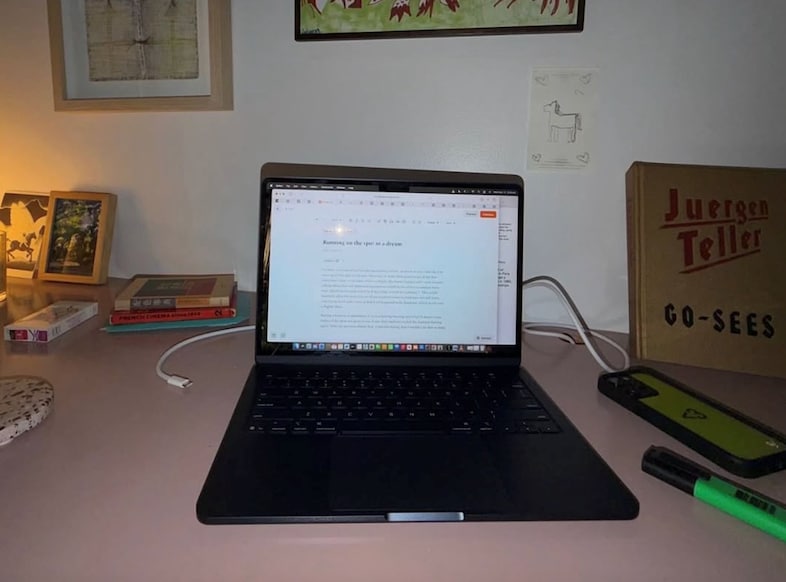
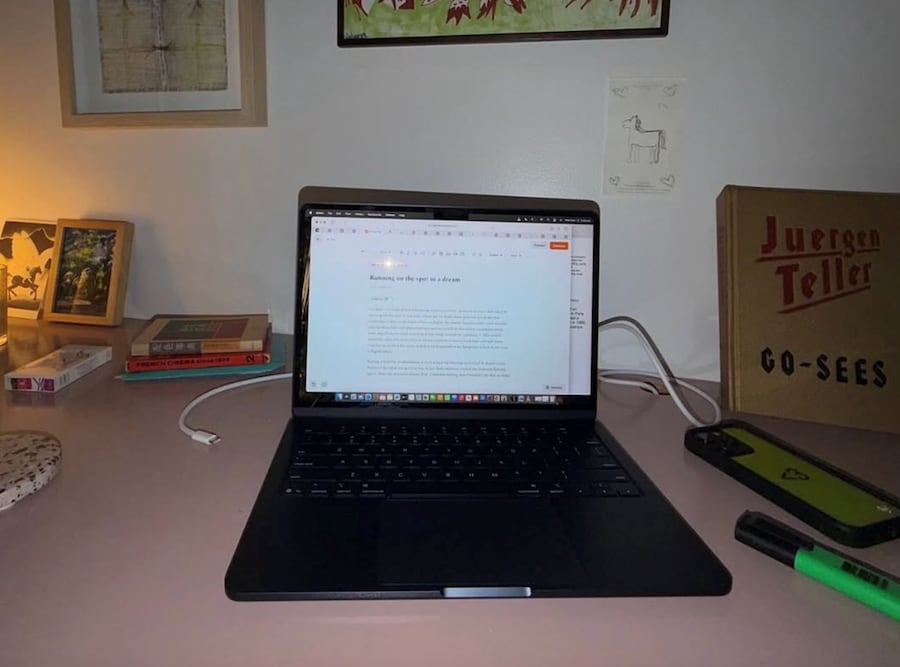
Over time, Substack started drawing comparisons to other social media platforms, especially by those who saw the platform as a slower, more intention refuge from scrolling through slop. As interest grew in a space for writers and readers, and stories shared about people making six figures on the platform, it made sense that more and more people wanted to join. The likes of Patti Smith and Pamela Anderson started sharing weekly thoughts and musings. Then, Substack launched Notes for short-form content in 2023, and influencers, publications and brands like American Eagle and Tory Burch flocked to the platform. This year alone, Lena Dunham, Lily Allen, Rosalía, Joseph Gordon Levitt, and Ballerina Farm have joined Substack. Last month, Charli XCX posted a photo of her laptop to Instagram, captioning it “I wrote on Substack <3”. Her first post has over 11 thousand likes. Even this week, Lizzo wrote a think piece on cancel culture, saying, “I’m having too much fun on Substack yall”.
It’s important not to get too exclusive with who can or can’t be considered a writer (institutions have been doing exactly this for decades). It is, however, fair to say that once even our favourite celebrities and brands join a space, it’s no longer exactly the same. Also, just because there’s a current level of social capital that comes from being a cultural critic and thought leader, doesn’t mean everyone is taking the time, care and research required to become one. (Cue FKA twigs with, “Where are the thinkers?”) “This is supposed to be a space for us to experiment outside of traditional media, and instead we’re getting more slop,” writer Najma Sharif recently posted on Notes. It’s a shift fashion theorist Rian Phin compares to when celebrities started blogging. “It didn’t destroy blogging; it revealed who could hack it,” she says. “For the people who joined for the fleeting status of being ‘in the know’ about this area of the internet, it didn’t last, and neither did they.” Many well-known creatives did get their start on Tumblr, after all.
While people debate whether the Substack bubble is “popping”, a Substack representative told me that, at the core, Substack is still very much a place for writers. Substack, which calls itself “a different kind of social media”, has been open about how its feed differs from traditional social platforms (most notably, no endless-scroll incentive). “Celebrities and influencers joining doesn’t crowd writers out either; it actually lifts the Substack ecosystem,” they say. “When someone like Charli XCX shows up, she brings her community with her.” Today, there are more than 5 million paid subscriptions to writers and creators on Substack, up from 4 million in November 2024.
Still, for writers who rely on paid Substack subscribers to pay rent, the reality is this: people can only read so many newsletters and only subscribe to so many $6 regular newsletters. Ahead, writers who have been on the platform for years weigh in on the celebrification (and potential slop-ification) of Substack.
ZACHARY ZANE, BOYSLUT ZINEWhen and why did you join Substack?
Zachary Zane: I started my Substack in May of 2020. I was worried I’d get kicked off Instagram, not for breaking the guidelines, but because Instagram loves to suspend the accounts of sex-positive writers. So I wanted a backup platform where I could reach my audience directly in case I got banned from Instagram.
Has your experience on the platform changed over time?
Zachary Zane: For the first three years, my Substack grew steadily and healthily. But once I reached 10,000 subscribers, I plateaued (in terms of unpaid subscribers). I had close to 900 paid subscribers, and now that number is down to 550. I have no idea why I’m losing subscribers. I have more essays than before. I have additional writers contributing to the BOYSLUT Substack. I pay queer authors to illustrate each piece. Perhaps the app is oversaturated, people are moving away from it, or they just don’t want to spend money on articles. Regardless, it’s been frustrating to invest so much time and effort into Substack only to see my subscriber count decrease.
Do you think Substack is still a space for writers?
Zachary Zane: Substack, especially in the beginning, paid me so much more than I got from mainstream publications. I was also able to write the content that I wanted to write in my unique voice. But now, I’m not too sure. I’m going back to writing some more SEO-style explainer pieces, as I know introductory 101 sex content tends to do well in terms of traffic. It’s not what I prefer to write, but I need to up my paid subscriber count ASAP. It’s still a place for writers, but it’s harder to make money and get your work out there. I hate to have a scarcity mentality, but I do believe that most people are only willing to pay for one or a couple of Substacks, not ten. And they may be more likely to pay for influencers’ and celebrities’ Substacks than those of emerging writers.
OTTESSA MOSHFEGH, IT’S OTTESSA, BITCHWhen and why did you join Substack?
Ottessa Moshfegh: I started ‘It’s Ottessa, Bitch’ last fall. As a writer who has no social media, I was extremely wary of getting into anything that was going to eat up my time and energy in a non-creative, unproductive way. Substack looked like a free space where I could control what I publish, how, when and how much or how little I would engage personally with readers. I used to be terrified of the internet and of people in general. I am less so now. Part of why I charge a lot (relatively speaking) on Substack is to ensure that the people who are receiving my special stuff are actually invested in it. I have fewer than 1,000 paid subscribers but nearly 50,000 free subscribers. So there are very, very few people who get to read the deep shit. As it should be.
Has your experience on the platform changed over time?
Ottessa Moshfegh: I’ve learned how to be more efficient, and I've also learned to ignore the statistics and just follow my instincts and publish what comes to me. The beauty of this thing is that it is immediate. There’s no editor, copyeditor, proofs or contracts. I’m all for the breakdown of systems, so I am in support of people making their own money. Especially writers. Writers should be in control of what they write and how it gets published. Why do we want a corporate entity filtering everything we read? No. This is an important platform, and however people use it, I think it’s OK.
Do you think Substack is still a space for writers?
Ottessa Moshfegh: Yes, it’s still a space for writers. The only way, so far, you can make money on the platform is by convincing people to sign up for your special newsletter, access to your complete archive, and so forth. It’s completely fair that there’s this chaotic mess of Notes that people use. Who cares. I don’t care if Substack Notes becomes Old Twitter. People should use it however they want. My Notes feed is just tons of amazing art. It’s wonderful. Maybe the difference between Substack and old Twitter has something to do with the platform being about a publication, and not about a personal identity. ‘It’s Ottessa, Bitch’ is an intentional project. It has an agenda of its own…
EMILIA PETRARCA, SHOP RATWhen did you join Substack, and what was it like?
Emilia Petrarca: September 2023. People were more willing to give you $5 because there were fewer people to give $5 to.
Has your experience on the platform changed over time?
Emilia Petrarca: Substack is now my main source of income, which means I can write fewer and better stories as a freelancer and actually get paid in a regular and timely manner. But it’s getting much, much harder for me to grow and retain paid subs. I don’t know how to fix that, but I hope they find a way to further incentivise people to pay. Because I get it, there are just way too many. I’m not paying for all of them, either! I’m checking my feed slightly more because I get more notifications, but every time I spend a few minutes scrolling through Notes, I want to log off. It’s not addicting, which is actually nice. Please don’t make it addicting.
Do you think Substack is still a space for writers?
Emilia Petrarca: I think Substack is still a space for writers. I read Rosalía and Charli. I think it’s a cool medium for them. They’re writers. And a lot of people are way worse at it.
RIAN PHIN, CULTURAL PRODUCTIONWhen did you join Substack, and what was it like?
Rian Phin: I started in 2023. It felt really promising and exciting. It was weird and coincidental. I decided to start writing on Substack, and then someone from the platform was assigned to me as my liaison right before I ever published. I never took advantage of that; I wanted to figure it out on my own. It didn’t feel so intimidating back then, honestly.
Has your experience on the platform changed over time?
Rian Phin: It seemed really pure a few years ago. It’s so intimidating to write on Substack now, even though I’ve already started. All of the criticism, think-pieces, harsh tweets and memes about the culture of Substack writers and the archetype of NYC culture writers on Substack really scare me out of publishing on there more often. I think people are more into it to establish themselves as glamorous philosophers and for the money now. I'm so glad people have a place to land and make a living, but the general mass exodus to Substack always worries me. Do people have $6 for every single one of their favourite writers? If writing for Substack was my main source of income, I’d be competing with my oomfs, mutuals and friends for the attention and coin of people in our overlapping audiences.
How do you think monetisation and influencer culture play into this?
Rian Phin: Monetisation quickly interrupts the fun sometimes. The objectives of communicating with an audience completely shift away from offering quality information to connect with or even impress like-minded people, and over to being brand-safe, speaking universally, making things marketable – it’s sad and boring. But I think celebrities and influencers will fall off if they’re not able to provide meaningful value to their audiences, and that’s fine.
Do you think Substack is still a space for writers?
Rian Phin: As long as writers haven’t abandoned the platform, it’s a place for writers. I always check if Rayne Fisher Quann is still publishing there (she is) to gauge things.
VIV CHEN, THE MOLEHILLWhen did you join Substack, and what was it like?
Viv Chen: I registered the name ‘the molehill’ in 2020 with the intention to blog about fashion, but didn’t write my first newsletter until late 2021. Getting started is the hardest part, I guess. Anyways, my first newsletter was a trend analysis piece on the rise of Polly Pocket aesthetics, and it went out to like 30 people’s inboxes. There was definitely a point in ‘early Substack’ when it felt exciting because the platform was starting to get a bit of recognition, but not mainstream exposure. Before that sweet spot of nascent coolness, Substack was honestly kind of boring, and there just wasn’t much happening. It was just me typing on my bedroom floor and sending emails out into the ether.
Has your experience on the platform changed over time?
Viv Chen: When I first started my newsletter, magazines and Substack felt like two worlds that did not overlap, and it was difficult to get a pitch accepted by an editor. That dynamic slowly shifted. The biggest change is that I was able to make fashion writing my full-time job. And, over time, editors started reaching out to me directly with assignments or pitch solicitations. Over the years, I’ve seen how ‘starting a Substack’ was a lifeline for freelance writers trying to survive the notoriously volatile media industry. And then, of course, other people saw the opportunity to monetise newsletters, such as traditional influencers. I think parasocial relationships have always been incredibly lucrative, and so there will always be money in it regardless of what platform is ‘hot’ at the moment. Basically, everyone has a Substack now!
Do you think Substack is still a space for writers?
Viv Chen: Writers do not all want the same thing out of Substack, so I can’t conceive of what a space for writers really means. As a reader, Substack is very much a social media platform now, especially if you have the app and are on Notes (which I am). That said, you can opt out of those things and just read your newsletters in your email inbox, and I guess that’s how you could experience ‘lo-fi Substack’.
ShareLink copied ✔️More on these topicsLife & CultureSpeakerboxsocial mediaTumblrcelebrityTwitterExpand your creative community and connect with 15,000 creatives from around the world.
READ MORE

‘It’s self-consciously cool’: Inside the chess club boom

What can extinct, 40,000-year-old Neanderthals teach us about being human?
Trail shoe to fashion trailblazer: the rise of Salomon’s ACS PRO

Inside the UK’s accelerating crackdown on student protests
How is AI changing sex work?
Where have all the vegans gone?
Could ‘Bricking’ my phone make me feel something?
Love is not embarrassing
‘We’re trapped in hell’: Tea Hačić-Vlahović on her darkly comic new novel
Chris Kraus selects: What to do, read and watch this month
We asked young Americans how their job search is going