
- Lifestyle
- Health & Families
Eating this ballgame favorite also gives people inflammation-reducing antioxidants and other beneficial nutrients
Julia Mustoin New YorkMonday 01 December 2025 16:39 GMTComments
 CloseHow Science Finally Solved The Mystery Of Peanut Allergies
Sign up to our free Living Well email for advice on living a happier, healthier and longer life
Live your life healthier and happier with our free weekly Living Well newsletter
Live your life healthier and happier with our free weekly Living Well newsletter
Email*SIGN UPI would like to be emailed about offers, events and updates from The Independent. Read our Privacy notice
Peanuts aren’t just an easy snack for a ballgame or a road trip — they also can improve brain function and memory, Dutch researchers said earlier this month.
Eating around 60 unsalted, skin-roasted peanuts each day over the course of four months was found to be effective at increasing blood flow to the frontal and temporal lobes of the brain – known as “global cerebral blood flow” – and promoting the ability to remember information that is spoken aloud or written, according to doctors at Maastricht University Medical Center.
Blood flow to the brain rose by 3.6 percent and memory increased by 5.8 percent. The researchers also found the blood pressure of 31 healthy older adults decreased, as well.
The findings could have implications for people hoping to reduce their risk for dementia, which increases as we age and as blood vessel function in the brain can become impaired.
More than 7 million American adults are living with Alzheimer’s disease, the most common form of dementia.
 open image in galleryPeanuts, found in Cracker Jack bags at baseball games, can help to improve brain function and memory in older adults, researchers in the Netherlands said this month (Getty Images)
“Cerebral blood flow is an important physiological marker of brain vascular function and refers to the amount of blood that flows through the brain, delivering oxygen and nutrients that are essential for maintaining brain health,” Dr. Peter Joris, an associate professor at the university’s Department of Nutrition and Movement Sciences, explained in a statement.
“We found that longer-term consumption of unsalted, skin-roasted peanuts improved global CBF, which suggests an overall enhancement in brain vascular function.”
Going nuts
The tests were conducted in individuals between the ages of 60 and 75 who had been recruited using advertisements and visited the university to have their blood drawn and blood pressure and weight measured at the start, middle and end of the study.
The participants were not allowed to consume other types of nuts or products that contain nuts. They were also required to abstain from working out 48 hours before each visit, stop drinking alcohol a day prior and fasted for at least 12 hours overnight before their visits.
Their cognitive performance was analyzed using a computer test known as the Cambridge Neuropsychological Test Automated Battery and the researchers also used MRIs to investigate the effects of eating peanuts on brain health.
While this is the first time researchers have shown eating peanuts improved vascular function in the brain in healthy older adults, the team’s 2021 research found eating a similar amount of soy nuts over 16 weeks increased blood flow to the brain, as well.
And their 2023 study also showed similar effects when eating mixed nuts for 16 weeks.
“However, in contrast to our two earlier studies that reported only regional changes in cerebral blood flow, the current findings also demonstrate increases in global cerebral blood flow and gray matter cerebral blood flow of 3.6 percent and 4.5 percent, respectively,” Joris and his team wrote with the current findings.
“To illustrate the relevance of this finding, global cerebral blood flow decreases with 0.37 percent per year as we age.”
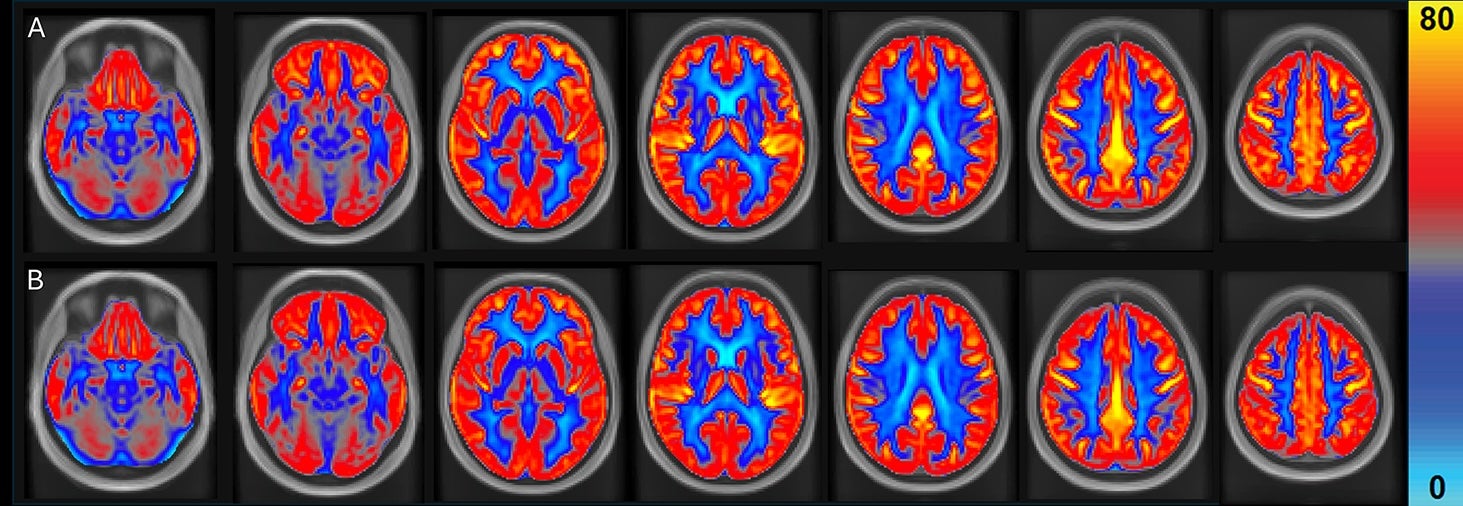 open image in galleryAverage cerebral blood flow is shown to increase, in yellow, after eating peanuts in brain scans listed as A. The scans in B mark control periods (Dr. Peter Joris)
The proof’s in the peanuts
Joris and the team believe that the proof lies in the nutritional content of the peanuts compared with soy and tree nuts.
Part of the benefit could be tied to an amino acid – the building block of proteins – known as l-arginine.
Although they noted that evidence linking the amino acid l-arginine in food to cerebral blood flow is “lacking,” they said IV infusions with the amino acid has been shown to increase global cerebral blood flow by 9.5 percent.
And, the unsaturated fatty acids, fiber, plant chemicals and inflammation-reducing antioxidants in peanuts may also work to enhance cerebral blood flow, including the antioxidant resveratrol. Found in the skin of grapes and blueberries, resveratrol has been found to enhance blood flow in the brain’s prefrontal cortex during cognitive tasks in healthy young adults.
Although peanuts have less resveratrol, it may have still been a contributing factor, the researchers said.
“For this study, skin-roasted peanuts were chosen because the peanut skin contains additional dietary fiber and natural plant compounds, specifically antioxidants. Together, these nutrients may help explain the beneficial health effects of skin-roasted peanuts observed in this study,” said Joris.
More about
PeanutpeanutsMemoryBrain healthsnacksDementiaJoin our commenting forum
Join thought-provoking conversations, follow other Independent readers and see their replies
Comments