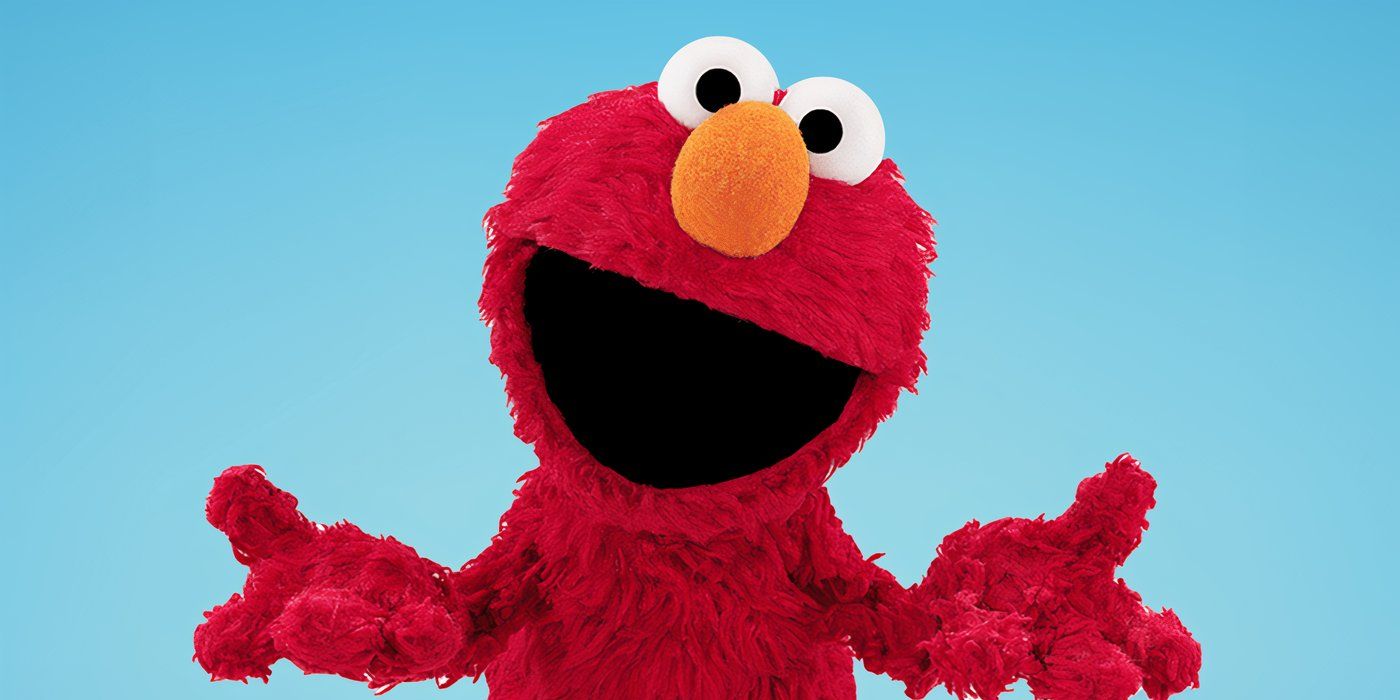
 Elmo from Sesame Street holding his hands outImage via Sesame Workshop
 By
Safwan Azeem
Published 22 minutes ago
By
Safwan Azeem
Published 22 minutes ago
Feel free to connect with him or check out his work. He's everywhere — Upwork, YouTube, Spotify, SoundCloud, Collider, LinkedIn, Instagram.
Sign in to your Collider account Summary Generate a summary of this story follow Follow followed Followed Like Like Thread Log in Here is a fact-based summary of the story contents: Try something different: Show me the facts Explain it like I’m 5 Give me a lighthearted recapSesame Street premiered in 1969, and since then, the show has continued to redefine what children’s programming can look like. Over decades, Sesame Street has proven that information and education can go hand in hand, and TV can serve as a medium to bring people from all over the world together. From helping kids learn their ABCs to teaching them about kindness and empathy, few children’s shows have managed to even come close to the impact Sesame Street has had on young minds.
The fact that the show is currently entering Season 56 proves that it has stood the test of time and evolved in ways to resonate with all kinds of children. However, you don’t create a legacy this big without making a few mistakes along the way. Sesame Street almost always hits the mark, but sometimes, even the best of intentions don’t translate well on screen. Here are 8 of the most controversial Sesame Street moments that have led to heated debates at some point in time.
8 Roosevelt Franklin’s Removal
 Image via Sesame Workshop
Most people might not know this, but Sesame Street was a pretty ambitious show even when it was in its early days. In 1970, the show introduced the Muppet, Roosevelt Franklin (Matt Robinson), who was created to drive Black representation. The puppet wasn’t just tokenistic, either, because he embodied Black culture in a way that even adults from the community could see themselves in him. Roosevelt’s segments were hilarious, musical, and rooted in Black expression. The moment felt like a genuine breakthrough to many. However, the trouble began when some Black educators voiced concerns about the character leaning into damaging stereotypes rather than shattering them.
For example, in a segment called “Morty Moot Mope,” kids spoke with an exaggerated “inner city” accent, which did not sit well with a lot of people. Members of the Children’s Television Workshop voiced that the show was unintentionally crossing over into caricature territory and argued that Roosevelt’s dialect was misrepresenting Black language. The character had quietly disappeared from the show by 1975, despite his initial popularity. The whole ordeal became one of Sesame Street’s earliest controversies and proved that the producers were walking an extremely thin line when it came to racial representation. Unfortunately, Roosevelt was a character with a lot of potential, if only the writers had done justice to the idea back in the day.
7 Snuffleupagus
 Image via Sesame Workshop
Snuffleupagus was another character who had to be pulled from the show because of the connotations that came with its personality. Mr. Aloysius Snuffleupagus, also known as Snuffy, was Big Bird’s giant imaginary friend. The character was an anteater-elephant hybrid who would only show up when the adults weren’t around, and for years, the gag remained the same. Big Bird would excitedly tell everyone about his furry best friend, and by the time everyone gathered around to meet him, he would be gone. On the surface, it feels like an exact reflection of the idea of imaginary friends and their importance to children. However, in the 1980s, people’s perception of Snuffy started to shift when they realized that the joke wasn’t really funny at all.
Watching adults roll their eyes and laugh at Big Bird’s stories was no longer cute and charming, especially with the massive cultural shift America was witnessing at the time. There were a bunch of high-profile investigations into child abuse cases, which forced parents to realize that it was not okay to dismiss children when they were trying to speak up. This once-innocent joke suddenly started feeling dangerous, and the producers began to worry that the whole thing could discourage kids from sharing important things with the adults in their lives. Instead of making Snuffleupagus disappear like Roosevelt, though, the show planned a whole arc for Big Bird where the character started understanding the difference between imagination and reality. Then, in an episode in 1985, the adults finally stayed around for long enough to see Snuffy, which brought things full circle. The situation could have easily become a PR disaster for Sesame Street, but the producers really tackled this one with a lot of tact.
6 Katy Perry’s Costume
 Image via Sesame Workshop
It’s always great when a show blurs the line between fiction and reality, and one of the ways Sesame Street does this is by calling guest stars to perform and interact with their fan-favorite characters. Katy Perry was scheduled to appear on the show in September 2010 for the Sesame Street Season 41 premiere. The singer filmed an age-appropriate parody of her iconic song “Hot N Cold” with Elmo in a bright, fun segment that was bound to be a hit with kids and their parents. Sadly, though, as soon as the clip was uploaded to YouTube, the comments section was flooded with people disapproving of Perry’s outfit, which featured a gold corset top with a sheer mesh neckline.
Parents believed that the clothes showed far too much cleavage on a show meant for preschoolers, and soon enough, news outlets were publishing pieces calling the singer out for her fashion faux pas. The production immediately responded to the backlash and confirmed that the video, which had only been released online at that point, would not air in the broadcast version of the show. The statement, shared by The New York Times, clarified that Perry enjoyed working with Elmo and the team, and that they all respected their viewers’ opinions. The “California Gurls” singer also handled the situation with humor and tweeted that her “play date with Elmo” had to be cut short.
5 Collaboration with Autism Speaks
 Image via Sesame Workshop
In April 2017, Sesame Street introduced Julia, a 4-year-old character with autism, and that kind of representation was still extremely rare in children’s programming. The great thing was that the show didn’t exaggerate Julia’s condition. She was presented as just another kid on the block who would sometimes have to navigate sensory overload with the help of her friends, who all cared enough to understand what she was going through. Julia was a brilliant addition to the show, especially because she had been created with direct input from the Autistic Self Advocacy Network (ASAN). In 2019, the show partnered with Autism Speaks to promote the organization’s “Screen for autism’ campaign about a 100 Day Kit for parents of newly diagnosed autistic children. Now, the idea was great, and in line with the show’s commitment to representation, so it obviously seemed harmless at first.
However, underneath all those ad segments where Julia’s struggle was normalized, the product itself did not treat autism the same way. The kit actually framed an autism diagnosis as something devastating and even compared having an autistic child to losing one. It featured practically no helpful advice, presented questionable information, and restrictive diets that weren’t backed by any kind of science. The kit kept focusing on making sure that autistic children “got better” instead of offering anything of substance to help them thrive, regardless of their diagnosis. All of this felt way out of line and led to ASAN formally ending its partnership with Sesame Street for the careless endorsement. The whole thing really felt like a betrayal, especially because of all the promise Julia’s character once held.
4 Kami: The HIV-Positive Character
 Image via Sesame Workshop
Kami was a South African Muppet unveiled on the show back in 2002, and her introduction sparked a lot of conversation. The character is a five-year-old orphan whose mother died of AIDS. Now, like several other kids in South Africa, Kami had been living openly with the virus since her birth, which made her the franchise’s first HIV-positive character. She was gentle, curious, and always encouraged the viewers to speak to adults when they felt sick to shed the stigma around HIV. What’s interesting is how the writers deliberately made her asymptomatic and easily lovable to counter years of fearful messaging around the virus.
The character was originally meant to address the toll HIV had taken on families in South Africa, but it ended up resonating with international audiences, too. Kami proved to be so impactful that she appeared in public service campaigns with Bill Clinton and accompanied Whoopi Goldberg at a World AIDS Day event. However, it was difficult for the character to be accepted by the U.S, with several congressmen actually writing warning letters to PBS and claiming that children who watched the show were too young to be exposed to HIV. The backlash pretty much reflected the cultural divide that Sesame Street was trying to highlight with Kami’s character. However, in the end, Sesame Workshop had to clarify that Kami was specifically created for South African audiences because she was extremely relevant to the children living there. Ultimately, despite the outrage against Kami, she remains one of the strongest characters to have ever been created for Sesame Street.
3 Allegations Against Elmo’s Voice Actor
 Image via Sesame Workshop
Elmo is practically the face of Sesame Street. At this point, it’s truly hard to imagine the show’s existence without the lovable red furry monster, once voiced by Kevin Clash. The man has to be credited with making the world fall in love with the character, which is why the allegations against him came as a total shock. The controversy began in 2012, when a young man claimed that he and the voice actor had engaged in a sexual relationship when the accuser was only 16. As per CNN, Clash denied that the relationship occurred while the man was underage. However, the scandal was bad enough to damage Sesame Street’s family-friendly brand.
Things took a turn when the accuser backtracked and referred to their relationship with Clash as consensual. That’s not where it ends, though, because after that, several other accusers emerged and filed lawsuits against the voice actor for beginning sexual relationships with them when they were minors. Sesame Workshop had no choice but to suspend Clash until all of this had blown over. On November 20, 2012, the man behind Elmo’s voice resigned and parted ways with the show after 28 years. Eventually, the allegations were found to be false, and Clash was cleared of the abuse charges. Despite being legally cleared, though, the scandal remains one of the most polarizing chapters in the show’s history.
2 Cookie Monster Promoting Obesity
 Image via Sesame Workshop
Cookie Monster is one of Sesame Street’s most beloved puppets. The googly-eyed blue monster loves devouring entire trays of chocolate cookies while singing his iconic “C is for cookie” song. However, by the mid-2000s, parents started to perceive the gag a little differently and called for major change. Childhood obesity rates in the U.S. were skyrocketing at the time, and Sesame Workshop felt like their most iconic character had to be the one to drive change. In 2005, Sesame Street slowly started shifting Cookie Monster toward a healthier diet, and this wasn’t a one-off thing.
The character received a completely new storyline where he taught kids the difference between healthy foods and occasional snacks. It was a gentle way for the show to address real health concerns. In fact, one of the episodes actually featured Cookie Monster saying, “Me eat less cookies” and promoting kids to snack on carrots and clementines instead. Despite the positive intention, the angle did not sit well with parents who misunderstood the whole thing as Cookie Monster going on a diet and villainizing kids for snacking. Many believed that the show was easing one of its most popular characters to pander to nutrition experts. Cookie Monster actually had to take to Twitter himself to clarify that while he was going to eat more vegetables, he was still the monster we all knew and loved.
1 Margaret Hamilton's Appearance As The Wicked Witch of the West
 Image via Sesame Workshop
You have to appreciate Sesame Street for always addressing heavy topics. That’s exactly what the show wanted to do with Margaret Hamilton back in 1976. The idea was for her to reprise her legendary role of The Wicked Witch of the West from The Wizard of Oz (1939) and teach the kids a lesson about facing their fears. Ironically, though, the episode actually had to be banned because it was deemed too frightening. The premise followed the Witch losing her broomstick somewhere over Sesame Street and then storming into town to demand it back.
She interacted with characters like Mr. Hooper and Big Bird while wreaking absolute havoc. Honestly, the whole thing was meant to be light-hearted fun. If you watch the segment now, it really doesn’t feel all that crazy. However, for its time, it triggered a never-ending stream of complaints from parents who claimed that Hamilton gave their children nightmares for days and completely put them off the show. Turns out that the kids just weren’t ready to watch a green witch on screen, and even wrote their own letters to the producers begging the show to never air the witch again. As understandable as the backlash was, the whole thing is a bit funny if you look back at the absolute hysteria that it sparked.
 sesame-street.jpg
Like
Sesame Street
Release Date
November 10, 1969
sesame-street.jpg
Like
Sesame Street
Release Date
November 10, 1969
Cast
See All-
 Jim Henson
 Expand
Collapse
Follow
Followed
Like
Share
Facebook
X
WhatsApp
Threads
Bluesky
LinkedIn
Reddit
Flipboard
Copy link
Email
Close
Thread
Sign in to your Collider account
Expand
Collapse
Follow
Followed
Like
Share
Facebook
X
WhatsApp
Threads
Bluesky
LinkedIn
Reddit
Flipboard
Copy link
Email
Close
Thread
Sign in to your Collider account
We want to hear from you! Share your opinions in the thread below and remember to keep it respectful.
Be the first to post Images Attachment(s) Please respect our community guidelines. No links, inappropriate language, or spam.Your comment has not been saved
Send confirmation emailThis thread is open for discussion.
Be the first to post your thoughts.
- Terms
- Privacy
- Feedback
 Feb 4, 2014
Watch: Benedict Cumberbatch Tries to Convince the Muppets He’s Not Sherlock Holmes on SESAME STREET
 1 hour ago
This Cancelled Too Soon Cult ’90s Sci-Fi Series Is One of TV’s Boldest Alien Conspiracies You Need To Binge This Weekend
 4 hours ago
'Ahsoka' Star Reveals the Frustrating Reason Why She Won't Be Back for Season 2
 7 hours ago
16 Years After the Original, Horror’s Most Twisted Imposter Returns for a Chilling New Chapter
More from our brands

40 Awesome Cartoons Only 2000s Kids Will Remember
Rachel Zegler's Snow White Controversies, Explained

42 Greatest R-Rated Adult Anime Series of All Time
50 Best New Movies on Streaming to Watch Right Now

The 45 Most Popular Cartoons of All Time, Ranked


40 Longest-Running TV Shows Ever, Ranked By Duration

30 Best Cartoon Network Shows From The 2000s, Ranked
What To Watch
 July 20, 2025
The 72 Best Movies on Netflix Right Now
Trending Now
July 20, 2025
The 72 Best Movies on Netflix Right Now
Trending Now
 This Underrated 2-Season Prime Video Thriller Series Did 'Yellowjackets' Before Showtime Could
 Bob Dylan Disliked This Iconic Rock Band’s Cover of One of His Greatest Song
 Michael B. Jordan's 85% RT Legal Drama Quietly Surfaces on Netflix Global Charts