- Home
Edition
Africa Australia Brasil Canada Canada (français) España Europe France Global Indonesia New Zealand United Kingdom United States Edition:
Global
Edition:
Global
- Africa
- Australia
- Brasil
- Canada
- Canada (français)
- España
- Europe
- France
- Indonesia
- New Zealand
- United Kingdom
- United States
Academic rigour, journalistic flair
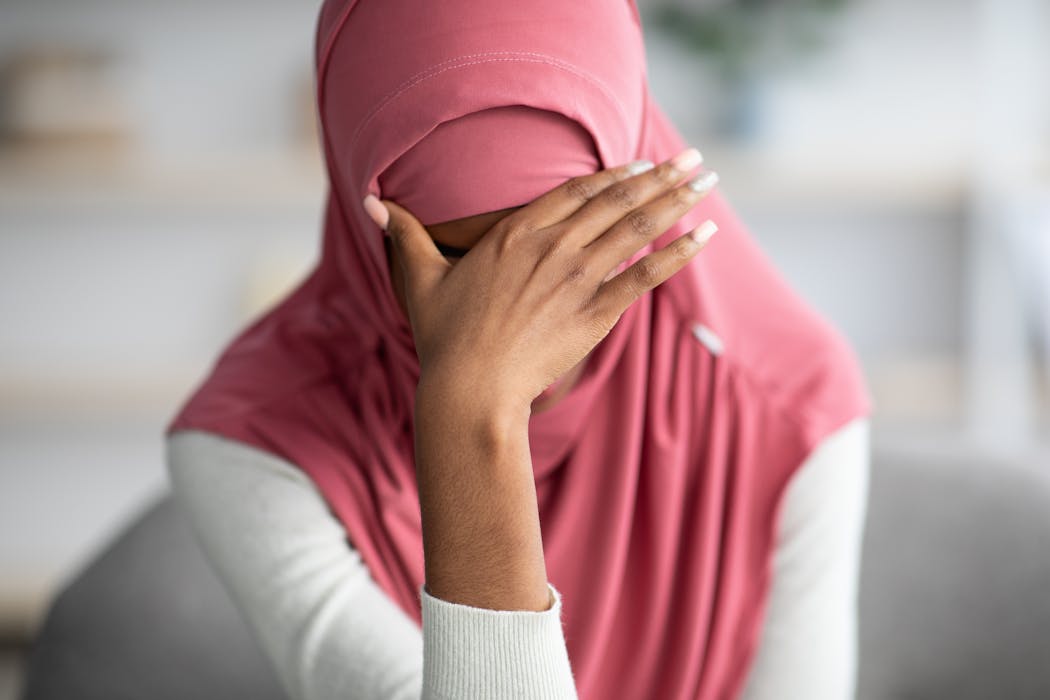
 Prostock-studio/Shutterstock
Minority ethnic women in the UK face economic abuse at twice the rate of white women. These are their experiences
Published: November 26, 2025 6.20pm GMT
Punita Chowbey, Sheffield Hallam University, Kaveri Qureshi, University of Edinburgh
Prostock-studio/Shutterstock
Minority ethnic women in the UK face economic abuse at twice the rate of white women. These are their experiences
Published: November 26, 2025 6.20pm GMT
Punita Chowbey, Sheffield Hallam University, Kaveri Qureshi, University of Edinburgh
Authors
-
 Punita Chowbey
Senior research fellow, Sheffield Hallam University
-
Kaveri Qureshi
Senior Lecturer, School of Social and Political Science, University of Edinburgh
Disclosure statement
Punita Chowbey receives funding from the NIHR, UKRI and Joseph Rowntree Foundation. Punita works closely with charities working on gender based violence.
Kaveri Qureshi receives funding from the NIHR and the ESRC. Kaveri Qureshi works closely with charities working on gender violence.
Partners

Sheffield Hallam University and The University of Edinburgh provide funding as members of The Conversation UK.
View all partners
DOI
https://doi.org/10.64628/AB.gnqqpvywp
https://theconversation.com/minority-ethnic-women-in-the-uk-face-economic-abuse-at-twice-the-rate-of-white-women-these-are-their-experiences-267263 https://theconversation.com/minority-ethnic-women-in-the-uk-face-economic-abuse-at-twice-the-rate-of-white-women-these-are-their-experiences-267263 Link copied Share articleShare article
Copy link Email Bluesky Facebook WhatsApp Messenger LinkedIn X (Twitter)Print article
Economic abuse may not be as obvious as physical abuse, but for the millions of people it affects in the UK, economic abuse can be totally devastating.
Economic abuse, which is recognised as a form of domestic abuse in law, involves controlling a person’s (often a woman’s) ability to acquire, use and maintain economic resources.
Separating or divorcing does not mean the end of economic abuse in a marriage, particularly when children are involved. Post-separation economic abuse is often related to child maintenance or spousal support payments, which may be manipulated or withheld by abusers.
This harms mothers’ financial independence, mental health and parenting, and has consequences for children’s wellbeing.
A recent national survey found that minority ethnic women face economic abuse at twice the rate of white women (29% vs 13%). Our recently-published research explores why, through the experiences of 28 separated or divorced British south Asian Muslim women. This research is part of our continuing research on divorce and economic abuse.
Two-thirds of our participants had been financially dependent upon their husbands during their marriages, in keeping with broader statistics on the low employment rates of British Pakistani and Bangladeshi women. Further, several participants described their husbands preventing them from working.
UK-born Afsana had to work secretly as a tutor for meagre pay: “This tutoring was undercover with my dad. My working would have looked bad on [my husband].”
After separation or divorce, women were left economically vulnerable. Some struggled to find work, due to lack of recent employment experience as well as labour market discrimination.
“I worked in one school as a volunteer, but the Jobcentre said ‘that’s not enough, we need more evidence of work,’” said one woman. “I said, ‘everywhere you apply, they ask for a qualification, and experience is the main thing.’ I was not going out … how could I have undertaken any work?”
A major theme in our research was how abusers used child maintenance as a means to control women economically. In 18 cases, the father was not paying any child maintenance. Of the rest, only two mothers felt that the amount paid was fair.
Many women described child maintenance mirroring earlier patterns of economic abuse during their marriages. As UK-born Afsana put it: “He didn’t provide when he was with me, so I didn’t expect him to provide when he was not with me.”
Where women had involved the Child Maintenance Service (CMS), they felt it was unresponsive, especially those in transnational marriages involving economic assets overseas.
UK-born Kiran described her experience with CMS after her ex-husband hid assets in Pakistan: “I’ve even given the telephone numbers and addresses in the properties which are in Pakistan. [But] ‘Excuse me. We know that you’re upset. It just takes a bit of time.’ I go, ‘How long does it need?’”
Women felt disbelieved, which undermined their confidence in the system. Although the CMS may face limits in investigating finances held overseas, women felt the evidence they provided was often ignored. Many of the men were in self-employment, which may have made it difficult for the CMS to investigate.
Legal blind spots and immigration abuse
Post-separation economic abuse can also occur through institutions like courts and banks. UK-born Hora described how her husband remarried via an unregistered Islamic marriage, which allowed him to transfer money and assets to his new wife.
She told us: “My barrister said, 'You’re not divorced from this lady yet, but you’ve remarried.’ He said, ‘Yes judge, in my religion I can have four wives.’ And this is a High Court judge, and he said, ‘Yes, quite!’”
Hora felt that this comment suggested the judge supported her husband’s use of religious justification for re-marrying before divorce, rather than recognising it as part of financial abuse.
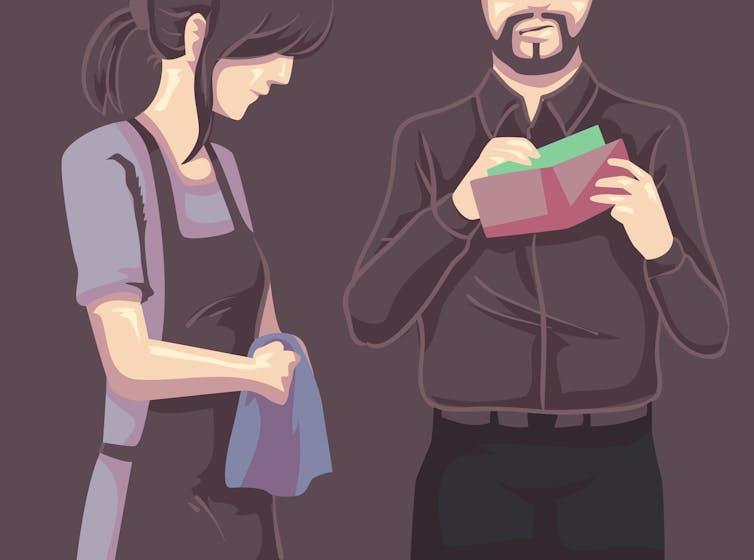 Economic abuse can happen in relationships, or after separation.
BNP Design/Shutterstock
Economic abuse can happen in relationships, or after separation.
BNP Design/Shutterstock
Women with an insecure immigration status might also experience “immigration abuse”. This too can be a form of economic abuse, where, for example, an abuser uses the threat of deportation or immigration enforcement to trap women in financially dependent relationships.
Several women described struggling to open a bank account or obtain credit due to their migration status being exploited by their abusers. Pakistan-born divorcee Fauzia had never had a national insurance number, child benefit or bank account until these were arranged for her by a social worker at the women’s refuge she turned to with her children.
Our research suggests that south Asian women can face severe post-separation economic abuse due to multiple, intersecting disadvantages across the home, labour market and state institutions. Addressing these inequalities requires policies that take women seriously, while also being culturally sensitive and aware of the multiple challenges these women face.
- Economic abuse
- UK ethnic minorities
- Give me perspective
Events
Jobs
-
 Senior Lecturer / Lecturer, Environmental Engineering
-
Case Specialist, Student Information and Regulatory Reporting
-
Lecturer in Paramedicine
-
Associate Lecturer, Social Work
-
Lecturer, Communication Design
 Senior Lecturer / Lecturer, Environmental Engineering
 Case Specialist, Student Information and Regulatory Reporting
 Lecturer in Paramedicine
 Associate Lecturer, Social Work
 Lecturer, Communication Design
- Editorial Policies
- Community standards
- Republishing guidelines
- Analytics
- Our feeds
- Get newsletter
- Who we are
- Our charter
- Our team
- Partners and funders
- Resource for media
- Contact us
-
-
-
-
Copyright © 2010–2025, The Conversation