 By Rhys Davies and Ben KeithShareNewsweek is a Trust Project member
INTERPOL delegates, including police chiefs, ministers and senior officials from all 196 member countries, are gathering to elect the organization’s next president. At stake is not a ceremonial title but the integrity of the world’s most important system of police cooperation. And the frontrunner, Turkey’s Mustafa Serkan Sabanca, appeared in a classified memo released this week that shows him advising officials on how to get around INTERPOL’s rules.
In the leaked memo, Sabanca “kindly requested” that Turkish officials recast a politically motivated case against a human rights lawyer in exile as an embezzlement matter. The original allegations, tied to the Gülen movement, could never survive Article 3, INTERPOL’s ban on political cases. The solution he proposed was simple deception. The memo is not ambiguous. It is not theoretical. It is a written instruction on how to disguise a political prosecution so it might pass through INTERPOL unnoticed.
 ...
...The prospect of Sabanca’s election is akin to putting the North Koreans on the U.N. Human Rights Council. The contradiction is so absolute that it requires no elaboration. INTERPOL exists to shield global policing from political misuse; Sabanca has presided over precisely that misuse.
Turkey’s record makes the picture starker still. Earlier this year, the U.K. Parliament’s Joint Committee on Human Rights heard evidence stating that the country trails only Russia and China in its abuse of the Red Notice system, a tool similar in effect to an international arrest request, to target political opponents abroad. Since the 2016 coup attempt, Turkish authorities have submitted more than 3,500 Red Notice and diffusion requests aimed at alleged Gülen sympathizers—an unending stream of political vendettas packaged as criminal charges.
Against this backdrop, Sabanca’s memo is not an aberration. It is an insight into the system he helped build. The document is a clear indication that Sabanca advised Turkey’s National Central Bureau to disguise the real basis of an extradition attempt. The method is familiar: present dissent as fraud, opposition as organized crime, journalism as terrorism. The objective is always the same: to lure foreign courts, and INTERPOL itself, into treating political persecution as ordinary law enforcement.
The human consequences are not abstract. The lawyer targeted in the memo, now granted asylum in Belgium, fears the personal reach Sabanca would gain if elevated to INTERPOL’s top office. He is right to be afraid. A presidency that legitimizes such tactics would place dissidents, refugees and exiles in immediate jeopardy. Their safety depends on an assumption of neutrality. That assumption would not survive Sabanca’s election.
Democratic states, too, would feel the cost. INTERPOL’s authority relies on trust: trust that Red Notices reflect genuine criminality, trust that leaders uphold the organization’s constitution, trust that political neutrality means something. When the presidency is handed to an individual documented as seeking to erode those safeguards, the entire system becomes suspect. Judges will hesitate. Border officers will doubt. States will retreat from cooperation. Criminals, not authoritarians, will be the beneficiaries.
This is not a minor governance dispute; it is a test of whether INTERPOL can still act as the guardian of its own legitimacy. Member states have just hours left to prevent a profound error. Electing Sabanca would telegraph a message to abusive governments everywhere: persistence is rewarded, manipulation is forgiven and the rules are negotiable.
Symbols matter. Leadership matters more. An organization that depends on political neutrality cannot be led by a man who has already demonstrated a willingness to subvert it. The memo published this week makes the stakes unmistakable.
Member states should vote accordingly. The credibility of INTERPOL, and the safety of those who rely on it, demands nothing less.
Ben Keith is a barrister at International Human Rights Advisors.
Rhys Davies is a barrister at International Human Rights Advisors
The views expressed in this article are the writers’ own.
Request Reprint & LicensingSubmit CorrectionView Editorial & AI Guidelines Add Newsweek as a preferred source on Google to see more of our trusted coverage when you search.
Recommended For You
 OpinionConventional Wisdom: Trump Turkey Pardoning Edition3 min read
 OpinionWhen Strength Becomes a Burden—Reimagining the Strong Black Woman | Opinion4 min read
 OpinionDoes the US Need a Third Political Party? Newsweek Contributors Debate5 min read
 OpinionGOP Rep.: The U.S. Must Close Critical AI Chip Export Loophole Exploited by China | Opinion5 min read
 OpinionAgriculture Secretary: Giving Thanks to the American Farmer This Thanksgiving | Opinion4 min read
 OpinionFormer White House Middle East Envoy: What We Keep Getting Wrong About the UAE and Sudan | Opinion5 min read
Related Podcasts
Top Stories
 WorldPutin Gives Update on Ukraine Peace, Trump Sending Witkoff to Moscow: Live Updates3 min read
 NewsUncommon Knowledge: Don’t Blame Trump for the Gerrymander Paradox8 min read
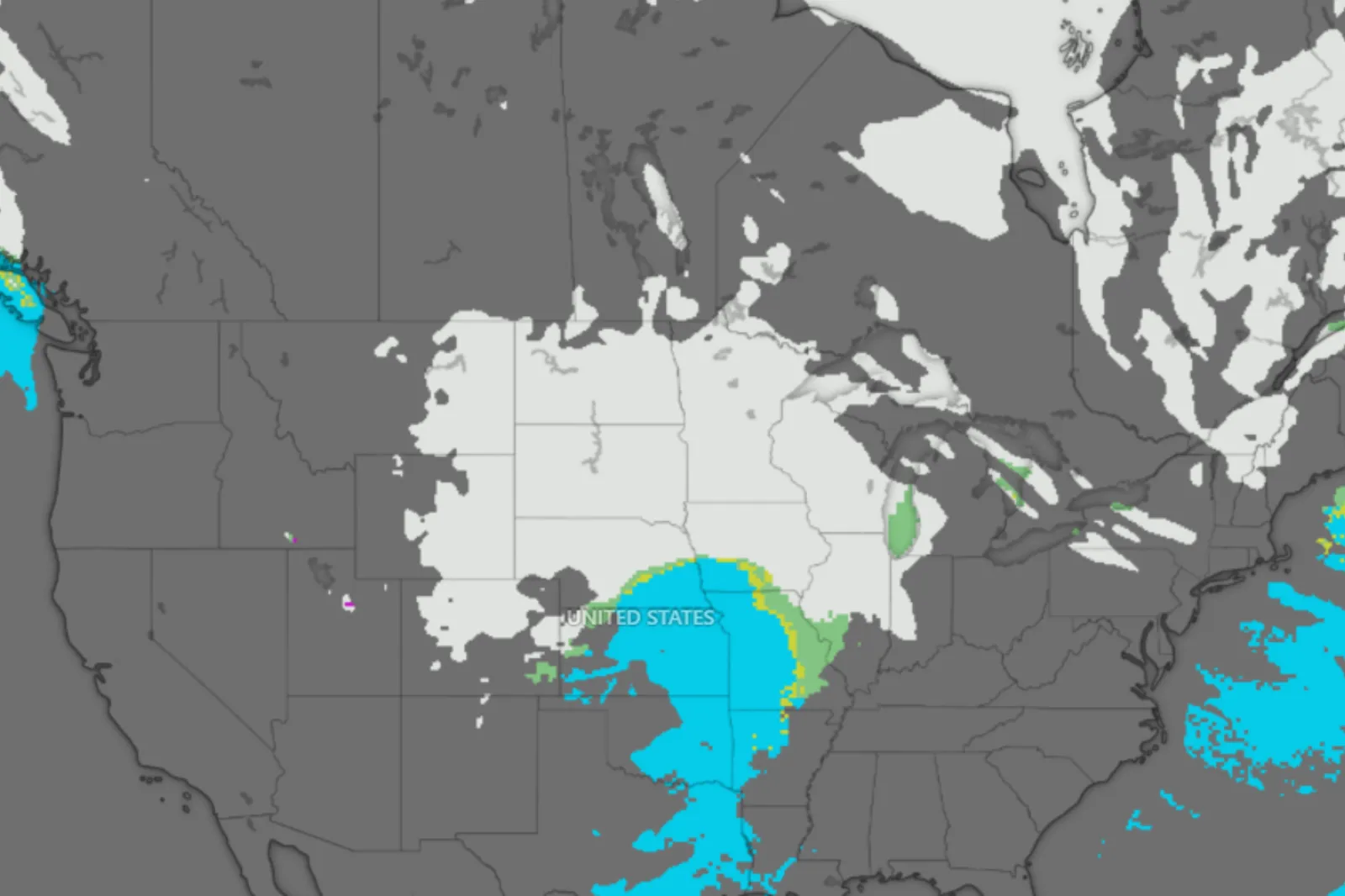 Live BlogThanksgiving Winter Storm Live Tracker, 2,000 Flights Delayed, Up To 3ft Of Snow Expected1 min read
 NewsTrump Admin Faces Lawsuit After SNAP Benefits Taken Away From Immigrants1 min read
 NewsHong Kong High-Rise Fire Kills 36, Hundreds Missing as Blaze Spreads3 min read
 NewsDonald Trump Suffers Supreme Court Setback3 min read
Trending
 MoneyNew ‘Cash Law’ Could Change Grocery Store Rules3 min read
 U.S. Economy‘Mass Blackout’ Starts Today: What to Know3 min read
 SnowfallWinter Storm Warning Issued As 25 Inches of Snow To Strike5 min read
 Home PricesPrice Correction ‘Worse Than 2008’ Coming To US Housing Market—Analyst5 min read
 ArkansasRepublican Switches Party To Democrats Amid Concerns About Affordability3 min read
Opinion
OpinionINTERPOL Must Not Elect One of Its Chief Abusers As Its Next President | Opinion4 min read OpinionThanksgiving in America | Opinion5 min readOpinionWhen Strength Becomes a Burden—Reimagining the Strong Black Woman | Opinion4 min readOpinionConventional Wisdom: Trump Turkey Pardoning Edition3 min read