- News
- Science
- Archaeology
Experts say the find sheds light on death rituals in the Neolithic age
Ceyda CaglayanWednesday 26 November 2025 16:39 GMTComments
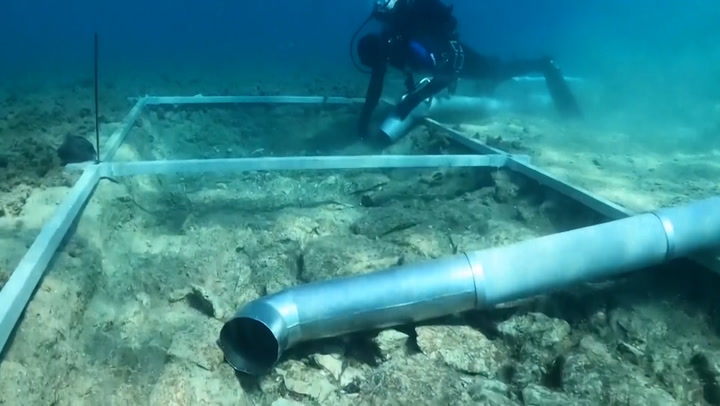 CloseRelated: Archaeologists uncover remains of Neolithic Road in waters of Croatia's Adriatic Sea
Sign up for our free Health Check email to receive exclusive analysis on the week in health
Get our free Health Check email
Get our free Health Check email
Email*SIGN UPI would like to be emailed about offers, events and updates from The Independent. Read our Privacy notice
A significant collection of new archaeological discoveries has been unveiled in southeast Turkey, offering fresh insights into a pivotal period over 11,000 years ago when humanity transitioned from nomadic hunter-gatherers to settled societies.
Located on a plateau overlooking the fertile plains often referred to as the “cradle of civilisation”, the Unesco World Heritage Sites of Gobeklitepe and nearby Karahantepe are fundamentally reshaping archaeologists' understanding of prehistoric eras.
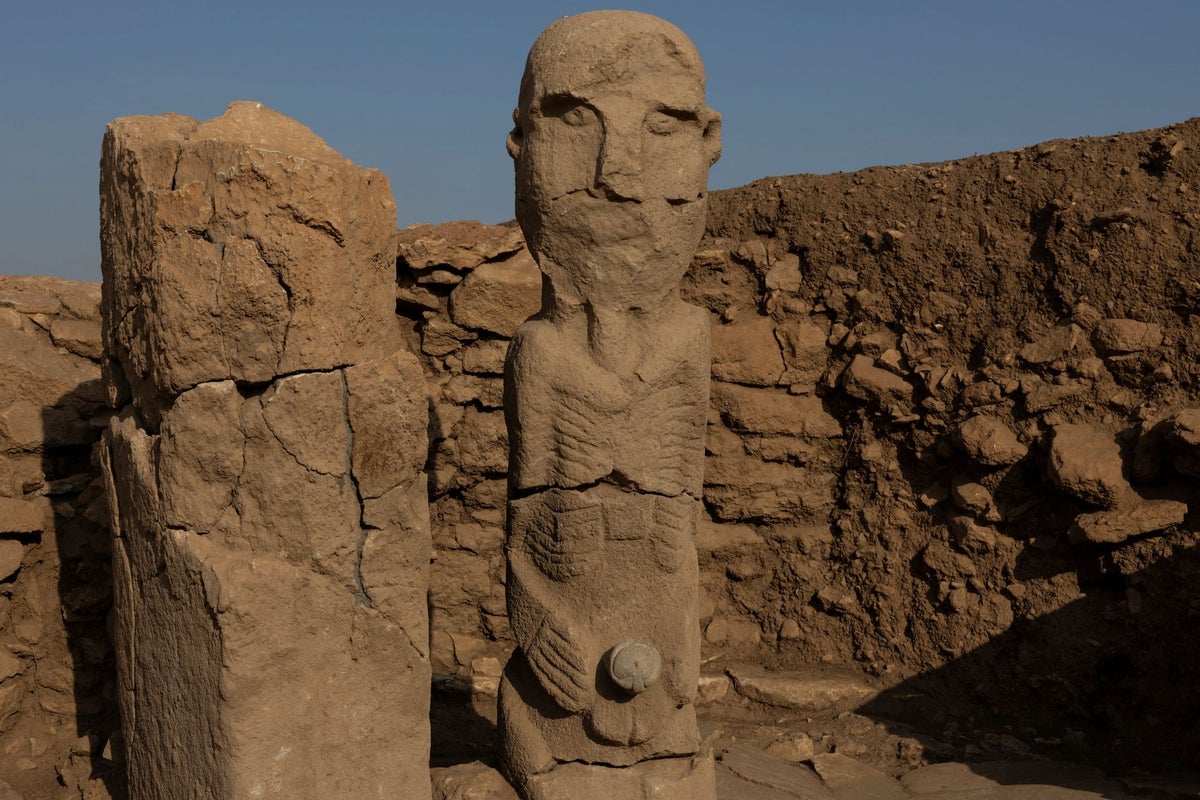
Among the latest finds in Sanliurfa province is a striking statue featuring a facial expression reminiscent of a deceased individual.
Experts have hailed this as a unique discovery, shedding light on death rituals and symbolic expression within Neolithic communities.
It was one of approximately 30 artefacts found, which also included various human and animal statues, figurines, vessels, plates, necklaces, and beads, notably one crafted in human form.
“What makes these archaeological sites unique is the way they reshape our knowledge of Neolithic history, as well as the transition to settled life,” Culture and Tourism Minister Mehmet Nuri Ersoy said.
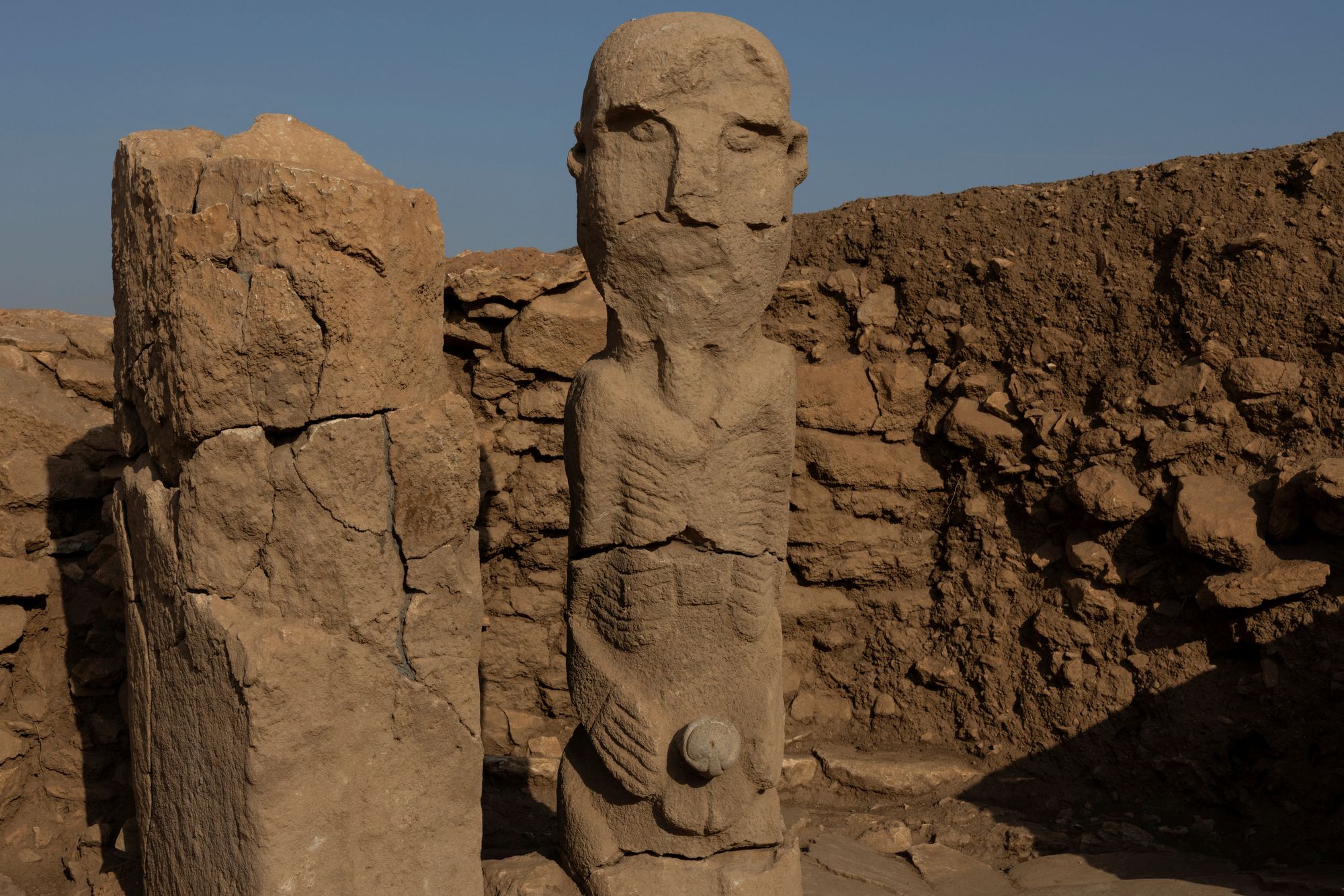 open image in galleryA pillar and a human statue stand at the Karahantepe excavation site (REUTERS)
He said the sites, which Turkey has dubbed the Stone Mounds project, show that humanity had a far higher level of consciousness in terms of belief, rituals, social organisation and cultural production than previously assumed.
Gobeklitepe is expected to attract around 800,000 visitors this year, he said, illustrating the growing recognition of the site's importance.
The ministry-led project encompasses 12 Neolithic sites of settled communities in Sanliurfa dating back to 9,500 BC, with Gobeklitepe and Karahantepe featuring the world's oldest structures used for gathering and performance rituals.
Among the most striking features at the sites are oval-shaped monumental structures up to 28 metres in diameter surrounded with T-shaped limestone pillars, regarded as representations of humans, with reliefs of animals depicted on some of them.
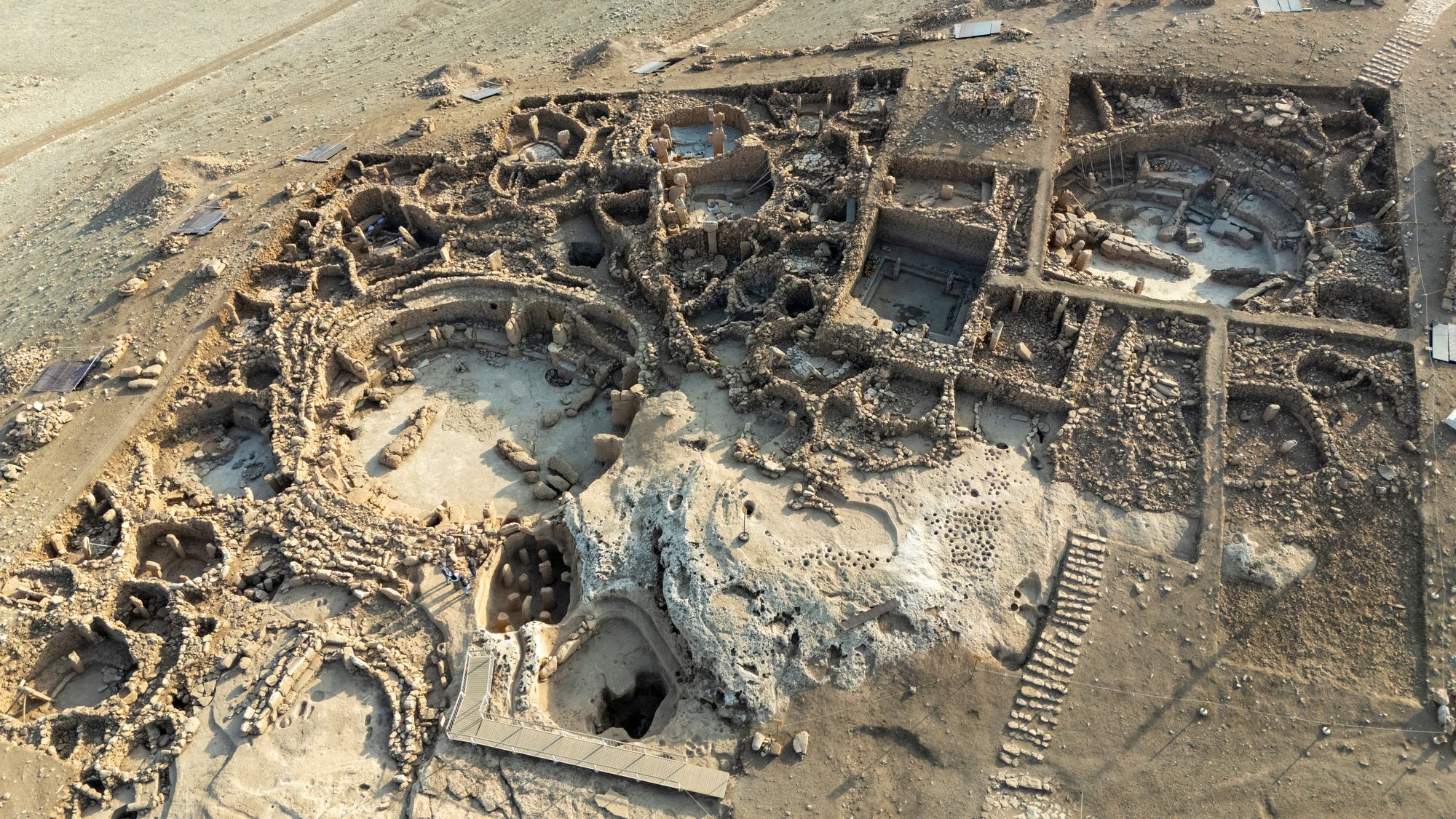 open image in galleryA drone view of the excavation site at Karahantepe (REUTERS)
Archaeologists say one recent excavation at Karahantepe uncovered a T-shaped pillar with a human face, representing the first known depiction of a human face on such a pillar.
“From nutrition to architecture, from the symbolic world to the rituals, the vast diversity of evidence obtained here bring us incredibly close to prehistoric societies,” said Necmi Karul, the head of excavations, describing the builders of the structures as skilled craftsmen.
He said that until recently it was assumed that settled life started with agriculture and animal husbandry but the project indicated that these people were still hunter-gatherers but had become settled.
More about
ArchaeologistsTurkeyneolithicJoin our commenting forum
Join thought-provoking conversations, follow other Independent readers and see their replies
Comments