- Space
The striking discovery was made by a NASA rover ‘eavesdropping’ on the red planet’s whirling winds
Marcia DunnWednesday 26 November 2025 16:58 GMT
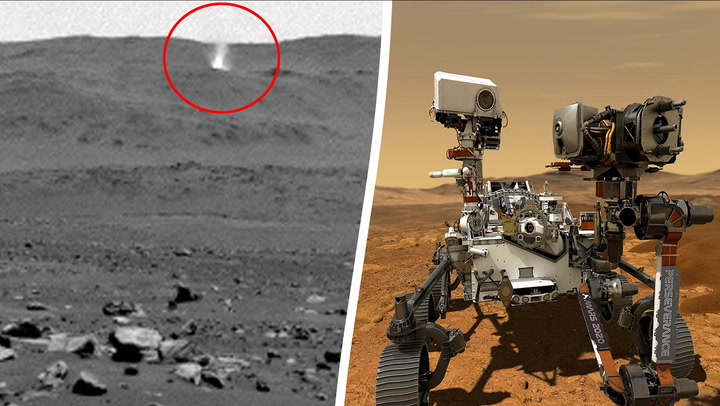 Close1.2 mile-high ‘dust devil’ spotted on Mars by Nasa’s Perseverance rover
Sign up to our free weekly IndyTech newsletter delivered straight to your inbox
Sign up to our free IndyTech newsletter
Sign up to our free IndyTech newsletter
Email*SIGN UPI would like to be emailed about offers, events and updates from The Independent. Read our Privacy notice
Scientists believe they have detected lightning on Mars, thanks to the sensitive microphone aboard NASA’s Perseverance rover. The discovery was made by "eavesdropping" on the planet's whirling winds.
A French-led research team reported on Wednesday that the rover’s microphone captured the distinct crackling of electrical discharges. Over two Martian years, 55 instances of what they term "mini lightning" were documented.
These phenomena predominantly occurred during dust storms and dust devils, almost exclusively on the windiest Martian days, or sols. The electrical arcs, mere inches in size, were detected within two metres of the microphone, which is part of a system used for examining Martian rocks.
Sparks from these discharges, likened to static electricity on Earth, were clearly audible amidst the noisy gusts and dust particles striking the microphone.
Scientists have been looking for electrical activity and lightning at Mars for half a century, said the study’s lead author Baptiste Chide, of the Institute for Research in Astrophysics and Planetology in Toulouse.
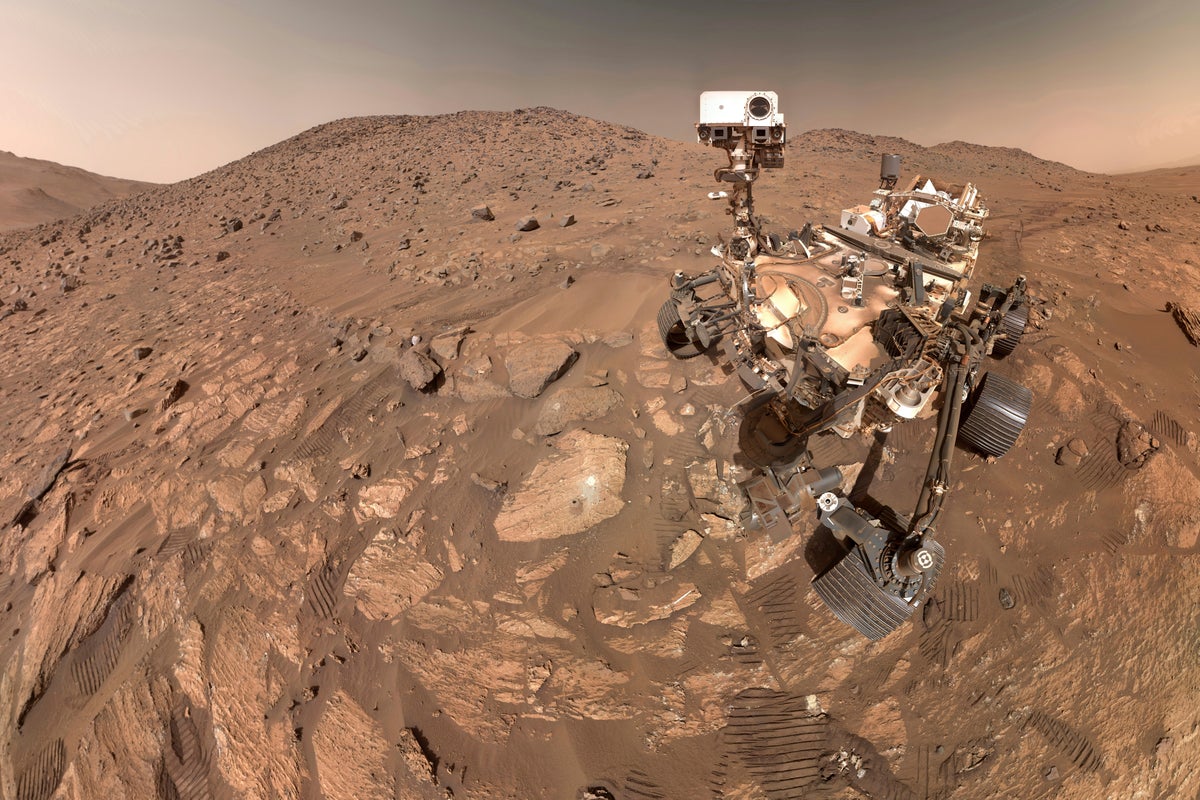
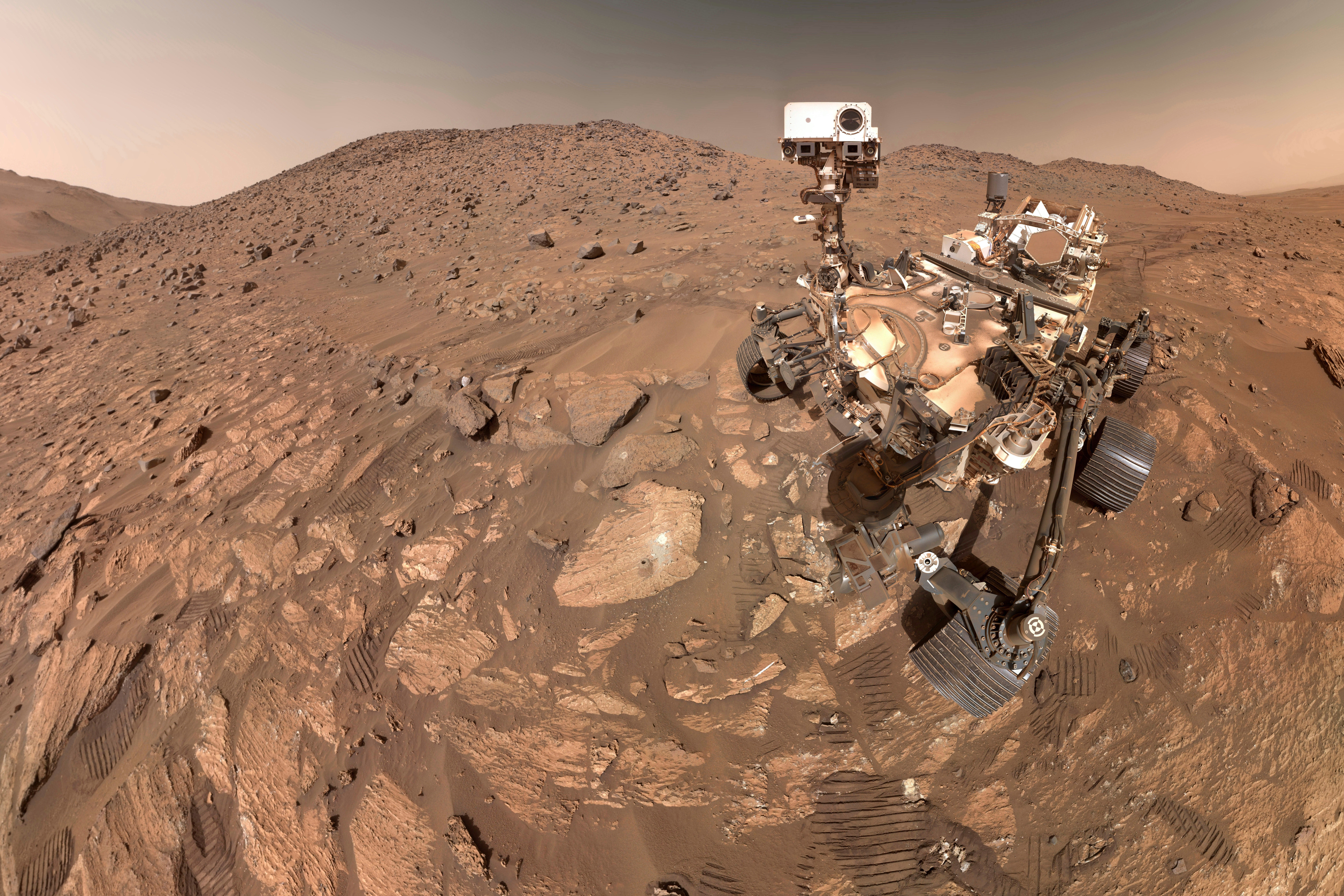 open image in galleryFILE - This image provided by NASA, shows a selfie of their Perseverance Mars rover, on July 23, 2024. The image is made up of 62 individual images that were stitched together. (NASA via AP)
“It opens a completely new field of investigation for Mars science,” Chide said, citing the possible chemical effects from electrical discharges. “It’s like finding a missing piece of the puzzle.”
The evidence is strong and persuasive, but it's based on a single instrument that was meant to record the rover zapping rocks with lasers, not lightning blasts, said Cardiff University's Daniel Mitchard, who was not involved in the study. What's more, he noted in an article accompanying the study in the journal Nature, the electrical discharges were heard — not seen.
“It really is a chance discovery to hear something else going on nearby, and everything points to this being Martian lightning,” Mitchard said in an email. But until new instruments are sent to verify the findings, “I think there will still be a debate from some scientists as to whether this really was lightning.”
Lightning has already been confirmed on Jupiter and Saturn, and Mars has long been suspected of having it too.
To find it, Chide and his team analyzed 28 hours of Perseverance recordings, documenting episodes of “mini lightning” based on acoustic and electric signals.
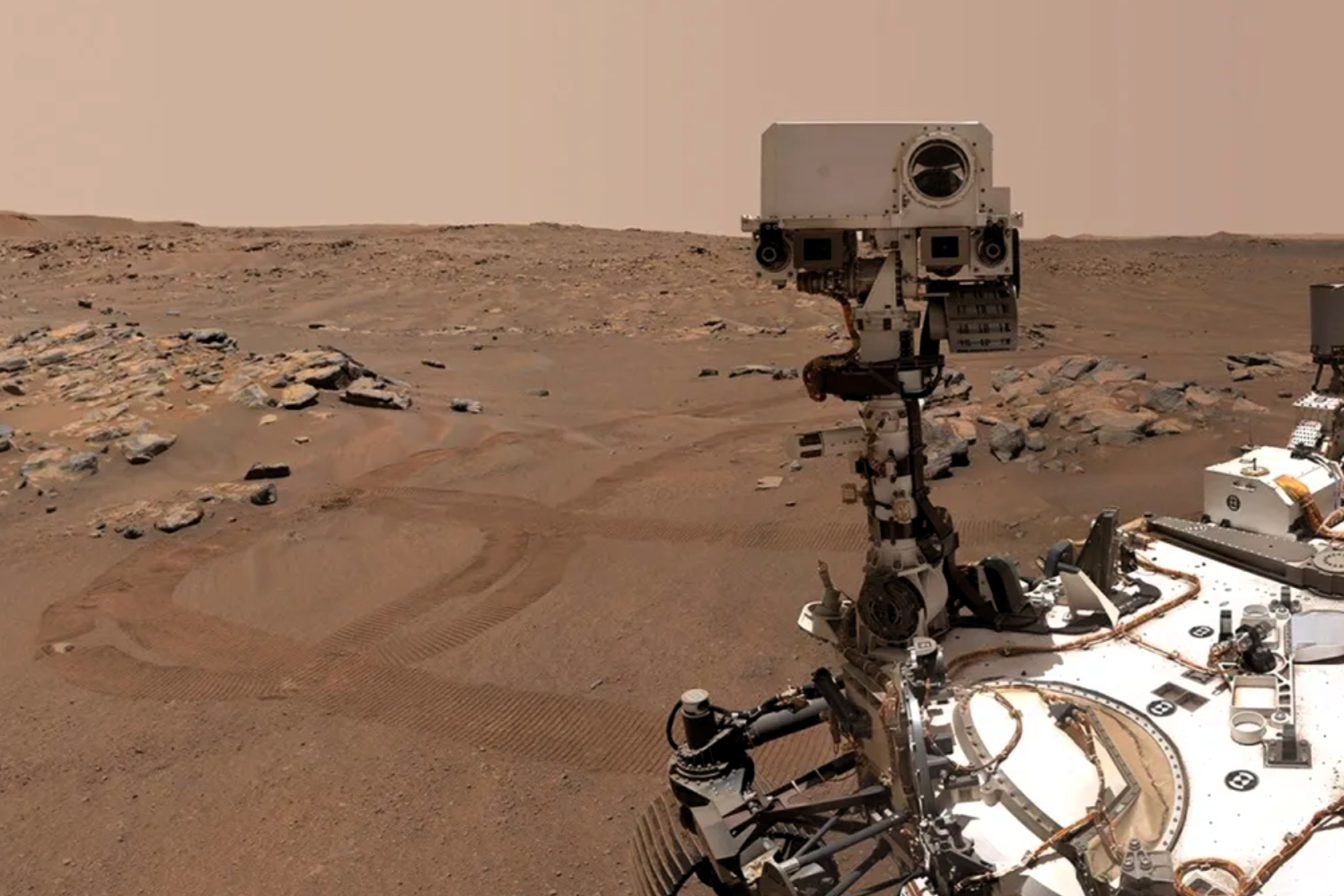 open image in galleryNasa's Mars rover Perseverance takes a selfie on 10 September, 2021 (Nasa)
Electrical discharges generated by the fast-moving dust devils lasted just a few seconds, while those spawned by dust storms lingered as long as 30 minutes.
“It’s like a thunderstorm on Earth, but barely visible with a naked eye and with plenty of faint zaps,” Chide said in an email. He noted that the thin, carbon dioxide-rich Martian atmosphere absorbs much of the sound, making some of the zaps barely perceptible.
Mars’ atmosphere is more prone than Earth’s to electrical discharging and sparking through contact among grains of dust and sand, according to Chide.
“The current evidence suggests it is extremely unlikely that the first person to walk on Mars could, as they plant a flag on the surface, be struck down by a bolt of lightning,” Mitchard wrote in Nature. But the “small and frequent static-like discharges could prove problematic for sensitive equipment.”
These aren’t the first Mars sounds transmitted by Perseverance. Earthlings have listened in to the rover’s wheels crunching over the Martian surface and the whirring blades of its no-longer-flying helicopter sidekick, Ingenuity.
Perseverance has been scouring a dry river delta at Mars since 2021, collecting samples of rock for possible signs of ancient microscopic life. NASA plans to return these core samples to Earth for laboratory analysis, but the delivery is on indefinite hold as the space agency pursues cheaper options.