
- Home
- Personal Finance
- Shopping
- Gadgets
Once seen as a budget alternative, prepaid wireless is attracting new attention as networks improve and shoppers look for flexible, lower-cost options.
 By
Paige Cerulli
published
11 February 2026
in Guides
By
Paige Cerulli
published
11 February 2026
in Guides
When you purchase through links on our site, we may earn an affiliate commission. Here’s how it works.
- Copy link
- X
Profit and prosper with the best of Kiplinger's advice on investing, taxes, retirement, personal finance and much more. Delivered daily. Enter your email in the box and click Sign Me Up.
Contact me with news and offers from other Future brands Receive email from us on behalf of our trusted partners or sponsors By submitting your information you agree to the Terms & Conditions and Privacy Policy and are aged 16 or over.You are now subscribed
Your newsletter sign-up was successful
Want to add more newsletters?

Delivered daily
Kiplinger Today
Profit and prosper with the best of Kiplinger's advice on investing, taxes, retirement, personal finance and much more delivered daily. Smart money moves start here.
Signup +
Sent five days a week
Kiplinger A Step Ahead
Get practical help to make better financial decisions in your everyday life, from spending to savings on top deals.
Signup +
Delivered daily
Kiplinger Closing Bell
Get today's biggest financial and investing headlines delivered to your inbox every day the U.S. stock market is open.
Signup +
Sent twice a week
Kiplinger Adviser Intel
Financial pros across the country share best practices and fresh tactics to preserve and grow your wealth.
Signup +
Delivered weekly
Kiplinger Tax Tips
Trim your federal and state tax bills with practical tax-planning and tax-cutting strategies.
Signup +
Sent twice a week
Kiplinger Retirement Tips
Your twice-a-week guide to planning and enjoying a financially secure and richly rewarding retirement
Signup +
Sent bimonthly.
Kiplinger Adviser Angle
Insights for advisers, wealth managers and other financial professionals.
Signup +
Sent twice a week
Kiplinger Investing Weekly
Your twice-a-week roundup of promising stocks, funds, companies and industries you should consider, ones you should avoid, and why.
Signup +
Sent weekly for six weeks
Kiplinger Invest for Retirement
Your step-by-step six-part series on how to invest for retirement, from devising a successful strategy to exactly which investments to choose.
Signup + An account already exists for this email address, please log in. Subscribe to our newsletter

Rising wireless bills are pushing more consumers to reconsider traditional phone plans and explore lower-cost alternatives. Prepaid wireless, once viewed primarily as a budget option, is drawing renewed interest as shoppers look for flexible ways to cut recurring expenses without committing to long-term contracts.
Much of the growth is being driven by mobile virtual network operators (MVNOs), which lease network access from major carriers such as Verizon, AT&T and T-Mobile. Because MVNOs don’t maintain their own infrastructure, they can often offer comparable coverage at lower monthly prices.
With inflation continuing to strain household budgets, more consumers are embracing cost-cutting strategies, including switching to prepaid providers.
From just $107.88 $24.99 for Kiplinger Personal Finance
Become a smarter, better informed investor. Subscribe from just $107.88 $24.99, plus get up to 4 Special Issues
CLICK FOR FREE ISSUE
Sign up for Kiplinger’s Free Newsletters
Profit and prosper with the best of expert advice on investing, taxes, retirement, personal finance and more - straight to your e-mail.
Profit and prosper with the best of expert advice - straight to your e-mail.
Sign upHow prepaid plans differ from traditional phone contracts
Prepaid phone plans don’t require the long-term commitments that often come with traditional wireless contracts. While many postpaid plans require two- or three-year agreements, prepaid service allows customers to pay month-to-month, offering greater flexibility and easier plan changes.
Because prepaid service is paid in advance, it typically doesn’t require a credit check, and monthly line costs are often lower than traditional contracts. However, prepaid customers usually need to purchase their phones upfront, rather than financing a device through a carrier installment plan.
There are trade-offs to consider. Prepaid phone promotions are often less generous than postpaid deals, and data allotments may be more limited. Traditional plans also tend to include more bundled perks, such as streaming services or discounts for combining wireless and home internet.
Since many prepaid providers operate as mobile virtual network operators (MVNOs) that rely on major carrier networks, customers may also experience slower data speeds during periods of heavy network congestion.
How much you can save switching to prepaid
Some prepaid phone providers offer rates that are substantially lower than traditional contracts:
- Cricket Wireless: Select Unlimited plan with unlimited data is available for $35 per month with Auto Pay
- Metro by T Mobile: Unlimited 5G Data plan is available for $40 per month
- Straight Talk: Silver Unlimited plan with unlimited data is available for $45 per month
Wireless service can be a major household expense. According to a J.D. Power study, the average monthly cell phone bill is $141, or about $1,692 per year.
By comparison, Straight Talk’s Silver Unlimited plan costs $45 per month, or about $540 annually. That difference could save a user roughly $1,152 per year.
Savings can increase for households that need multiple lines. Several prepaid providers, including Cricket Wireless and Metro by T-Mobile, offer multi-line discounts that lower the per-line cost.
Some plans price four unlimited lines at about $100 per month, which works out to roughly $25 per line. At that price, a household would spend about $1,200 per year for four lines of service, which can be significantly less than the cost of many traditional family plans.
How discounted phones are driving prepaid growth
One drawback of prepaid phone plans is that customers often need to purchase their devices upfront. However, longer smartphone lifespans and shifting upgrade habits are helping make that cost more manageable, allowing consumers to get more years of use from a single device.
Carriers are also helping offset upfront costs by discounting older flagship models. For example, Straight Talk Wireless offers promotional pricing on select iPhones for new customers, including the iPhone 13 for about $199, or as low as $149 when paired with a Silver Unlimited plan or higher.
Newer mid-cycle Apple models, such as the iPhone 15, typically retain their value due to strong durability and ongoing software support. These factors also contribute to strong resale demand, which can keep prices elevated compared with older devices.
Some prepaid providers also offer entry-level phone promotions. Straight Talk, for instance, advertises the Samsung Galaxy A17 5G as a free device when customers enroll in a qualifying unlimited plan.

Get an iPhone 13 for $149 from Straight Talk
Get an iPhone 13 (128GB) when you activate a line of service on a Silver Unlimited Plan or higher.
Offer valid through 5/17/26 while supplies last online. Taxes and fees apply. Bundle purchase of phone and Silver Unlimited Plan or higher required on Straighttalk.com.
Limit of two phones per customer. Cannot be combined with other offers. ©2025 VERIZON.
View DealWho benefits most from prepaid phone plans
Prepaid phone plans can be a strong fit for budget-conscious households, particularly those that need multiple lines, since multi-line discounts can significantly reduce the cost per user.
Seniors and retirees living on fixed incomes may also benefit from prepaid phone plans, which often provide a balance of affordability and essential features without long-term commitments. Teens and secondary phone users are another common fit, as prepaid plans typically offer talk, text and data at a lower overall cost.
Prepaid service can also appeal to travelers or individuals who want a backup or emergency phone. The lower monthly expense and flexible, no-contract structure can make prepaid plans a practical option for occasional or limited use.
When prepaid may not be the best option
Prepaid isn’t always the best option, though, and the plans aren’t a great fit for certain situations:
- Heavy data users: Users who rely on data, especially during times of peak use, may find slower data speeds frustrating and limiting. While many prepaid plans include 10 GB of hotspot data, these plans won’t be a fit for individuals who frequently rely on their phones as hotspots or gaming.
- Multi-line families: Prepaid multi-line plans offer additional savings, but they won’t always offer a better value than a major carrier’s family plan. Families who need to upgrade all of their devices might get a better deal from a major carrier.
- Frequent phone upgrades: Individuals who like to frequently upgrade their phones could find prepaid plans to be limiting and expensive, especially if they’re looking for a top-tier device like a newer iPhone. Consumers who frequently upgrade phones may be better off with a plan from a major carrier that allows for upgrades every two or three years.
Tips for switching to prepaid without losing service quality
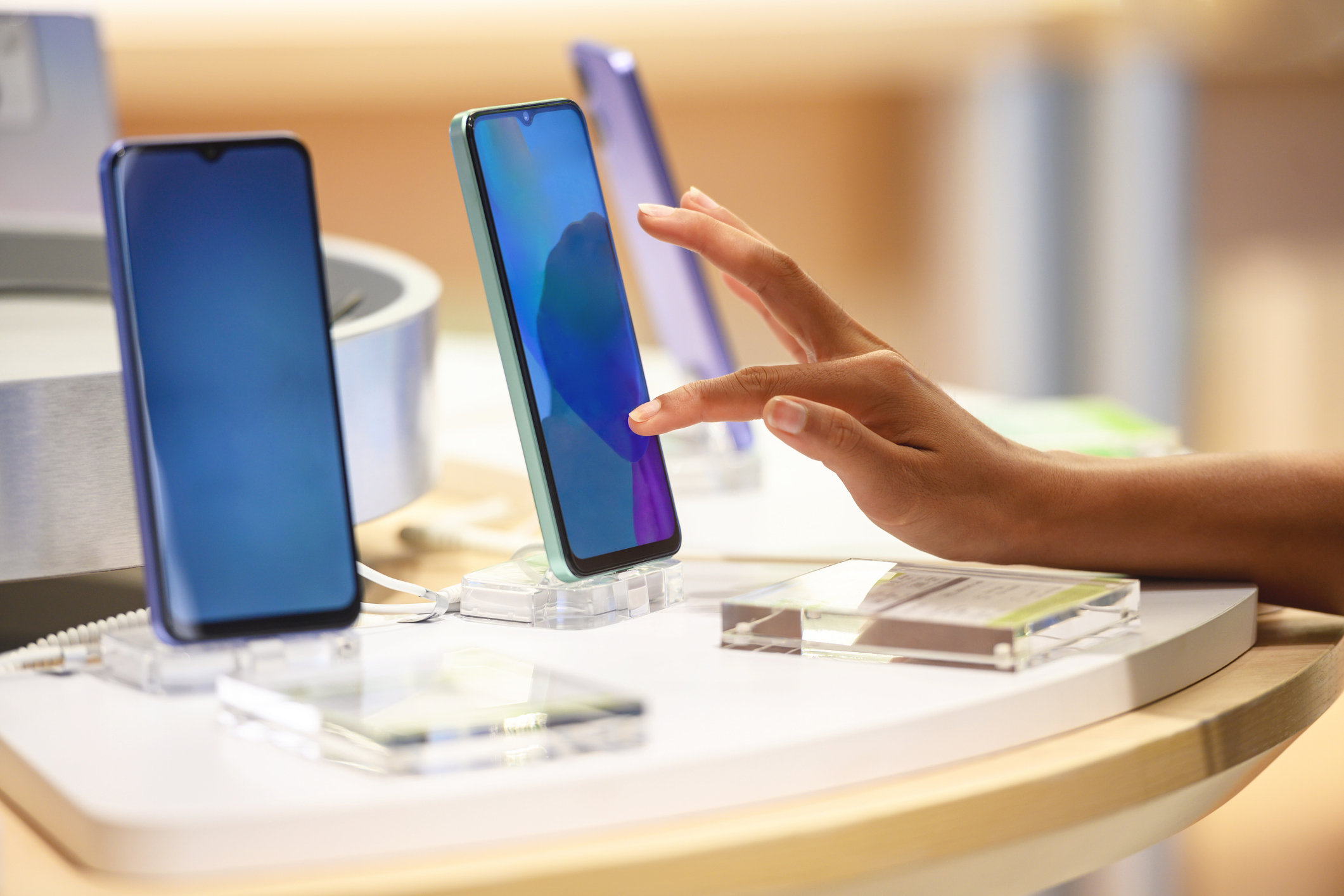
If you’re thinking of switching to a prepaid phone plan, the following tips can help ensure you won’t lose your service quality:
- Check network compatibility: If you want to bring your current phone, visit the carrier’s website and enter your device’s IMEI into their IMEI checker to make sure it’s compatible.
- Evaluate coverage maps: Check the carrier's coverage map to make sure that coverage is available in the areas you use your phone most frequently.
- Prepare to port your number: If you want to port your current number, check with the new carrier to make sure that it’s eligible. Keep your old service active until your number is ported, which can take a few hours up to a few days.
- Avoid hidden fees: Many prepaid plans are upfront about fees, but some carriers still hide fees in the fine print. Carefully read all of the documentation available for the plan you’re considering, and look for extra fees like activation fees, taxes and surcharges and international roaming fees.
A prepaid plan can lower your wireless costs — in some cases by $1,000 or more per year — but it isn’t the right fit for every user. Before switching, consider how you use your phone day to day, especially if you rely on fast data speeds or frequent hotspot access.
Prepaid plans can come with trade-offs, including slower speeds during network congestion, fewer perks and less generous device promotions. Weigh those limitations against the savings to decide whether the lower monthly price is worth it for your needs.
Related Content
- Keeping Your Number When You Switch Phone Plans: What Can Go Wrong and How to Avoid It
- Pay-As-You-Go vs. Monthly Plans: Which Saves More for Light Phone Users?
- One of T-Mobile’s Most Valuable Offers for Seniors
 Paige CerulliContributor
Paige Cerulli is a freelance journalist and content writer with more than 15 years of experience. She specializes in personal finance, health, and commerce content. Paige majored in English and music performance at Westfield State University and has received numerous awards for her creative nonfiction. Her work has appeared in The U.S. News & World Report, USA Today, GOBankingRates, Top Ten Reviews, TIME Stamped Shopping and more. In her spare time, Paige enjoys horseback riding, photography and playing the flute. Connect with her on LinkedIn.
Latest-
 Job Growth Sizzled to Start the Year. Here's Why It's Unlikely to Impact Interest Rates
The January jobs report came in much stronger than expected and the unemployment rate ticked lower to start 2026, easing worries about a slowing labor market.
-
 The High Cost of Sunshine: How Insurance and Housing Are Reshaping Snowbird Living
The snowbird lifestyle is changing as insurance and housing costs climb. Here’s how retirees are adapting and where they’re choosing to go.
-
 Dad Is a 68-Year-Old Widower, Forced to Retire. How Can I Help?
My dad is fun and handsome, but reeling after so much loss. Relationship experts give their advice.
-
 Tariffs: An Uninvited Valentine's Day Guest
Expect to pay more for flowers and chocolates this year or find creative alternatives to save on Valentine's Day without looking cheap.
-
 How Much It Costs to Host a Super Bowl Party in 2026
Hosting a Super Bowl party in 2026 could cost you. Here's a breakdown of food, drink and entertainment costs — plus ways to save.
-
 8 Things You Need to Stop Wasting Money on in 2026
Want to get your finances in shape this year? Start by cutting out these sneaky sources of waste in your budget.
-
 Samsung Galaxy S25 Ultra for $4.99 a Month: A Closer Look at Verizon’s Deal
Verizon’s aggressive pricing makes Samsung’s top-tier phone tempting, but the real cost depends on your plan and how long you stay.
-
 Are T-Mobile's Prepaid Perks a Home Run or a Strikeout?
T-Mobile's prepaid lineup promises MLB.TV, T-Mobile Tuesdays and hotspot data. But do the perks make it worth switching?
-
 23 Last-Minute Gifts That Still Arrive Before Christmas
Scrambling to cross those last few names off your list? Here are 23 last-minute gifts that you can still get in time for Christmas.
-
 Verizon’s 4-Line Phone Promo Offers Strong Value for Families Upgrading to Premium Devices
Families can upgrade to top-tier smartphones for $25 a line with Verizon’s newest offer.
-
 Top Tech Gifts You Can Still Get Before Christmas from Walmart
Big savings on Apple, Bose, HP, Vizio and more while there's still time to shop.
