- News
Hong Kong residents and experts are pushing back against claims that bamboo scaffolding was a key reason for the city's deadliest fire in decades
Chan Ho-HimThursday 04 December 2025 05:55 GMTHong Kong residents and experts defend bamboo scaffolding after deadly fire
Show all 5

For free real time breaking news alerts sent straight to your inbox sign up to our breaking news emails
Sign up to our free breaking news emails
Sign up to our free breaking news emails
Email*SIGN UPI would like to be emailed about offers, events and updates from The Independent. Read our Privacy notice
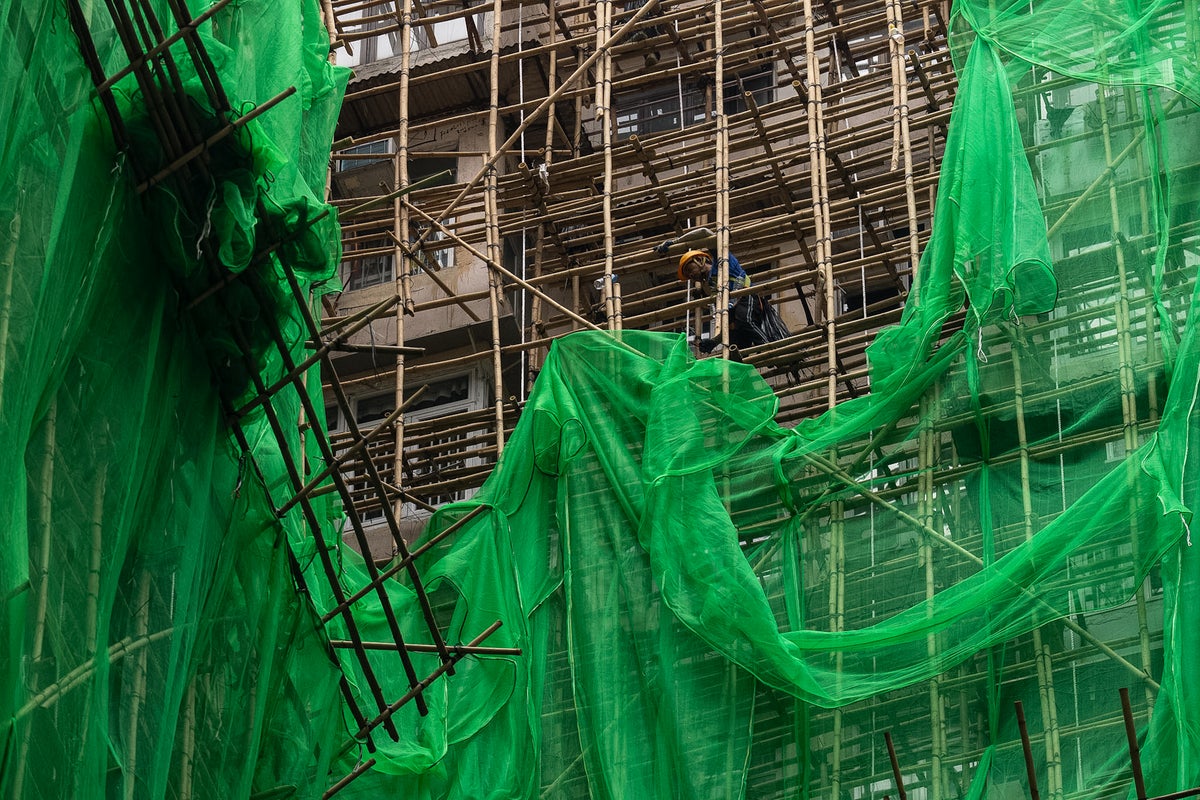
Hong Kong residents, construction professionals and former senior officials are pushing back against the idea that bamboo scaffolding was a main reason flames spread so quickly in the city’s deadliest blaze in decades, as a debate flares over whether it should be replaced.
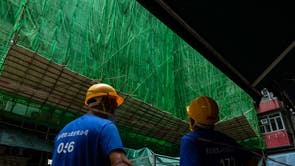
Authorities were quick to focus on the traditional scaffolding enveloping the apartment buildings at the Wang Fuk Court complex -- where the fatal Nov. 26 blaze spread from one tower to seven, killing at least 159 people. While much of the green netting covering the scaffolding incinerated, some of the bamboo scaffolding also burned and fell, and officials have stepped up plans to replace it.
Bamboo scaffolding is a common sight on Hong Kong high rises, though mainland China and places elsewhere in Asia have mostly begun using metal alternatives.
An industry union says Hong Kong has an estimated 3,000 workers registered to erect bamboo scaffolding, a construction technique dating back hundreds of years.
Experts are skeptical about blaming bamboo
“I would be very cautious about blaming bamboo itself before the full investigation reports are published,” said Kristof Crolla, an associate professor of architecture at the University of Hong Kong whose focus includes bamboo architecture.
As a natural material, bamboo can be combustible, Crolla said. But “when it is properly used and combined with certified fire-retardant netting it is comparatively hard to ignite.”
During the fire, flames shot up the bamboo scaffolding erected for external maintenance work,-as well as the green netting draping it. But bamboo is usually not “easily ignited," said Raffaella Endrizzi, an architect who researches bamboo scaffolding who teaches at the Chinese University of Hong Kong. “Focusing on bamboo alone risks obscuring more systemic safety issues,” she said.
Last week, as firefighters battled the deadly inferno for a second day, the city’s chief secretary for administration, Eric Chan, told reporters that bamboo scaffolding's fire resistance was “inferior” to that of metal scaffolding.
The city's top leader, John Lee, said officials had met with construction industry representatives to discuss timelines for switching to metal scaffolding. Metal should be used for safety reasons when possible, Chan said.
The initial cause of the fire is under investigation. So far, experts have found that some of the green netting wrapped around the bamboo scaffolding was substandard and that flammable foam boards were used to seal windows during the months' long renovations. Those were the main factors causing the fire to spread to seven of the eight buildings in the Wang Fuk Court complex, said Secretary for Security Chris Tang.
Pushback from residents and former officials
One note in Chinese left among a mountain of bouquets placed near the disaster site stood out: “it’s not the bamboo scaffolding that should be reviewed, but the whole system." Many others have posted similar comments on social media.
Putting the blame on bamboo scaffolding is a “lazy, scapegoating” move that distracts from deeper issues, Regina Ip, a former Hong Kong secretary for security who is an adviser to the chief executive, Lee, wrote Tuesday in the local newspaper Ming Pao.
“It would be a great pity to hastily decide on banning bamboo scaffolding -- which is flexible to use -- because of this incident,” John Tsang, a former Hong Kong financial secretary, wrote on his Facebook page.
“Anyone with common sense knows that bamboo isn’t so easy to burn,” he said.
Challenges in replacing bamboo scaffolding
Those defending bamboo scaffolding say it's uniquely suited to Hong Kong’s dense, irregular urban landscape.
“It’s light, fast, adaptable, and supported by generations of skilled scaffolders -- qualities that have shaped the city’s skyline and construction pace,” said Endrizzi, of the Chinese University of Hong Kong.
The two cannot be so easily substituted, said the University of Hong Kong's Crolla.
For one, “bamboo scaffolding (can) be threaded through very tight urban conditions and irregular façades in ways that metal systems often cannot,” he said.
Ehsan Noroozinejad, a senior researcher focusing on construction and infrastructure at Western Sydney University, said aluminum or steel scaffolding is non-combustible and could last longer. But it's also heavier and can take more time to set up and dismantle.
Bamboo costs half or less than metal scaffolding, said Ho Ping-tak, chairman of the Hong Kong and Kowloon Bamboo Scaffolding Workers Union. He questioned how willing residents at older buildings needing external renovations would be to pay more.
Wider issues have surfaced
Broader issues of suspected bid-rigging and use of substandard construction materials in other building maintenance and renovation projects have dominated discussions as the city mourns victims of the fire.
“Switching materials alone (from bamboo to metal scaffolding) won’t address underlying problems around specification, enforcement, and site supervision,” said Endrizzi. Policy changes should be based on evidence because otherwise Hong Kong risks disrupting a system that has worked for decades, while failing to crack down on regulatory problems and the use of unauthorized construction materials, she said.
Authorities have arrested at least 15 people in a probe into suspected corruption and negligence at the renovation project.
That has raised questions about government oversight, since residents at Wang Fuk Court raised fire safety concerns about the construction materials, including the netting, a year earlier.
After the fire, contractors at several other Hong Kong housing estates undergoing exterior maintenance work began removing netting covering scaffolding. On Wednesday, officials ordered the removal of external scaffolding nets at hundreds of buildings undergoing major renovations or maintenance. They are to be tested before they are reinstalled.
An independent committee will investigate the cause of the fire, said Hong Kong’s top leader Lee. He pledged systemic changes in the construction industry to prevent further such tragedies.
“We must uncover the truth, ensure that justice is served,” he said.
___
AP photographer Chan Long Hei in Hong Kong and AP business writer Elaine Kurtenbach contributed to this report.