- Space
‘We’re looking at events near the beginning of the beginning’
Julia Mustoin New YorkWednesday 03 December 2025 20:38 GMTComments
 CloseCome on the Journey To Learn More About Extinction-Level Asteroids
Sign up to our free weekly IndyTech newsletter delivered straight to your inbox
Sign up to our free IndyTech newsletter
Sign up to our free IndyTech newsletter
Email*SIGN UPI would like to be emailed about offers, events and updates from The Independent. Read our Privacy notice
NASA has found sugars essential for life on Earth in samples of the 4.6 billion-year-old Bennu asteroid.
Scientists discovered glucose, the human body’s main source of energy, as well as the critical RNA ingredient ribose, the agency said Tuesday.
This marks the first time ribose has been found in an extraterrestrial sample.
Although the sugars are not evidence of extraterrestrial life, NASA said it shows that crucial ingredients for life’s chemistry are widespread throughout the solar system.
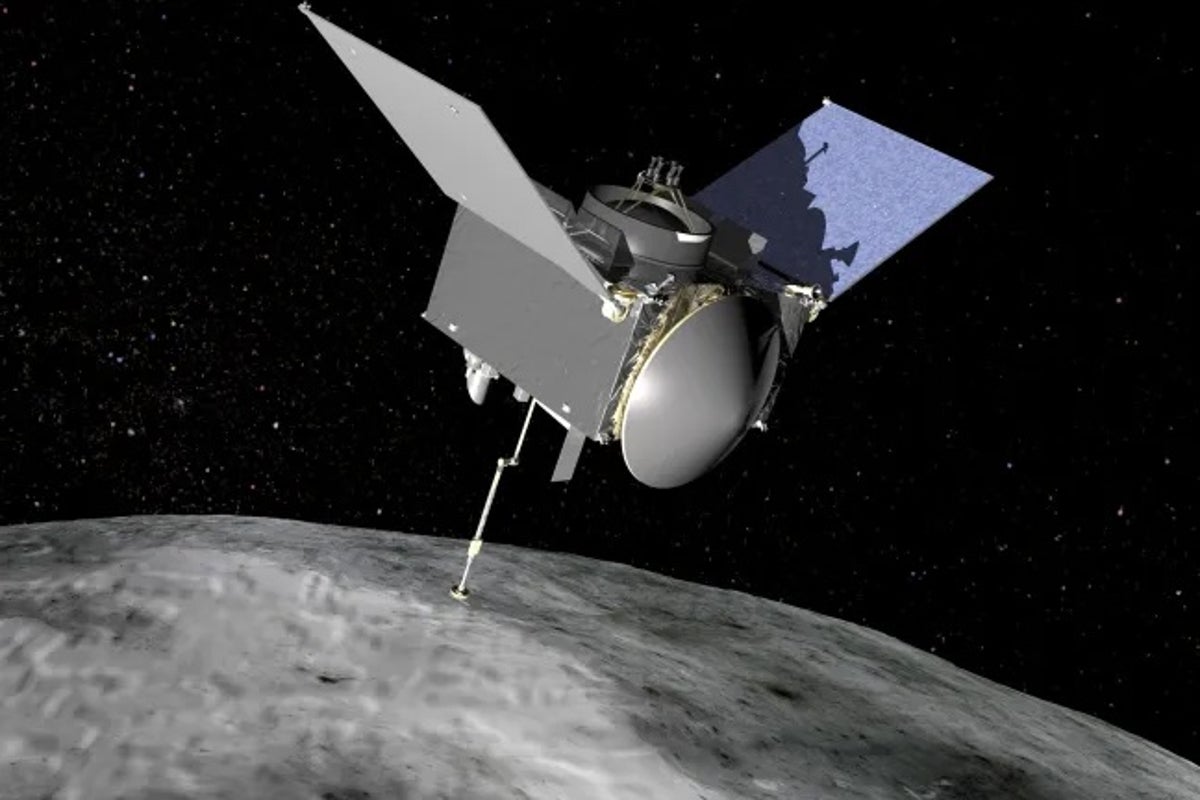
The samples were collected from the 1,600ft-wide asteroid by the OSIRIS-REx spacecraft in 2020. The spacecraft launched in 2016 and returned to Earth in 2023. The samples have since undergone a series of tests.
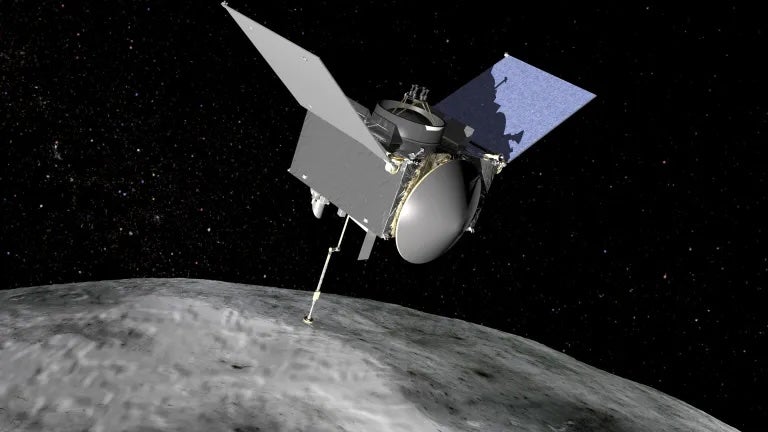 open image in galleryAn illustrative image shows the OSIRIS-REx spacecraft flying over the ancient asteroid Bennu. Samples from the asteroid revealed hidden sugars that are essential for life on Earth (NASA)
Discovered by New Mexico scientists in 1999, Bennu, the size of New York City’s Empire State Building, is now hurtling through outer space, some 160 million miles away from Earth, according to The Sky Live app.
“All five nucleobases used to construct both DNA and RNA, along with phosphates, have already been found in the Bennu samples brought to Earth by OSIRIS-REx,” Dr. Yoshihiro Furukawa, of Tohoku University in Japan, said in a statement.
“The new discovery of ribose means that all of the components to form the molecule RNA are present in Bennu,” he said.
NASA found signs of past microbial life in samples from Mars earlier this year.
Rewriting genetic history
Finding ribose was not a complete surprise, NASA said, because it was previously detected in meteorites recovered on Earth in 2019.
But not finding the sugar deoxyribose, a key building block of our DNA, was also interesting because of what it could mean for the beginnings of life.
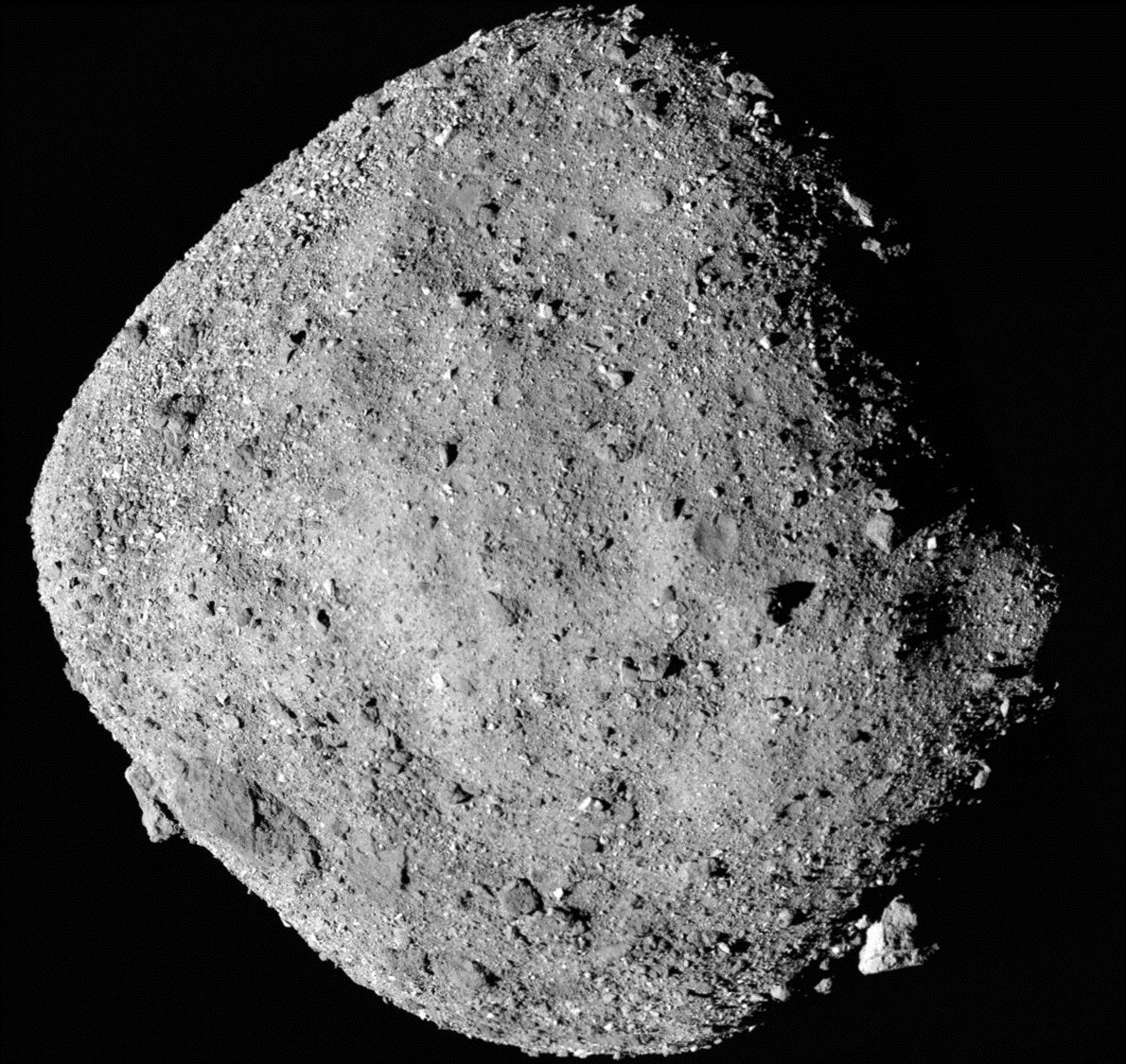 open image in galleryThis mosaic image of the asteroid Bennu was taken by the OSIRIS-REx spacecraft in December 2018. The asteroid is 1,600 feet wide (NASA/Goddard/University of Arizona)
This means ribose may have been more common than deoxyribose in environments of the early solar system and could support the theory that the first forms of life relied on RNA for survival.
“Present day life is based on a complex system organized primarily by three types of functional biopolymers: DNA, RNA, and proteins,” said Furukawa. “However, early life may have been simpler.”
Mysterious and ancient space gum
The sugars aren’t all scientists found in the asteroid’s samples. The researchers found ancient and mysterious “space gum” — something never seen before in space rocks.
NASA says this translucent rubber- and plastic-like substance could have helped create life on Earth and that the gum was likely made in the early days of the solar system.
The larger “parent” asteroid, that Bennu broke off, formed from materials in the cloud of gas and dust that eventually led to the creation of our solar system.
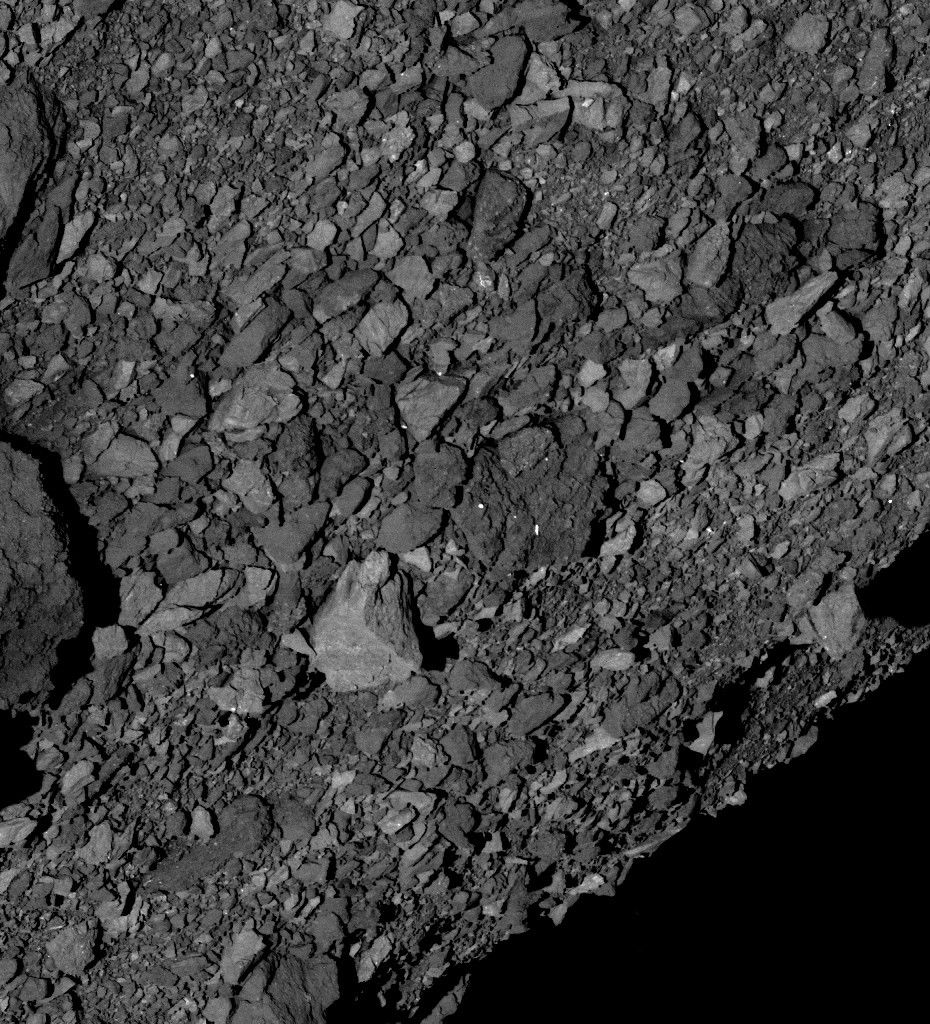 open image in galleryThis image taken by NASA’s OSIRIS-REx spacecraft in March 2019 shows a view across asteroid Bennu’s southern hemisphere and into space (NASA)
Previous research showed that the parent asteroid survived various chemical processes involving heat and water during the solar system’s formation.
As Bennu’s ancestor began to warm due to radiation from this process, a chemical compound known as carbamate was produced and later reacted with other molecules to create the flexible “gum” the scientists found.
“With this strange substance, we’re looking at, quite possibly, one of the earliest alterations of materials that occurred in this rock,” said research scientist Dr. Scott Sandford, of NASA’s Ames Research Center.
“On this primitive asteroid that formed in the early days of the solar system, we’re looking at events near the beginning of the beginning.”
More about
NasaasteroidLifeextraterrestrial lifesolar systemJoin our commenting forum
Join thought-provoking conversations, follow other Independent readers and see their replies
Comments