- Home
Edition
Africa Australia Brasil Canada Canada (français) España Europe France Global Indonesia New Zealand United Kingdom United States Edition:
Global
Edition:
Global
- Africa
- Australia
- Brasil
- Canada
- Canada (français)
- España
- Europe
- France
- Indonesia
- New Zealand
- United Kingdom
- United States
Academic rigour, journalistic flair
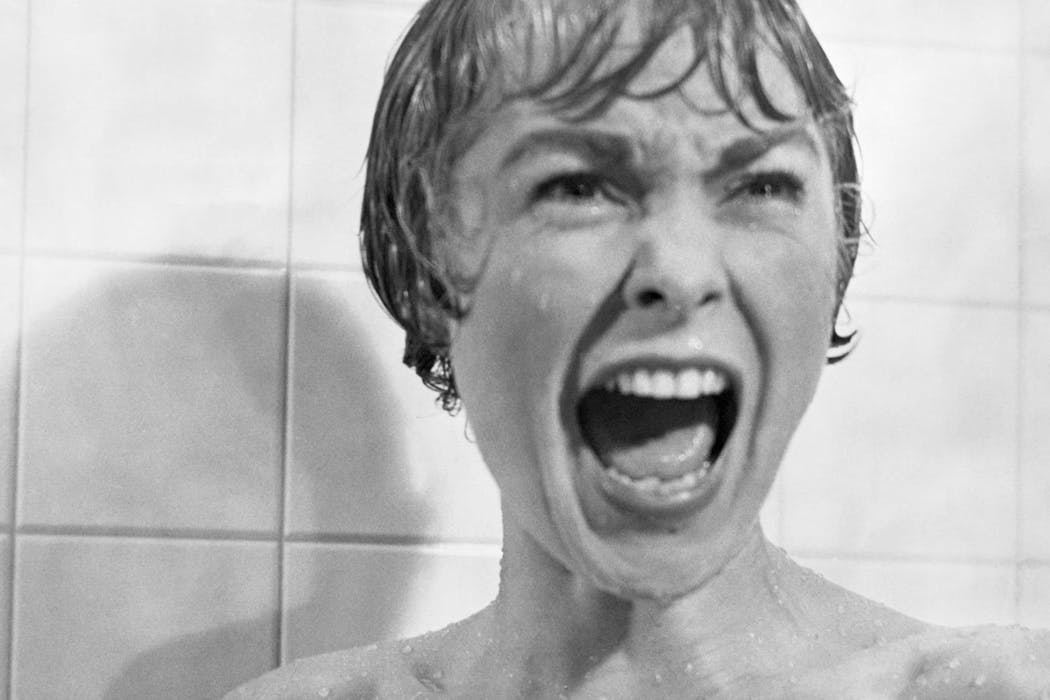
 Psycho (1960)
The scariest stuff is what you can’t see: how we got the sound of horror films
Published: December 3, 2025 6.36pm GMT
Will Jeffery, University of Sydney
Psycho (1960)
The scariest stuff is what you can’t see: how we got the sound of horror films
Published: December 3, 2025 6.36pm GMT
Will Jeffery, University of Sydney
Author
-
 Will Jeffery
Sessional Academic, Discipline of Film Studies, University of Sydney
Disclosure statement
Will Jeffery does not work for, consult, own shares in or receive funding from any company or organisation that would benefit from this article, and has disclosed no relevant affiliations beyond their academic appointment.
Partners

University of Sydney provides funding as a member of The Conversation AU.
View all partners
DOI
https://doi.org/10.64628/AA.h7wnek6py
https://theconversation.com/the-scariest-stuff-is-what-you-cant-see-how-we-got-the-sound-of-horror-films-267639 https://theconversation.com/the-scariest-stuff-is-what-you-cant-see-how-we-got-the-sound-of-horror-films-267639 Link copied Share articleShare article
Copy link Email Bluesky Facebook WhatsApp Messenger LinkedIn X (Twitter)Print article
I was recently watching a scene from the 2025 film Weapons for a monograph I’m writing and noticed a familiar sound: a low, unsettling drone as a character walks down a hallway.
It’s the same kind of sound used in recent horror films such as Together (2025). You can also hear it throughout the trailer for the 2025 film Shelby Oaks, where sound throbs like an invisible threat.
We never see what’s making this sound or where it comes from within the film’s world, which only makes it more disturbing.
It’s become so common that, in The Filmmaker’s Guide to Horror, Danny Draven advises aspiring directors that if a terrified character is creeping through, for example, a dingy basement, they can create atmosphere with “a low drone or rumble”, and so on. “You can be very creative with these situations”, he writes.
This approach is now so embedded in the genre that film scholar William Whittington argues horror uses music and sound effects “far more aggressively and conceptually” than any other genre.
So why do horror films sound like this?
From silence to sound
Horror existed well before synchronised sound arrived in the late 1920s. Films such as The Cabinet of Dr Caligari (1920) and Nosferatu (1922), made during the German Expressionist period, unsettled audiences through distorted sets, eerie lighting and stylised acting.
Once Hollywood transitioned to sound, the horror genre as we know it took shape.
Dracula (1930) and Frankenstein (1931) marked the true beginning of modern horror. Both were cheaply made and contained no musical score. They relied entirely on diegetic sound – the creak of a door, a scream, a character’s footsteps.
As sound technology improved and budgets increased, non-diegetic music (sound not originating in the story world) began to be used more often. This introduced an ongoing tension in horror sound: objective realism versus subjective emotional perspective.
Too early!
The origin of horror films is linked to the origin of cinema itself. According to legend, at the premiere of the Lumière brothers’ 1895 film The Arrival of a Train at La Ciotat Station, audiences panicked, ducking and fleeing as the train on screen seemed to surge toward them.
The film isn’t a horror movie, but the reaction resembles the kind of startled fear horror aims to provoke.
Early audiences had not yet learned how to watch films – when the train appeared too suddenly coming at them, their bodies reacted before their minds could catch up.
This “too early” sensation – events occurring before we are ready for them – became a defining feature of horror.
In Cat People (1942), often cited as the first true jump scare, a young woman walks alone at night, hearing what she believes is a stalking presence. When the sound of a bus suddenly hisses into the scene, it startles both her and the audience.
The scare works not because of what we see, but because the sound arrives too soon, breaking the tension in a shock of noise – a modern echo of that onrushing Lumière train.
Film theorist Linda Williams describes horror as structured around the anxiety of not being ready, the problem of things happening “too early”.
Where melodrama deals in tragic lateness – arriving too late to save someone – horror delivers the opposite: the terror of being unprepared.
Music that stings
Sounds that arrive too early are not limited to horror. Classical Hollywood frequently used the “stinger”: a sudden burst of music to underline a dramatic moment.
In Ben-Hur (1959), when Judah declares to Messala, “I am against you,” a sharp orchestral shock of brass and strings announces the rupture between the two friends.
In 1960, Psycho changed the function of the musical stinger forever.
In the famous shower scene, Bernard Herrmann’s shrieking violins don’t highlight a plot point – they stab. The music becomes the attack. Audiences were stunned, not only because of the brutal sound but because the protagonist was killed so early in the film.
From that moment, horror split into classical and modern eras. Stingers in films like Halloween (1978) signal the killer’s sudden, unexpected entry from an offscreen space. The shock is now the point.
By the late 20th century, sound had become horror’s most powerful tool.
The power of the off-screen
After Psycho, stronger sound technology allowed horror to exploit the off-screen space more fully. The boundary between sound and music blurred: a low drone or rumble might be musical, or it might be part of the film world.
Draven gives another tip to aspiring horror filmmakers:
[it is] often what is happening off screen that can be the scariest – and great, well-planned sound design can take us there.
The first half of Jaws (1975) remains so terrifying because, though we hardly see the shark, its presence is rendered through music – we feel what we cannot locate.
Jump scares increased dramatically in the post-Psycho era.
Paul Schrader’s remake of Cat People in 1982 contains eight jump scares compared to only two in the 1942 original. On the website Where’s The Jump?, the vast majority of films listed in the “High Jump Scare Movies” category are from the 21st century. None were released before the 1980s.
This reflects the “hypersensationalisation” of post-Psycho horror – a genre now driven by sound as much as image.
Contemporary horror still relies on the same principles: anxiety thrives not in what we can see, but in what we can’t.
Low drones, off-screen noises and sudden stingers all work by activating our imagination before we’re ready – inviting us to anticipate the moment when we’ll inevitably think, once again, “too early!”
- Music
- Screen
- Horror films
- Film Music
- Psycho
Events
Jobs
-
 Case Specialist, Student Information and Regulatory Reporting
-
Analyst, Student Information and Regulatory Reporting
-
Senior Manager, Student Information and Regulatory Reporting
-
Respect and Safety Project Manager
-
Associate Dean, School of Information Technology and Creative Computing | SAE University College
 Case Specialist, Student Information and Regulatory Reporting
 Analyst, Student Information and Regulatory Reporting
 Senior Manager, Student Information and Regulatory Reporting
 Respect and Safety Project Manager
 Associate Dean, School of Information Technology and Creative Computing | SAE University College
- Editorial Policies
- Community standards
- Republishing guidelines
- Analytics
- Our feeds
- Get newsletter
- Who we are
- Our charter
- Our team
- Partners and funders
- Resource for media
- Contact us
-
-
-
-
Copyright © 2010–2025, The Conversation