 By Ryan ChanShareNewsweek is a Trust Project member
China, a major power with the world's numerically largest navy, could adopt a nuclear-powered design for its next aircraft carrier as the military giant extends its reach in the Pacific, analysts say.
Why It Matters
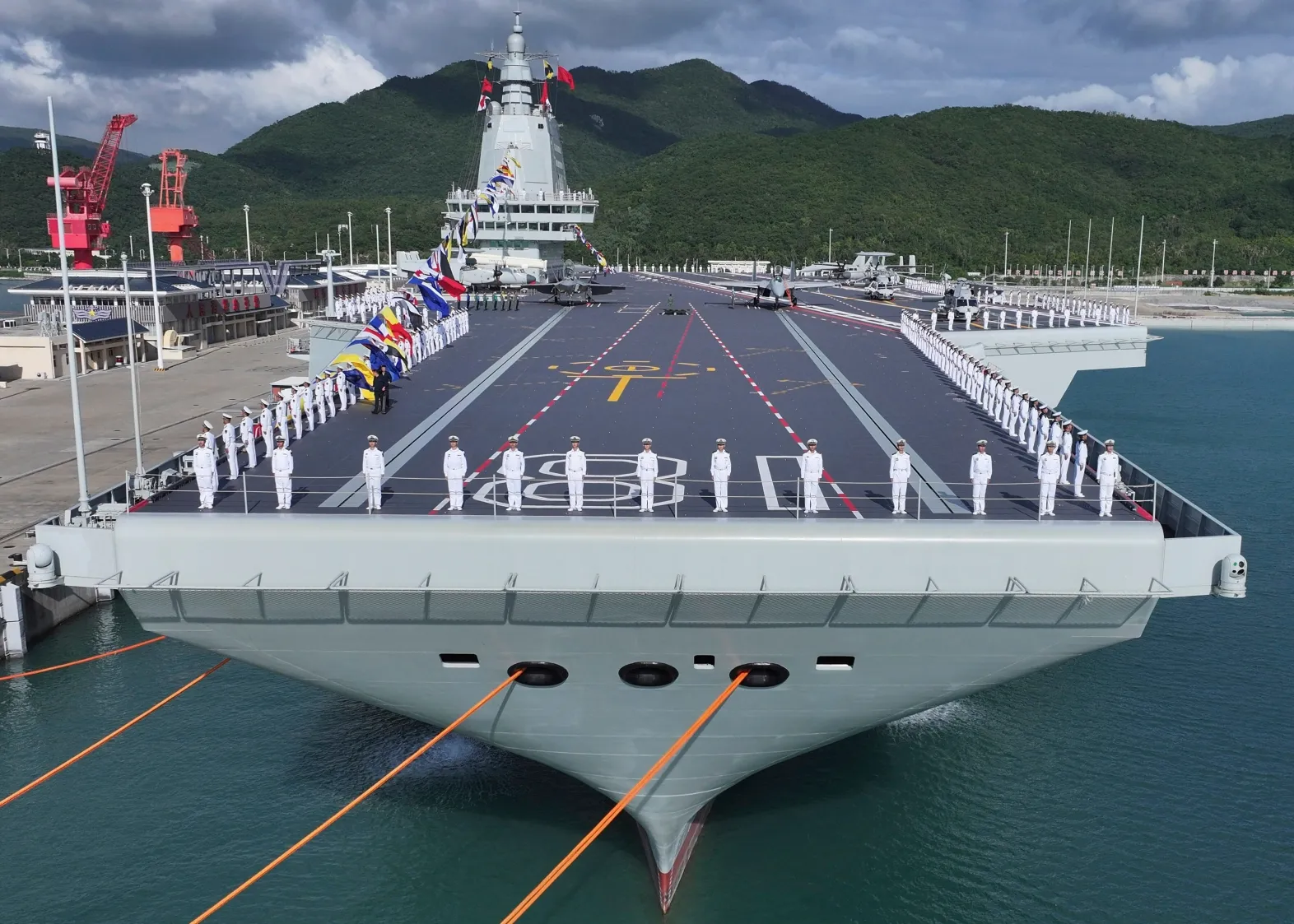
The Pentagon believes China operates over 370 naval ships and submarines, including three aircraft carriers. The third and most advanced, the CNS Fujian, was officially put into service in early November at a ceremony attended by President Xi Jinping, whose aim is to build a "world-class" military.
Unlike the United States, which operates the world's largest aircraft carrier fleet with 11 vessels, all Chinese aircraft carriers are conventionally powered rather than nuclear-powered, limiting their range, endurance and mobility compared with their American counterparts, whose reactors need only a single refueling for a 50-year service life.
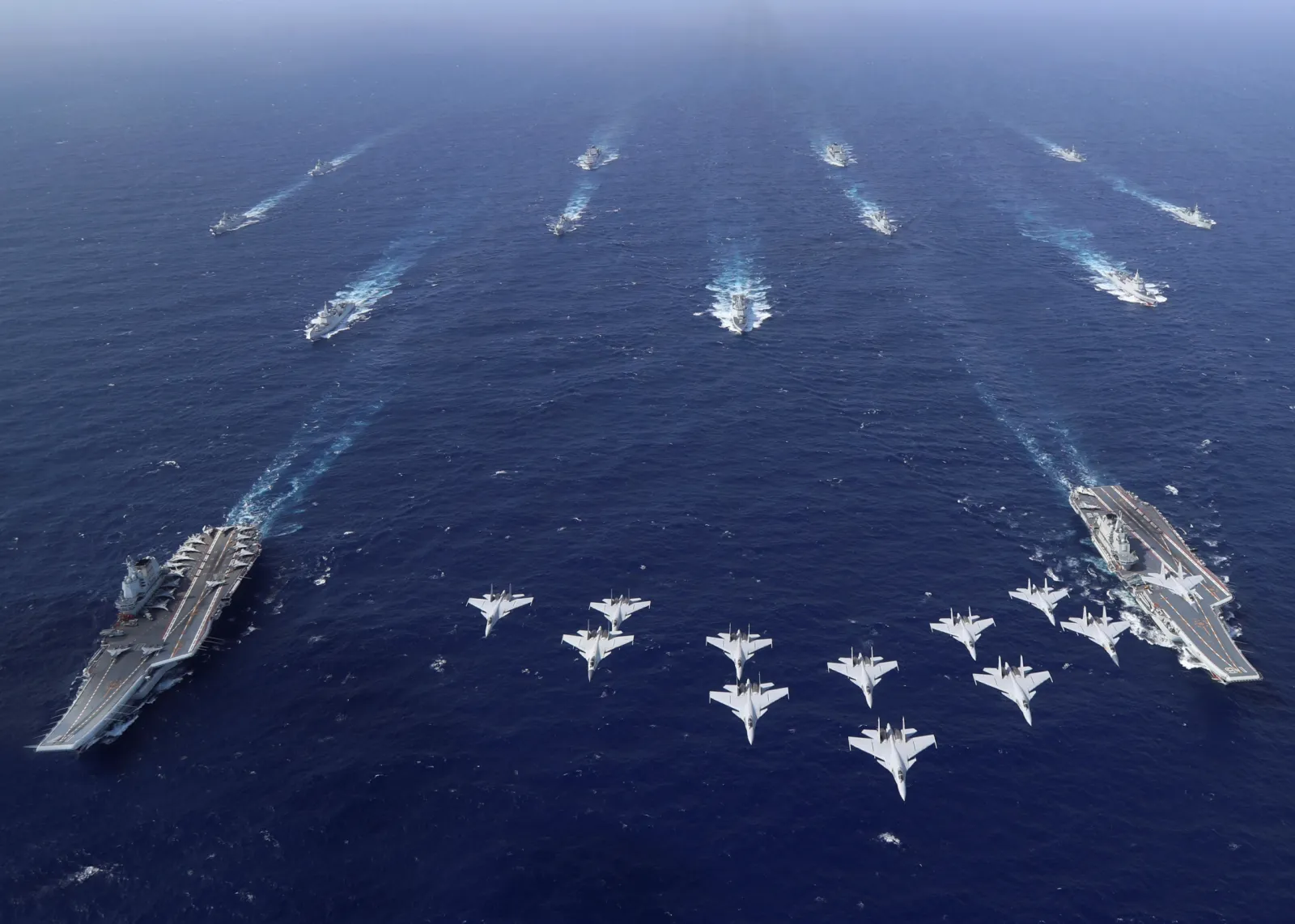
Serving as floating air bases at sea, aircraft carriers have become a symbol of China's military power, with Beijing increasing the frequency of their deployments, including a dual aircraft carrier mission in June in the Western Pacific, demonstrating a rapidly growing naval capability to project forces far beyond the country's immediate waters.
"The future development plans for China's aircraft carriers will be comprehensively considered based on national defense needs," Liu Pengyu, spokesperson for China's embassy in Washington, D.C., said in an email statement to Newsweek, adding that the country's "defensive" national defense policy will remain unchanged.
Strategic Goals
"If China's long-term ambition is to aggressively contest U.S. dominance beyond East Asia, then nuclear-powered carriers would be an important piece of the puzzle," Kitsch Liao, associate director of the Atlantic Council's Global China Hub, told Newsweek.
However, China would first need to build a mature conventional aircraft carrier force to form and maintain what Liao called a "cohesive" presence east of Taiwan in the short term. Beijing has long threatened to take the self-ruled island by force.
 ...
...Should the U.S. military—particularly the Air Force and the Navy—come to Taiwan's aid in the event of a Chinese invasion, China could deter and hinder American military intervention by deploying aircraft carriers in the Philippine Sea east of the island.
"If China's posture is defensive and aims to safeguard or even coerce but not conduct military operations against its East Asian neighbors, then conventional carriers would suffice," Liao said, noting that such vessels require significant and constant resupply.
Collin Koh, senior fellow at the Institute of Defense and Strategic Studies in Singapore, said the Chinese navy had shifted its focus to far-seas power projection beyond the first island chain, making a move to nuclear-powered aircraft carriers strategically sensible.
Under a U.S. containment strategy, the first island chain is a north-south line that includes Japan, Taiwan and the Philippines, aimed at deterring and defending against Chinese aggression via forward power projection. The second island chain centers on Guam.
Koh told Newsweek that nuclear reactors would provide a stable and sustainable energy source for future high-tempo aircraft carrier operations without imposing limitations, given China's adoption of electromagnetic catapults that consume large amounts of power,
Challenges Ahead
However, a Chinese military observer, speaking on condition of anonymity because of the sensitive nature of the topic, stated that if China aimed to project power beyond the Western Pacific, a nuclear-powered aircraft carrier would not be the most critical factor.
"This is because the logistical support required for a global navy far exceeds the fuel demands of the carrier itself," the observer told Newsweek, adding that escort ships and the aircraft carrier's jets and helicopters would consume substantial amounts of fuel.
While China is expanding its military footprint across the Indo-Pacific, it still lacks a vast, comprehensive logistical network in the region like that of the U.S., whose Navy can refuel ships on allied territory to support its overseas military missions.
A nuclear-powered aircraft carrier would mark the first time China fields nuclear propulsion on a large naval vessel beyond submarines, Koh said. Challenges include ensuring the reactors are safe enough to operate efficiently on such a complex naval platform.
 ...
...Despite facing "significant technical challenges," the Chinese military observer said China may follow its previous shipbuilding approach of first developing an experimental prototype before making iterative improvements.
Other challenges would include manpower, according to Liao. The Chinese navy operates 12 nuclear-powered submarines, significantly fewer than U.S. and Russia, which could impact the training of personnel for nuclear-powered aircraft carriers.
The issue of scaling up "training pipelines" to provide sufficient skilled personnel could worsen if China also plans to expand its nuclear-powered submarine fleet to match the posture suggested by the commissioning of nuclear aircraft carriers, Liao noted.
What People Are Saying
Kitsch Liao, associate director of the Atlantic Council's Global China Hub, said: "[The People's Liberation Army Navy]'s near-term carrier employment will be focused on flanking Taiwan's defense forces, while providing a protective cordon between the first and second island chain against U.S. and allied intervention of a Chinese invasion of Taiwan. This means supply chain issues would be less severe for conventional carrier groups, but reliability and capacity in the short term needs to take precedence."
Collin Koh, senior fellow at the Institute of Defense and Strategic Studies in Singapore, said: "All in all, it would make strategic, operational and technical sense for the [People's Liberation Army] Navy to turn to nuclear propulsion for its future aircraft carriers. I don't suppose if Beijing seeks at least parity with, if not outright superiority over, the U.S. Navy aircraft carriers it would be contented with just conventional propulsion whereas the Americans continue to enjoy the advantage of nuclear—which could make a key difference in a future naval campaign."
A Chinese military observer said: "I'm rather skeptical about China's ambition to build a global navy like the U.S. Navy, this is not reflected in China's political and diplomatic approach."
Liu Pengyu, spokesperson for China's Embassy in Washington, D.C., said: "China's development and improvement of weaponry are not directed against any country or specific target, nor do they pose a threat to any country or region. They are solely for the purpose of safeguarding national sovereignty, security, and development interests."
What Happens Next
Following the commissioning of the Fujian, defense outlet The War Zone reported that recent imagery suggests China is developing its first nuclear-powered aircraft carrier.
However, it remains unclear how many additional aircraft carriers—nuclear or conventionally powered—China will build to meet its strategic and operational needs.
Request Reprint & LicensingSubmit CorrectionView Editorial & AI Guidelines Add Newsweek as a preferred source on Google to see more of our trusted coverage when you search.
Recommended For You
WorldChina’s Next Aircraft Carrier Could Be Nuclear-Powered—What To Know6 min read WorldPutin Ally Tirades at ‘Crazy Hags’3 min read
 WorldSatellite Photos Capture Chinese Naval Fleet Alarming US Pacific Ally4 min read
 WorldChina Confronts US Ally at Disputed Territory3 min read
 WorldDonald Trump’s Honduras Gamble Hangs in Balance as Election Results Turn4 min read
 WorldColombia Issues New Statement on Trump’s Military Threat4 min read
Related Podcasts
Top Stories
 NewsExclusive: Democrat Targets Trump’s $175B Immigration Funds for Housing7 min read
 NewsUkraine War Live Updates: Russia Says No ‘Compromise’ Peace Deal Reached2 min read
 NewsVideo of Hegseth Telling Military Not to Follow ‘Illegal Orders’ Resurfaces5 min read
 NewsDonald Trump’s Major Medicaid Cuts for Abortions Blocked4 min readWorldDonald Trump’s Honduras Gamble Hangs in Balance as Election Results Turn4 min read
 PoliticsRepublican Ousted By Democrat In Georgia1 min read
Trending
 WeatherList of Schools Closed Tuesday as Snowstorm Hits4 min read
 TennesseeTennessee Special Election: Behn Teases Another Run After Losing to Van Epps2 min read
 Winter StormWinter Storm Warning As 12 Inches of Snow To Hit: ‘Delay All Travel’3 min read
 ViralCat Arrives at Vet for Neuter, Staff Not Ready for What’s in the Carrier3 min read
 ImmigrationGreen Card Update: New Changes for Holders in December6 min read
Opinion
 OpinionHas President Trump Ushered in an Era of Peace in the Middle East? Newsweek Contributors Debate6 min read
 OpinionRand Paul: My Proposal Will Improve Health Care and Lower Costs | Opinion4 min read
 OpinionBridging the AI Velocity Gap | Opinion5 min read
 OpinionPaving the Way Forward—It’s Time To Build the Roads and Bridges to America’s Next Golden Age | Opinion4 min read
 OpinionHHS Official: How the Working Families Tax Cut Act Strengthens Medicaid for Most Vulnerable | Opinion4 min read