 By Lucy NotarantonioShareNewsweek is a Trust Project member
Aggressive forms of breast cancer may be striking younger women far more often than previously believed, challenging long-held assumptions about who is most at risk.
Emerging evidence suggests that women in their 20s, 30s and early 40s are not only being diagnosed at increasing rates but are also more likely to face fast-growing tumors that can spread quickly if not caught early.
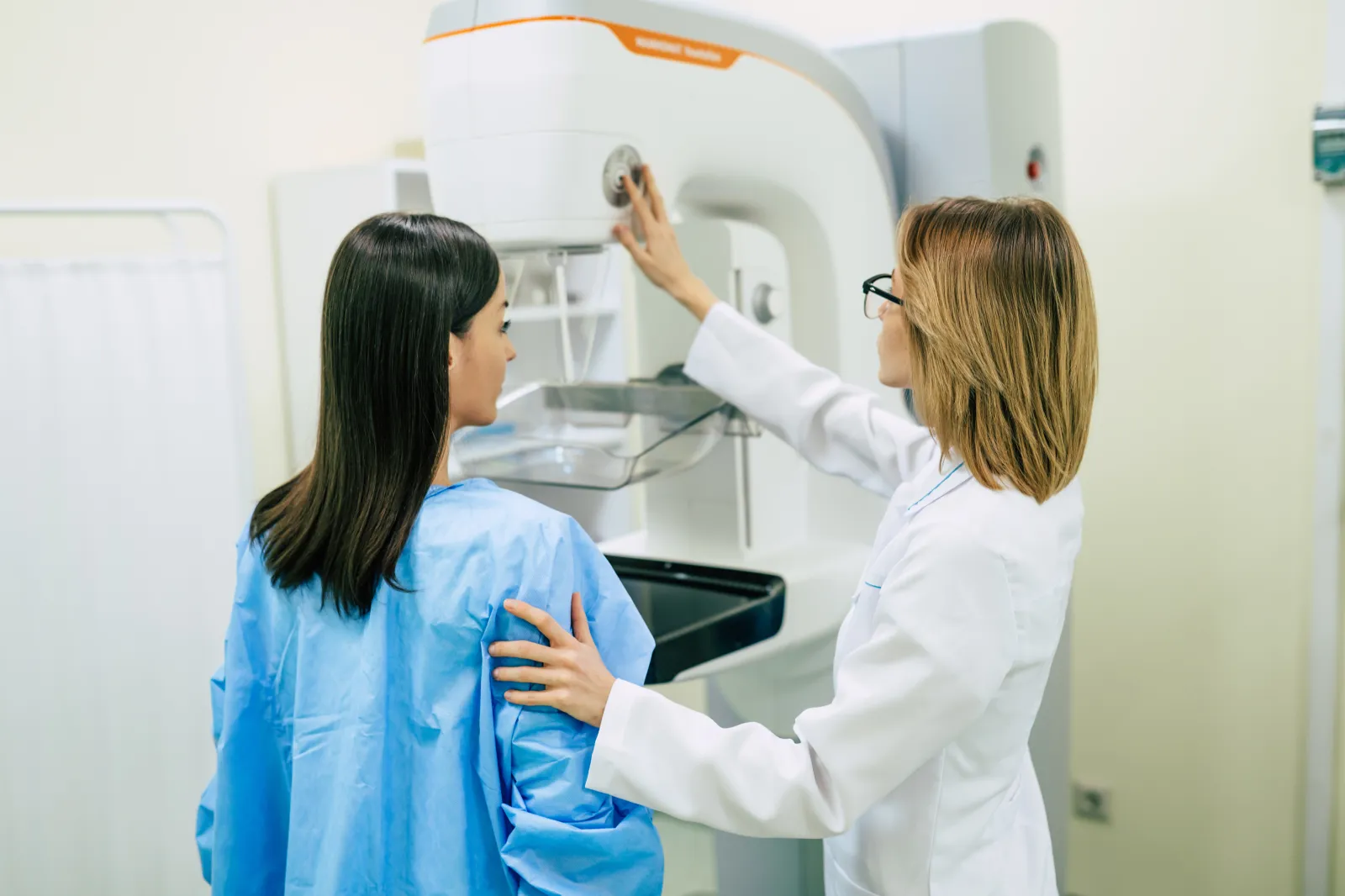
Newsweek spoke to Stamatia Destounis, a radiologist at Elizabeth Wende Breast Care (EWBC) in Rochester, New York, who reviewed breast cancer diagnoses made from 2014 through 2024 across seven outpatient facilities spread over a 200-mile area in Western New York.
She said: “The data clearly show a higher percentage of high grade cancers and triple negative cancers in the younger age group age less than 40 even when compared to 40–49.”
 ...
...Almost One Quarter of Cases Occur Before 50
Researchers found that 20–24 percent of all breast cancers diagnosed over an 11-year span occurred in women between 18 and 49 years old.
The American Cancer Society (ACS) says breast cancer is the most common cancer in women in the United States except for skin cancers. According to the ACS, the median age at diagnosis is 62. But the research reviewed by Destounis and EWBC research manager Andrea L. Arieno, found the average age at diagnosis was 42.6 years.
Destounis told Newsweek: “As for the mechanism behind this likely there are many, genetics, environmental hormonal but our study focused on ages of cancer diagnosis and types of tumors found not what the underlying cause is.
“We are looking at family history, genetic mutations race ethnicity and so far, the numbers seem similar to patients 50 and over with cancer diagnoses at our facilities.”
The researchers identified 1,799 breast cancers in 1,290 women in the 18–49 age group. Each year, the number of cases ranged from 145–196.
Most of the cancers were invasive, meaning they could spread beyond the breast—and many were aggressive types, especially among those seen in women under 40. She added that some were triple-negative, a form of breast cancer that is harder to treat because it does not respond to common hormone-based therapies.
Although women under 50 made up only 21–25 percent of those screened each year, they still represented about one out of every four breast cancers detected annually.
"This is striking because it shows that younger women not only carry a stable and substantial share of the breast cancer burden but their tumors are often biologically aggressive," Destounis said in a statement.
"That combination, steady incidence plus disproportionately aggressive biology, directly challenges age-based screening cutoffs and strengthens the case for earlier, risk-tailored screening approaches."
Possible Drivers and Risk Factors
Newsweek also spoke to Lisa Jacques, lead cancer nurse specialist at Perci Health, a virtual care clinic that provides support to people with cancer.
She said: “Breast cancer in younger women is still relatively uncommon but we are seeing a gradual increase in diagnoses. There isn’t a single explanation but several factors are likely contributing to this rise.”
Jacques pointed to lifestyle contributors including:
- Obesity
- Alcohol consumption
- Sedentary lifestyle
- Environment
“Another important factor is genetics,” added Jacques. “Younger women who develop breast cancer are more likely to carry an inherited gene variant, such as BRCA1 or BRCA2, so increased access to genetic testing means more of these cases are being identified.”
Destounis told Newsweek: “We are looking into all possible effects but so far no clear pattern has emerged and likely this is a topic that will be studied by many extensively.”
What This Means for Screening
 ...
...Destounis said screening decisions should not be based on age alone. She advises young women to pay close attention to their personal and family history.
"Possibly screening earlier for some women, could help detect these cancers sooner," she added.
Jacques added: “For younger women, screening every woman under 50 isn’t recommended at population level because mammograms are less accurate in dense breast tissue and the rate of false positives and unnecessary biopsies is higher.
"Where earlier screening is recommended is for women at higher-than-average risk. This includes those with a strong family history, known inherited gene mutations, or certain other risk factors. These women can be referred to a genetics or breast specialist service, where personalized screening plans often include annual mammograms or MRI starting in their 30s.
“The priority is identifying the women who would genuinely benefit from earlier or more intensive surveillance, rather than lowering the national screening age for everyone.”
Do you have a tip on a health story that Newsweek should be covering? Do you have a question about breast cancer? Let us know via [email protected].
Request Reprint & LicensingSubmit CorrectionView Editorial & AI Guidelines Add Newsweek as a preferred source on Google to see more of our trusted coverage when you search.
Recommended For You
 LifeThe Surprise Second Lego Portrait in Melania Trump’s Christmas Decor3 min read
 Food & DrinkMap Shows Where Arby’s Has Shut Down Restaurants in 20253 min read
 PetsTop 5 calmest dog breeds if you already have a cat5 min read
 LifeMan Gets Message From Stranger Online, Not Prepared for What He Reveals3 min read
 Family & ParentingWoman Sends Husband To Find Christmas Décor—Horror at What Happens Next3 min read
 PetsSenior Dog Gets ‘Swept Out’ of Front Yard by Wind, CCTV Footage Goes Viral3 min read
Related Podcasts
Top Stories
 Live BlogPutin Issues Stark Warning to Europe As He Meets Witkoff, Kushner—Live Updates3 min read
 NewsDonald Trump Is Trying to Mold Latin America in His Own Image8 min read
 NewsUncommon Knowledge: What Europe Can Teach Trump about Immigration6 min read
 U.S.Aileen Cannon Issued Update on Release of Jack Smith’s Trump Report6 min read
 WorldWho is Admiral Frank Bradley? Commander in Spotlight Over Venezuela Strike4 min read
 NewsPutin ‘Ready to Fight’ NATO Allies5 min read
Trending
 WeatherList of Schools Closed Tuesday as Snowstorm Hits4 min read
 ImmigrationGreen Card Update: New Changes for Holders in December6 min read
 ViralCat Arrives at Vet for Neuter, Staff Not Ready for What’s in the Carrier3 min read
 Black FridayBlack Friday Spending Raises Eyebrows Over US Economy8 min read
 PollsTennessee Special Election Day: Final Polls, Predictions4 min read
Opinion
 OpinionConventional Wisdom: Pope Visits Turkey and Lebanon Edition3 min read
 OpinionForeign Energy Companies Have No Home in Our Forests | Opinion4 min read
 OpinionThe Hemp Ban Shows America Still Works | Opinion4 min read
 OpinionConventional Wisdom: The Somali Minnesota Welfare Fraud Edition4 min read
 OpinionRedefining Professional Degrees Will Hurt Everyday Americans | Opinion5 min read
