
- Sport
- Football
The Bees were one of the earliest clubs to appoint a specialist set-piece coach and Mikel Arteta’s side built on that to create a ‘winning edge’
Miguel DelaneyChief Football WriterMonday 01 December 2025 19:38 GMTComments open image in galleryArsenal have perfected their set piece play following a trend started at Brentford (Arsenal FC via Getty Images)
Join the Miguel Delaney: Inside Football newsletter and get behind-the-scenes access and unrivalled insight
Join the Miguel Delaney: Inside Football newsletter
Join the Miguel Delaney: Inside Football newsletter
Email*SIGN UPI would like to be emailed about offers, events and updates from The Independent. Read our Privacy notice
In Arsenal’s preparations for Wednesday, set-piece coach Nicolas Jover has especially been focusing on how to block Brentford’s most aerially decisive players - namely, Sepp van Berg - from “accessing key zones”. Jover’s much-discussed work isn’t so much about delivery routines, as attempting to co-ordinate what actually happens in the box; the smaller details that define the finer margins.
None of this will be any secret to Brentford, since they essentially came up with it all - at least in terms of applying new science to a traditionalist football approach. There is more to it than the admittedly impressive rigour of Tony Pulis. Along those lines, Brentford generally go about their business in a modest way, but the manner in which Premier League rivals get praise for something they pioneered has irked certain figures at the Gtech Community Stadium. Manager Keith Andrews has even made a few public comments, with such sentiments no doubt spiked by how the Irishman’s very appointment was questioned.
The best possible response has been in how there’s an obvious symbolism in a former set-piece coach becoming one of the campaign’s success stories, in a season characterised by this theme.
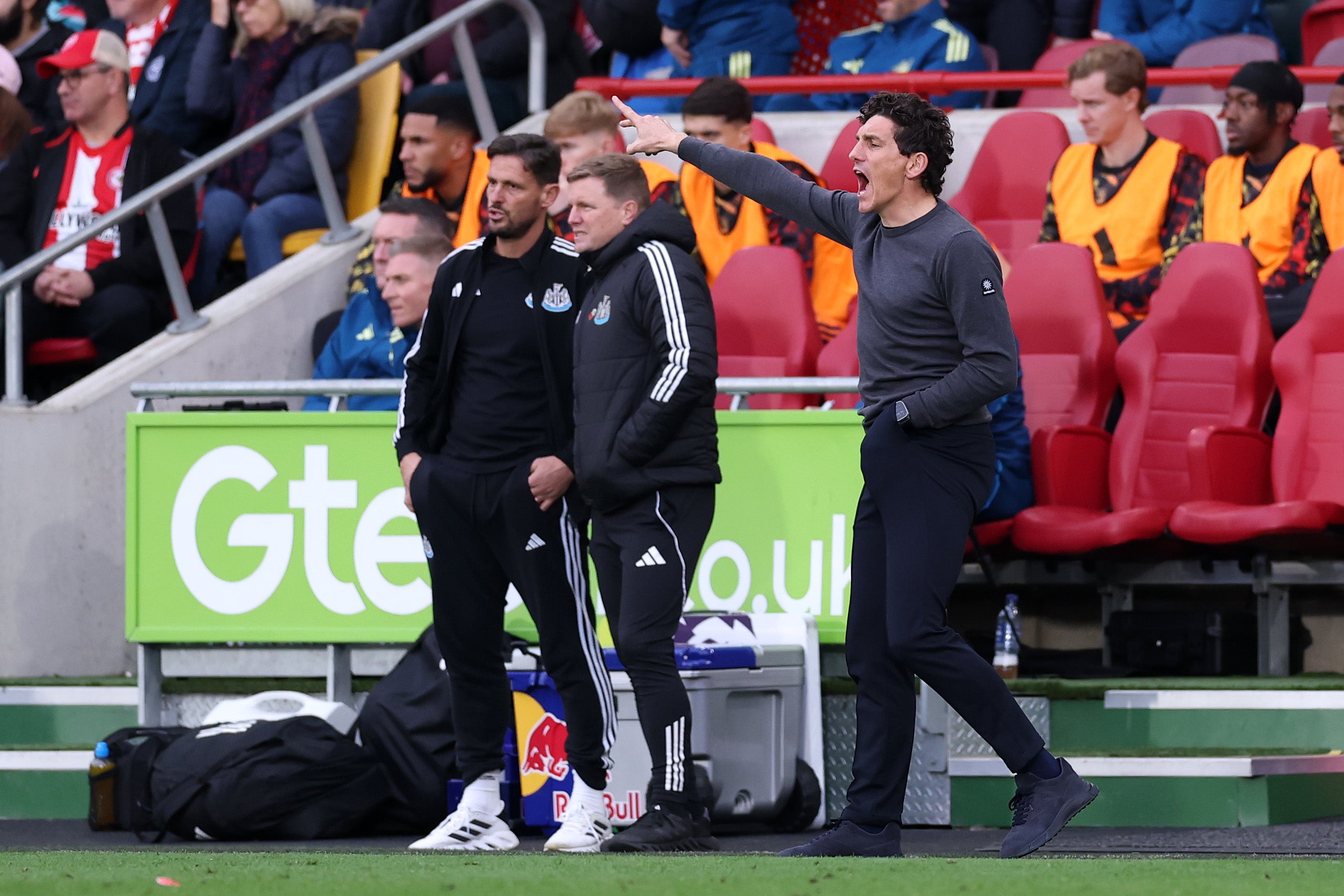 open image in galleryBefore taking over as manager Brentford's Keith Andrews was a specialist set-piece coach (Getty Images)
Brentford again look ahead of the game, before a match where this all comes full circle. Wednesday’s meeting is between the club who restarted all of this and the club who have since taken it to a logical conclusion.
One rival recently remarked that Arsenal’s own true innovation here is in perfecting two set-piece routines that are close to undefendable. That’s what has really made the difference.
Duly, Mikel Arteta has been influenced by Brentford in a very direct way, and not just because the latter rewired the thinking on all of this. The Basque is seen by peers as one of the most analytical coaches around, “a margins guy”, obsessed with probabilities.
This was exactly the thinking at Midtjylland back around 2014, when Brentford owner Matthew Benham also had a majority share in the Danish side. Clubs led by a data genius naturally began to see that set-pieces were being inefficiently used, due to the increasing emphasis on a positional game spread by Pep Guardiola. The phrase used at both Midtjylland and Brentford was that this was “a winning edge”.
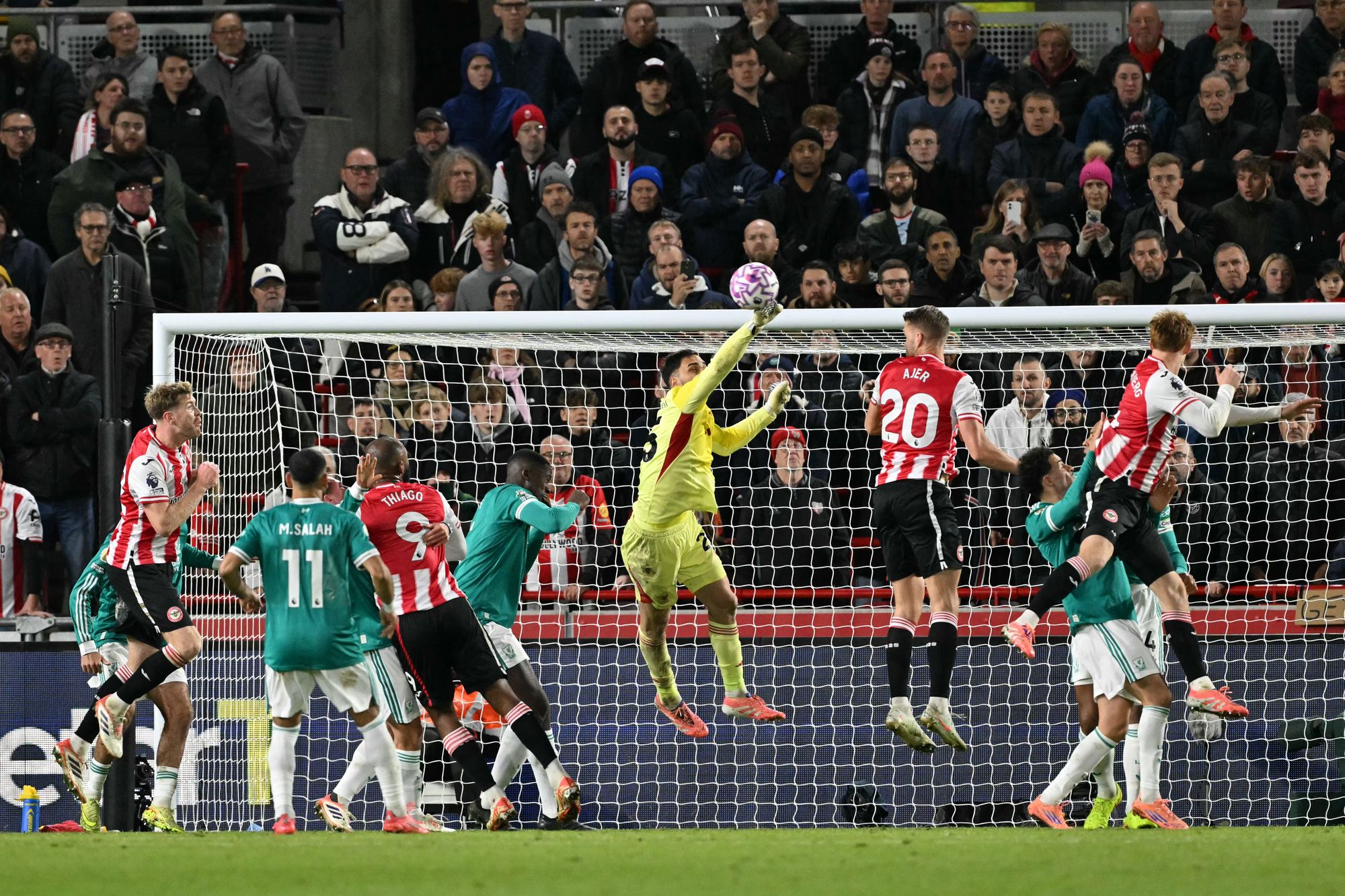 open image in galleryBrentford have led the way with their ability to perform set pieces (AFP via Getty Images)
They began to train proper set-piece coaches, thinking about the whole area in a new way. This is where Jover and many of the most recognised current names come from.
It was former Arsenal loans manager - and current Norwich City sporting director - Ben Knapper who had identified Jover as a distinctive talent, telling anyone who’d listen. Arteta heard and initially took him to Manchester City.
Jover’s work wasn’t as pronounced there given how many goals that Guardiola’s best sides were scoring from open play, but the thinking among his staff was that a well-timed header from Vincent Kompany could still make the difference in title races with Liverpool that were coming down to a point. The margins, the differences.
Jover’s work was actually so internally respected that City really battled to keep him when Arteta made an approach as Arsenal manager back in 2021.
The set-piece coach’s fame is now such that Arsenal fans sing his name… and other clubs mock them for it.
That has fed into another theme of this season, which is almost over the “morality” of set-pieces and whether this is all good for football.
Recommended Mikel Arteta heaps praise on Arsenal after an ‘immensely difficult’ week
 ‘Special’ Declan Rice has even more to offer Arsenal – Mikel Arteta
 Keith Andrews backs Brentford striker Igor Thiago for Brazil call
It’s true that emphasis on it really isn’t as good to watch, unless your team is scoring. Such approaches were traditionally viewed as “small-team football”, too, since it was one of the few recourses those of limited resources had. They weren’t able to concentrate on attacking play in the same way, since wages meant they didn’t have the talent. Hence a certain inherited football snobbery.
And that is of course the thinking that this Brentford-style “margins” approach blows out of the water - or the box. Quite simply, why not do something that helps you?
As has previously been reported on the Independent, Arteta’s own thinking on this has been conditioned by the realisation that teams were defending en masse against his positional game. Since that was leading to increased corners and set-pieces, why not hit them there? Defending territory against such possession tactics can be exhausting, so why not make it even more difficult by making the next step just as hard?
It isn’t going away, either, since Opta’s data shows that the weekend’s 10 fixtures matched the record for set-piece goals in a single match-round this season, at 14. That has happened three times this season, twice in the past three weeks, and is double from the start of the campaign.
Set piece goals per gameweek
- 7
- 9
- 12
- 8
- 7
- 14
- 7
- 9
- 12
- 6
- 14
- 11
- 14
As with a lot in football - including the Guardiola ideology - there is almost this sense that the more an approach spreads, the less effective it is.
Except, many industry figures feel that set pieces are an area where there is still going to be considerable edge for some time. That is essentially down to resource scarcity, and a game still catching up with Brentford.
There aren’t yet that many top set-piece coaches, which is partly why the same few names have become mini-celebrities - the Austin McPhees and Bernardo Cuevas.
McPhee has laughed at how he was just the Premier League’s third, after Arsenal and Brentford, on joining Aston Villa. There’s been an arms race, visualised in the missiles of deliveries.
 open image in galleryArsenal have built a reputation as a formidable set-piece side (Arsenal FC via Getty Images)
While that continues to be the case, clubs who employ such figures are going to have that “winning edge”. The next level is then Arsenal’s near-perfect two routines, or the “chaos” that Andrews says comes from Brentford throws.
It is within these where the set-piece coaches really earn their fame. They’re computing which players should make what runs in which directions, how to minimise opposition players who will attack the ball, and how to “overwhelm goalkeepers”.
And yet even that comes down to some football fundamentals. As one training figure laughs, none of this would actually matter if you didn’t have world-class deliveries and players willing to actually attack the ball.
Brentford staff absolutely laud the throws of Kevin Schade and Michael Kayode. Arsenal believe Declan Rice now may have the best dead-ball delivery in the world, with Bukayo Saka close behind. They are then followed by physical specimens like Gabriel, Jurrien Timber and Mikel Merino coming at you with intent.
 open image in galleryDeclan Rice has developed his skills to become a dead ball specialist (Getty Images)
And there may even be another football fundamental there. A belief pervades that set-pieces are currently all the more effective because the modern player isn’t as accustomed to them. They’ve come through academies where the focus was playing out with your feet rather than battering it away with your head.
It’s not like the 1980s or even the 2000s, where centre-halves were well used to suffering broken noses. “The modern player is too manicured, they’re not hardened enough.”
Some in Arteta’s dressing room felt that Bayern Munich were “a mess” any time they conceded a corner last week, with Arsenal’s very set-piece record creating a fear factor; another advantage with this.
Brentford are of course one of the few clubs who are well able to withstand that, and give Arsenal a bit back.
Arteta, however, might say that Arsenal would then just try to beat them on the ground - which is the real point of this. It’s not one or the other. It’s just about the edge.
More about
ArsenalBrentfordMikel ArtetaJoin our commenting forum
Join thought-provoking conversations, follow other Independent readers and see their replies
Comments