- Cars
- Electric Vehicles
Westminster has more chargers than Manchester, Liverpool, Leeds, Sheffield and Newcastle combined
Steve FowlerElectric Vehicles EditorMonday 01 December 2025 19:17 GMTComments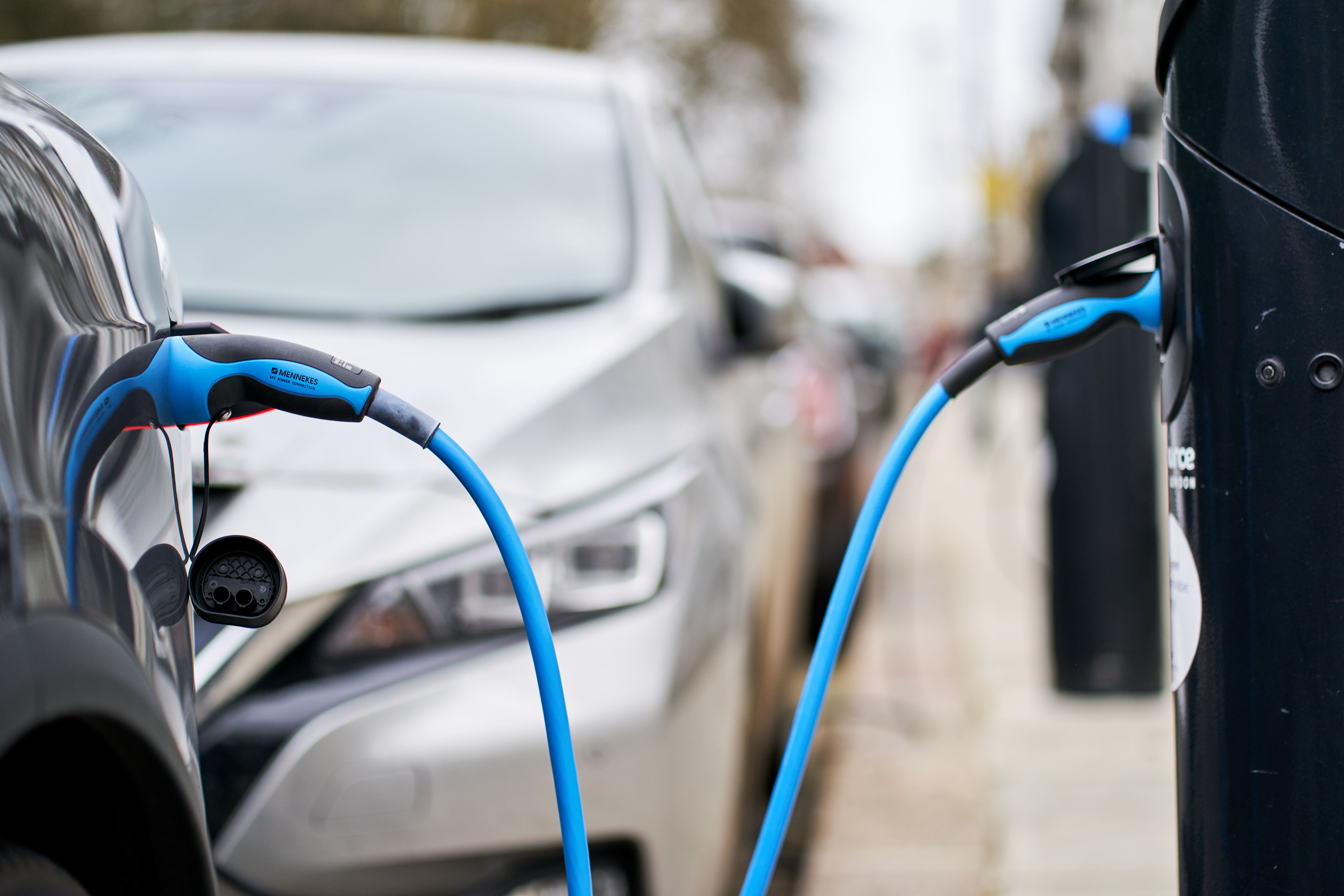 open image in galleryLatest public charging stats reveal a north-south divide (PA Archive)
Get our weekly Drive Smart newsletter for motoring news, reviews and advice from EV editor Steve Fowler
Get motoring news, reviews and advice from EV editor Steve Fowler
Get our EV editor’s weekly Drive Smart newsletter
Email*SIGN UPI would like to be emailed about offers, events and updates from The Independent. Read our Privacy notice
As the government prepares to unveil new funding for on-street EV charging, new data from Electrifying.com exposes a widening gulf in access to public chargers – with London and the South accelerating ahead, yet much of the North is left idling.
The figures reveal what experts are calling a “charging postcode lottery.” Drivers in the capital and surrounding regions now enjoy some of the densest charging networks in the UK. But millions elsewhere are struggling with limited and unreliable infrastructure – a divide that threatens to stall the nation’s transition to electric vehicles.
According to the analysis, five of the North’s biggest cities – Liverpool, Leeds, Manchester, Newcastle and Sheffield – have a combined population of 2.7 million but share just 2,485 public chargers between them. In stark contrast, Coventry – a city of only 350,000 residents – has 2,578 chargers, meaning it outperforms all five northern cities put together.
London’s Westminster tops the national table with 2,746 chargers – more than Manchester, Liverpool, Leeds, Sheffield and Newcastle combined – while the entire top ten charging hotspots are in London and the South.
“The scale of the disparity is impossible to ignore,” said Ginny Buckley, Chief Executive of Electrifying.com. “Coventry has over 750 chargers per 100,000 people, every one of the Northern Five has fewer than 100, and Westminster tops the chart with more than 1,300 per 100,000. Not a single area in the top ten is in the North, Scotland, Wales or Northern Ireland.
 open image in galleryWestminster tops the national public charging table with 2,746 chargers (PA Archive)
“This isn’t about geography – it’s about consistency,” Buckley continued. “Some councils are innovating with charging gullies and street solutions, while others can’t get schemes off the ground. We urgently need a joined-up, national approach that gives local authorities the guidance, expertise and confidence to install the right chargers in the right places. Without that, the EV transition will be fair for some – and impossible for others.”
Coventry is held up as a rare success story. The city’s collaborative, focused strategy for rolling out public chargers has helped it deliver one of the most comprehensive and reliable networks in the country. Its success has been underpinned by clear local leadership and partnerships with experienced charging providers.
But even where chargers exist, confidence among drivers remains low. A survey of more than 11,000 UK motorists conducted by Electrifying.com and the AA found that 60 per cent believe public charging infrastructure is unreliable, while only six per cent think there are enough public chargers available across the UK.
John Lewis, CEO of charging provider char.gy, said, “Coventry is proof that rapid rollout isn’t a London-only story – it’s what happens when a council has clarity, capability and committed partners. Many other areas want to deliver the same, but they’re held back by a variety of factors, such as planning and grid capacity.

Get your charger and tariff now. Save happily EV after.
T&Cs apply
Find out moreADVERTISEMENT
Get your charger and tariff now. Save happily EV after.
T&Cs apply
Find out moreADVERTISEMENT
Recommended Sony and Honda are building a car, and I’ve been behind the wheel
 BYD Seal 6 DM-i review – the dog-friendly plug-in hybrid that’ll go 935 miles in one go
 Nissan Leaf review – British built and an EV to be proud of
 The Independent EV Price Index November 2025
“Funding matters, but it doesn’t fix these bottlenecks. If we want to end the postcode lottery, we need to give every council what Coventry already has: the confidence and capacity to get chargers in the ground quickly and in the right places.”
The findings come as ministers prepare to announce increased financial support for local charging projects, but experts warn that money alone won’t solve the problem. Electrifying.com argues that national coordination and clearer policy frameworks are needed to ensure consistent delivery across the UK.
The danger, it says, is of creating a two-tier electric future – one where Londoners and southern drivers can charge easily and affordably, while those in northern and rural areas are left without reliable access to power.
For now, Westminster, Hammersmith & Fulham and Kensington & Chelsea continue to lead the charge, while much of the North risks being left in the slow lane.
More about
Electric carsCoventryLondonNorthPostcode lotteryJoin our commenting forum
Join thought-provoking conversations, follow other Independent readers and see their replies
Comments