 By Hugh CameronShareNewsweek is a Trust Project member
Data for Thanksgiving weekend shows consumers spent at healthy levels, but underlying details about spending patterns suggest this may not have been the economic boon the administration believes.
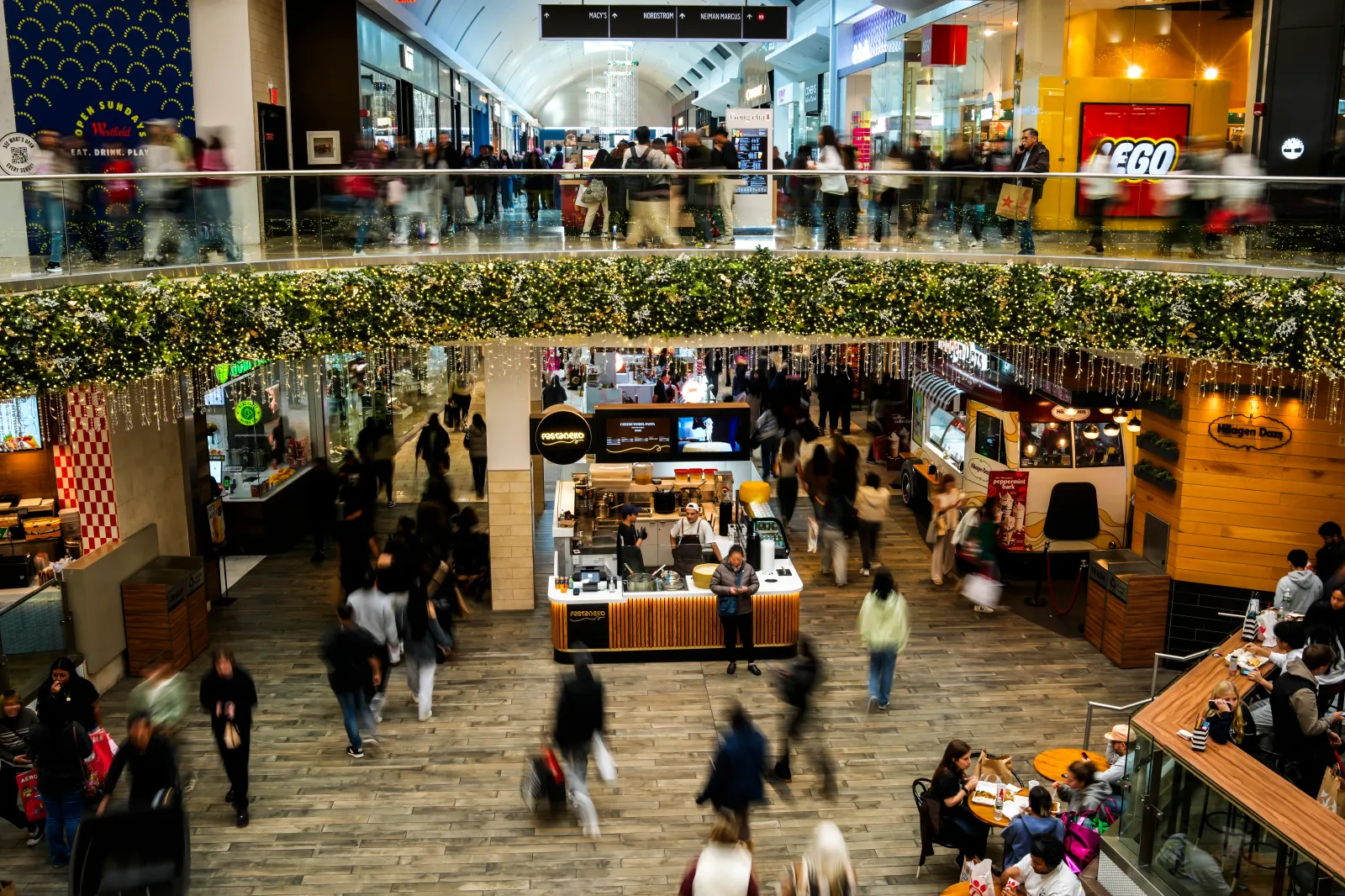
According to Adobe Analytics, U.S. consumers spent $6.4 billion on Thanksgiving Day and $11.8 billion online on Black Friday, both record highs and up significantly compared to last year. But Salesforce data, cited by Forbes, found that order volume fell by about 1 percent year over year, while average selling prices were up 7 percent—indicating that much of the growth was caused by inflation rather than any uptick in shopping enthusiasm.
Why It Matters
Consumer spending accounts for about two-thirds of economic activity, and the holiday season has been considered a particularly important barometer of how financially stressed shoppers are navigating the current economic climate.
The White House has already pointed to Black Friday sales figures as demonstrating that the American consumer is in good health in late 2025, but others see signs that weak consumer confidence and a collection of financial headwinds are taking their toll despite an overall jump in spending.
What To Know
Pre-Black Friday forecasts were mixed, with some projecting record-high spending and others, such as Deloitte, anticipating a decline as "cost pressures and financial constraints" weighed on shopping behavior.
Neil Saunders, the managing director of GlobalData Retail, told Newsweek that a lot of this year's increase was "due to higher prices with soft underlying volume growth."
"From our data, Black Friday spending grew by around 3.1 percent, with volumes rising by around 0.2 percent," he said. "Consumers dug deep on Black Friday, but they were selective in their spending and largely stuck to budgets. The new reality is that dollars stretch less far than they once did, and consumers have adjusted to that."
Adobe and Salesforce noted the effects of artificial intelligence and buy now, pay later (BNPL) options in driving spending this year. Salesforce estimated that AI agents drove about $3 billion in online sales on Black Friday, while Adobe reported an 805 percent increase in AI-driven traffic to U.S. retail sites.
Meanwhile, Adobe forecast $761.8 million in BNPL spending on Black Friday, adding that $20.2 billion would be spent through the payment method in November and December, up 11 percent year over year.
 ...
...Tracy Schuchart, a senior economist at NinjaTrader, called BNPL the "elephant in the room" of consumer spending, noting high levels of usage among high earners for discretionary purchases and among lower-income groups for essential items.
"The demographics explain why spending hit records while unit volumes declined," she wrote on X on Saturday. "Younger shoppers financing purchases on mobile devices drove transaction counts. High earners financing luxury goods on BNPL drove dollar amounts. Lower income shoppers financing necessities kept participation rates high even as they bought fewer actual items."
"This is a classic 'higher prices, lower volume' story," author and investor Joel Greenblatt wrote on X in response to the decline in unit volumes despite an increase in spending.
"People are still spending, but inflation is cutting into how much they actually buy," he continued. "For me, it signals that revenues may rise, but marginal consumers are under pressure, making profit margins and inventory management even more critical."
Despite higher online sales, retail analytics provider RetailNext charted a 5.3 percent year-over-year decline for in-store traffic on Friday and Saturday.
"Shoppers showed they're done with the impulse-driven, one-day frenzy," wrote Joe Shasteen, the global head of advanced analytics at RetailNext. "Prices, tariffs, and tighter budgets pushed people to shop with discipline, not adrenaline, and they responded by turning Black Friday into a value calculation."
What People Are Saying
White House economic adviser Kevin Hassett, the director of the National Economic Council, told CBS News: "We now have hard data for Black Friday and even for Saturday, and the online sales were up almost 10 percent, in-store sales were up 4 percent. It was really a blockbuster weekend after Thanksgiving. And so, I think that the folks who were saying, 'Wow, maybe people are going to be anxious about, you know, going back and getting presents for the kids and so on,' they've been disproven."
Retail analyst Neil Saunders told Newsweek: "The increased level of spending tells us that the consumer is not hibernating and that the retail economy is not in recession. However, it does reveal some underlying cracks. Growth is mostly being driven by middle- and higher-income households and is not a broad brush. Consumers are also cautions and are very deliberate and thoughtful about their spending. They're not just dashing out and buying loads on impulse. Muted volume growth creates polarization between winners and losers and there is not enough growth to satisfy all retailers."
Caila Schwartz, the director of consumer insights at Salesforce, told Forbes: "Black Friday delivered an important signal for the U.S. economy. On the surface, sales were strong, hitting $18 billion, a 3 percent jump year over year. But with the average selling price for goods climbing 7 percent, U.S. shoppers continued to feel the bite of inflation."
What Happens Next
Black Friday is considered an early indication of consumers' holiday season behavior—the "anchor of the holiday shopping season," according to Shasteen—and both retailers and economic analysts must wait till beyond Christmas for firmer indications of how economic headwinds are altering Americans' spending patterns.
Adobe is projecting a total of $253.4 billion in holiday spending this year, up from $241.1 billion in 2024, while the National Retail Federation expects sales across November and December to surpass $1 trillion for the first time ever.
Mastercard, meanwhile, has forecast a 7.9 percent increase in e-commerce sales and a 2.3 percent rise in in-store sales. However, it added in its report that "inflation is expected to be a larger contributor to sales growth, as opposed to actual sales volume compared to last year."
Request Reprint & LicensingSubmit CorrectionView Editorial & AI Guidelines Add Newsweek as a preferred source on Google to see more of our trusted coverage when you search.
Recommended For You
U.S.Black Friday Spending Raises Eyebrows Over US Economy5 min read NewsStrange Chernobyl Black Fungus May Eat Radiation4 min read
 U.S.Blue-Collar Jobs Are Collapsing Under Trump4 min read
 NewsDoes Cannabis Actually Have Medical Benefits?8 min read
 PoliticsTrump ‘Wouldn’t Have Wanted’ Second Strike on Venezuela Boat4 min read
 PoliticsKristi Noem Says National Guard Shooter Was ‘Radicalized’ in the US5 min read
Related Podcasts
Top Stories
 NewsTrump Says He Spoke to Venezuela’s Maduro Amid Tensions3 min read
 NewsManhunt Underway After 3 Children Killed at California Birthday Party4 min read
 NewsPete Hegseth Trolls Critics Over Boat Strikes5 min read
 WorldRussia Hits Back At NATO Plans To Get ‘More Aggressive’1 min read
 News5 Polls That Spell Trouble for Donald Trump and the Republicans4 min read
 NewsMap Shows Winter Storm Snowfall Totals Forecast for Each State3 min read
Trending
 NWSWinter Storm Warning as 8 Inches of Snow to Hit North and Midwest3 min read
 Donald TrumpMap Shows Donald Trump’s Approval Rating in Each State After 10 Months4 min read
 WeatherWinter Storm Warning As 13 Inches of Snow To Strike: ‘Extreme Caution’3 min read
 FloridaAmazon Driver Sees Food Left for Stray Cats—Ring Cam Captures What He Does3 min read
 Delta AirlineDelta Air Lines Plane Slides Off Runway During Winter Storm1 min read
Opinion
 OpinionThe Hemp Ban Shows America Still Works | Opinion4 min read
 OpinionConventional Wisdom: The Somali Minnesota Welfare Fraud Edition3 min read
 OpinionRedefining Professional Degrees Will Hurt Everyday Americans | Opinion5 min read
 OpinionAI Is Coming for Our Most Intimate Communications. Congress Must Act | Opinion5 min read
 OpinionConventional Wisdom: The Thanksgiving Tragedies Edition3 min read