- Asia
- Japan
Japan is experiencing most intense period of bear activity on record
Stuti MishraMonday 01 December 2025 10:16 GMTComments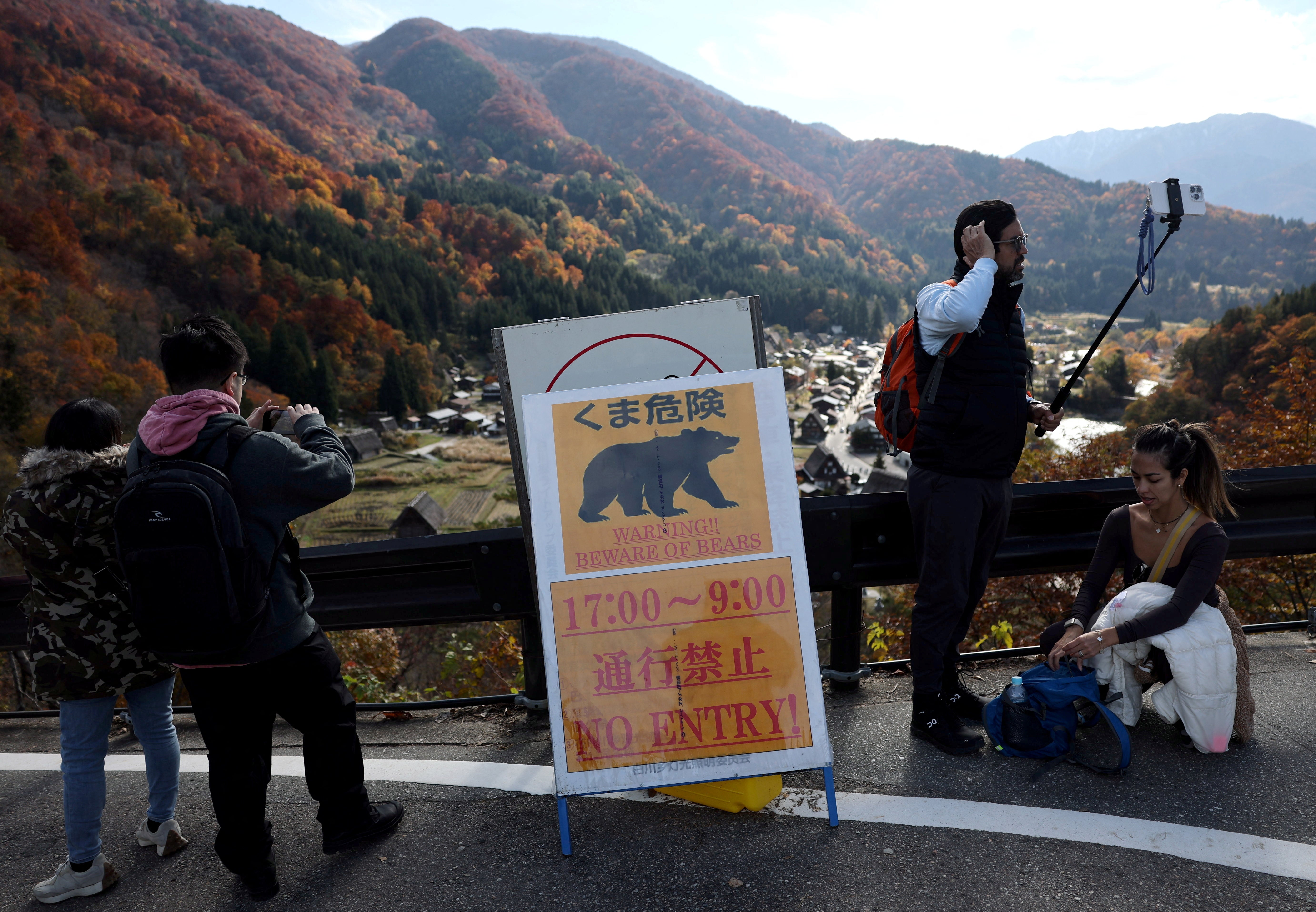 open image in galleryTourists take photos near a bear warning sign in Shirakawa village, Gifu prefecture, Japan (REUTERS)
Sign up to the Independent Climate email for the latest advice on saving the planet
Get our free Climate email
Get our free Climate email
Email*SIGN UPI would like to be emailed about offers, events and updates from The Independent. Read our Privacy notice
Kyoto has installed multilingual signs across the city to warn residents and tourists about bears amid a sharp rise in sightings.
The yellow signs in English, Chinese, Korean, and Japanese advise people what to do if they face an Asiatic black bear. Crouch down and protect the head and neck, one piece of advice goes.
A QR code on the signs links to a Kyoto prefectural website which tracks sightings.
The first sign was put up on Saturday outside the Sakyo Ward Office’s Yase branch after bear droppings were found nearby earlier in the month.
City officials said they had received 112 reports of sightings and other information about bears between April and 25 November, up from 86 during the same period in 2024.
The signs come as Japan experiences its most intense period of bear activity on record, with attacks and sightings rising across the country, including in areas that are popular with overseas visitors.
Since April this year, a record 13 people have been killed in attacks and incidents have been reported on an almost daily basis of bears entering homes, roaming near schools and even rampaging through supermarkets, according to local media.
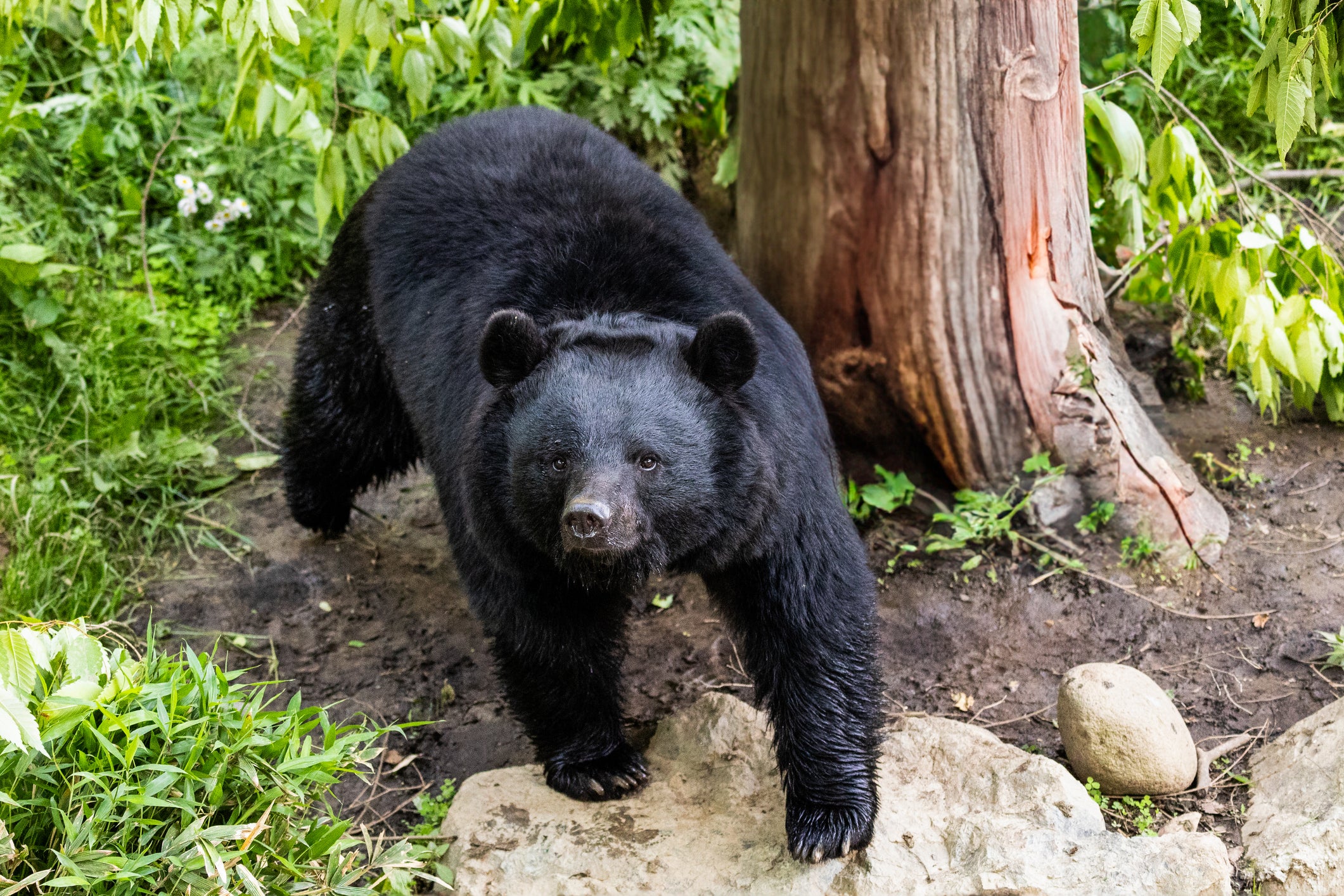 open image in galleryA close up of a Black bear in Iwate, North Japan (Getty)
This week, the National Police Agency announced several emergency measures to help prefectures facing the most severe incursions.
The agency said it would distribute 44 rifles and bullets suited for bear culling to police forces in 13 prefectures, including Akita and Iwate, the epicentre of the latest surge, and provide 790 sets of protective gear to officers guiding evacuations and securing neighbourhoods where bears had been sighted.
On 28 November, the cabinet approved a supplementary budget allocation of 480m yen (£2.5m) to pay for the measures.
Training would be rolled out gradually, police said.
Earlier this month, the military was deployed in parts of northern Japan to help set traps for a cull after local authorities said they could no longer cope with the rising attacks.
The spike in encounters is linked to several converging pressures. The bear population in Japan is estimated to have tripled since 2012 due to reduced hunting, while habitat loss and lack of food is making the problem worse. Poor acorn and beech-nut harvests are pushing bears into towns as they search for food before their winter hibernation.
Japan’s rural depopulation, which has left large swathes of abandoned farmland and overgrown properties, also adds to the problem by providing cover and forage to the wandering bears.
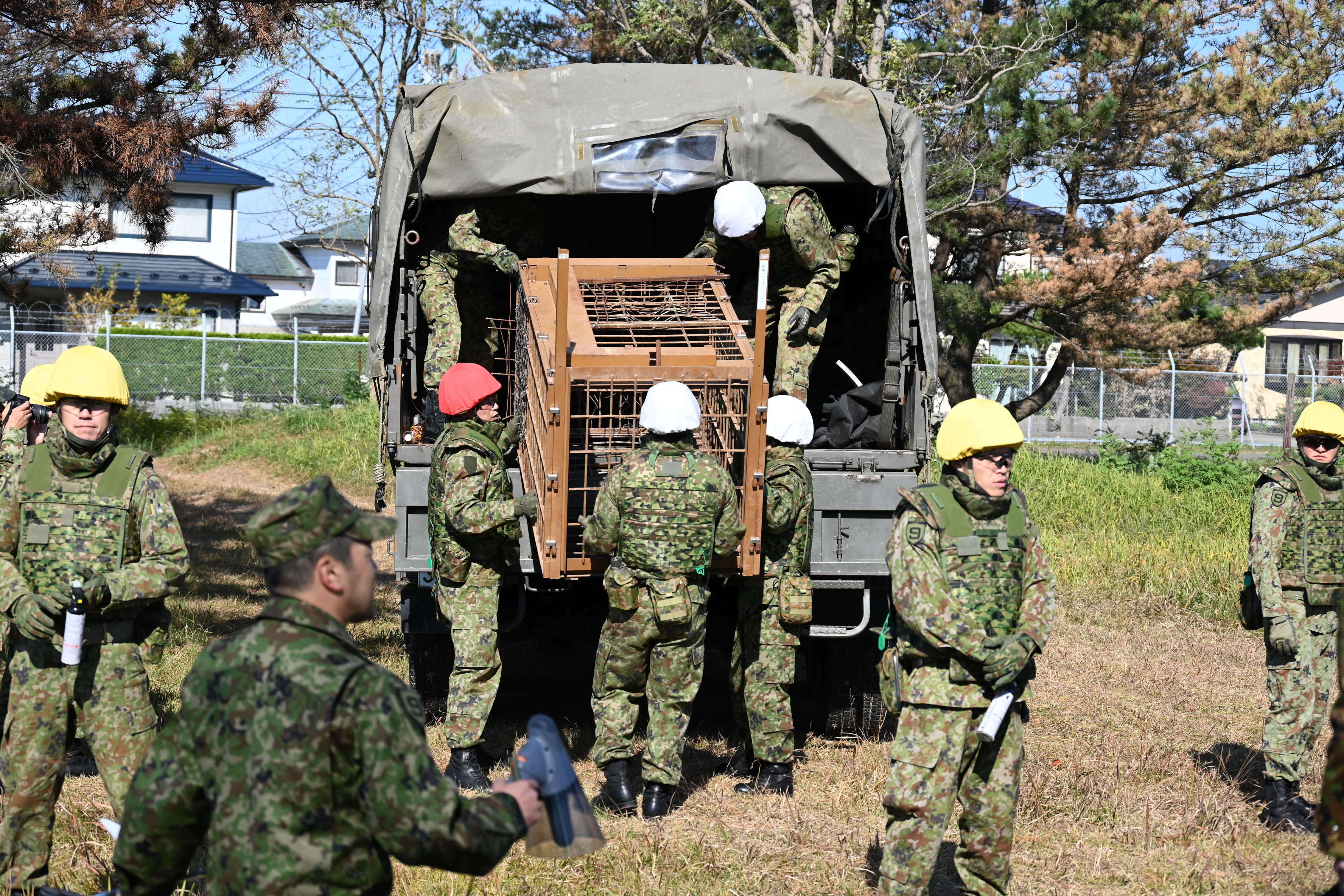 open image in galleryJapanese soldiers unload a bear cage from a truck in Akita (AP)
In some regions, such as Akita, Iwate and Gifu, officials have reported a sixfold increase in sightings this year, and residents have started carrying bear bells even in semi-urban areas.
This means the danger is no longer limited to remote mountain towns. Recent sightings have been reported near Kyoto’s Arashiyama bamboo forest, a major tourist attraction, and in Shirakawa-go, where a Spanish tourist was injured last month.
Across Japan, more than 220 people have been injured in bear attacks since April, the highest number ever recorded, according to NHK.
More about
KyotoKoreanChineseEnglishJoin our commenting forum
Join thought-provoking conversations, follow other Independent readers and see their replies
Comments