 Ryobi
Ryobi
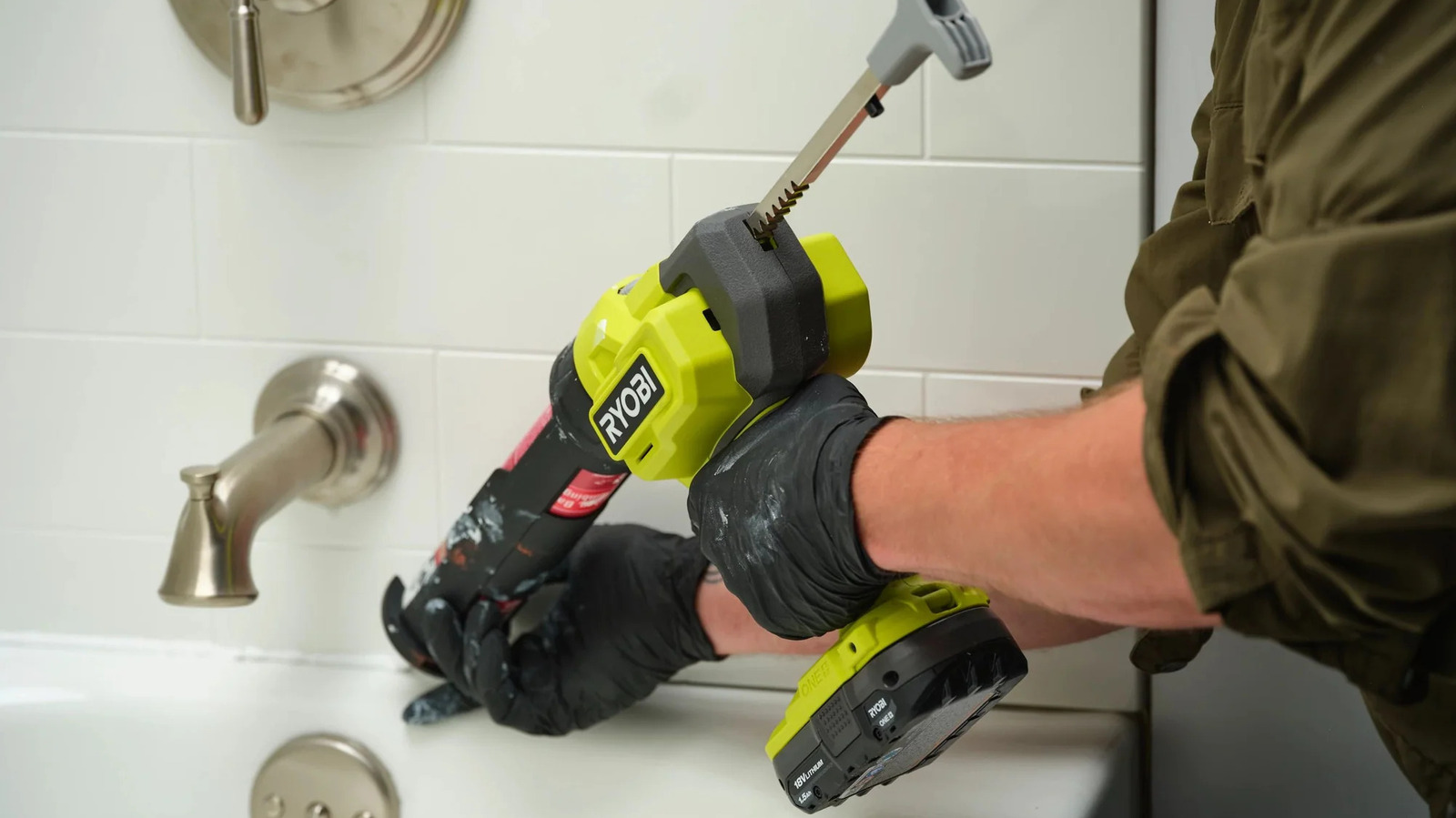
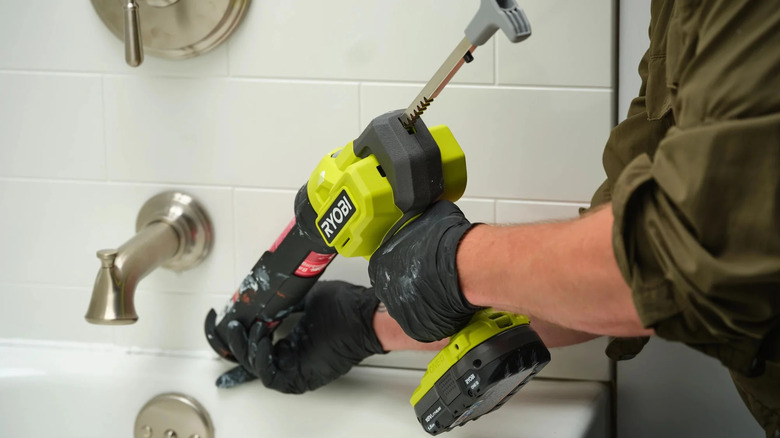
Whether you're renovating your bathroom, weatherizing your windows, or perhaps filling gaps between kitchen sinks, odds are that you'll need to apply caulk. After all, it'll add to the finishing touches and also protect your property against water damage and pests. That said, when it comes to caulking, you can always use a traditional manual caulk gun, but the process can be arduous, especially if you're covering a large area. Luckily, Ryobi offers an 18V caulk gun that most people praise because of its ease of use, reliability, and convenience.
However, although a caulk gun like the 18V ONE+ 10 oz. and Adhesive Gun Kit holds a 4.8 out of 5 rating on Ryobi's website, it doesn't mean that it is without any fault. Of course, it might have more positive features than negative ones, but still, it's prone to some of the common problems plaguing caulk guns. From minor issues like blocked nozzles to major concerns like material blowout, here's a closer look at the most common complaints you'll find about Ryobi caulk guns.
A blocked sealant nozzle that forces the caulk to leak out the back
 Ryobi
Ryobi
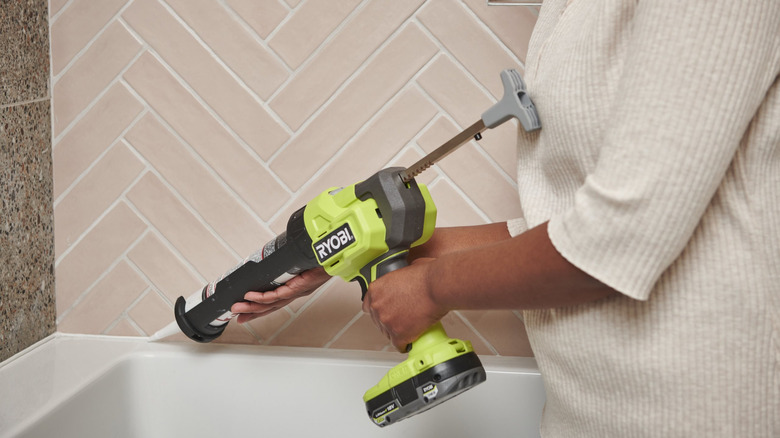
It's pretty much common for any type of caulk gun to suffer from caulk leaks that pop out of the back of the cartridge. Unfortunately, nine times out of ten, a blocked nozzle is always the culprit. After all, if there is a lot of clog sitting on the tip of your cartridge tube or your caulk gun's nozzle, when you apply pressure, the caulk will have nowhere to go. As such, it will try to find the weakest escape point, which will probably be the rear seal of the tube. And if the pressure is high enough, the cartridge will probably crack and push the sealant in a messy burst.
What causes the nozzle to block? In most cases, the culprit is an expired caulk. Even if the tube looks fine, when the caulk is left unused (or stored improperly) for an extended period, it will start to cure inside, clogging the nozzle. When this happens, instead of using your precious time unclogging the nozzle, your best bet is to purchase a new tube. However, if the tube hasn't expired or started to cure internally and it's clogged, just use a piercing tool attached to the caulk gun to break the blockage.
With that in mind, to prevent caulk from drying out prematurely, experts recommend threading a nail or a lag screw into the nozzle. You'll also want to wrap it with electrical or plastic packing tape to ensure that it is airtight.
Your caulk gun won't stop dripping
 Ryobi
Ryobi
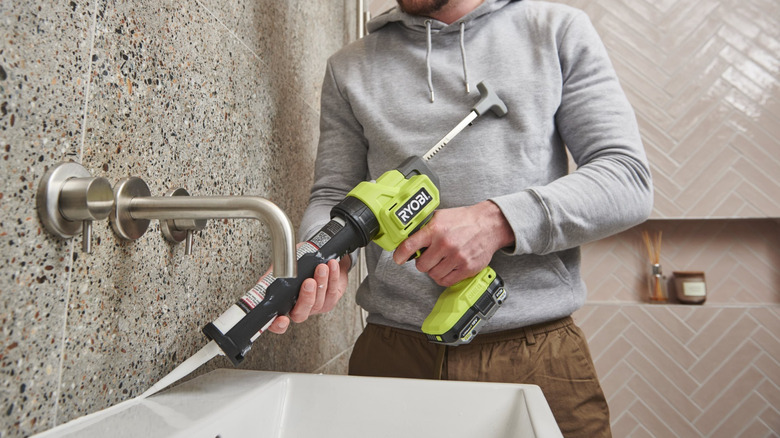
Like any other caulk gun, it's possible for this useful Ryobi cordless power tool to encounter issues with dripping. This happens when your gun continues to ooze out a slow, steady bead of caulk, leaving messy blobs or stringy tails. While this is at least a better issue to encounter than leaks out of the cartridge back, it can be quite frustrating, especially if clean lines matter to you.
Luckily, if you want to prevent these pesky leaks, all you need to do is release the trigger immediately after you lay a bead. The reason is that, unlike older versions that continue to leak even after you stop squeezing the cartridge, Ryobi 18V ONE+ caulk guns have an anti-drip mechanism. This means that once you let go of the trigger, the plunger will back off, stopping the flow. As a result, you'll get a clean bead instead of a messy one.
Besides that, you'll also want to check the viscosity of the caulk you're using. After all, thin or low-viscosity caulk will keep flowing because it requires less pressure to flow out.
Silicone runs out prematurely or escapes at the back end of the tube
 Ryobi
Ryobi
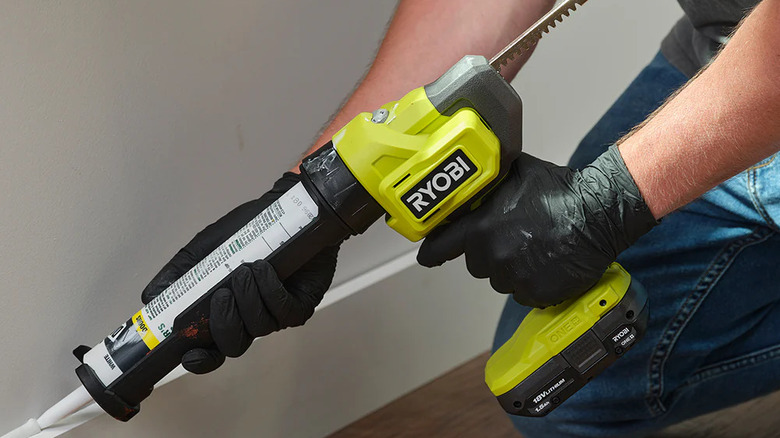
Probably another common problem that Ryobi caulk gun owners experience is what seems to be the silicone running out early. There is nothing more frustrating than pushing the trigger button, and nothing happens, even though there's still caulk in the tube. In most cases, the gun might keep pushing, but instead of caulk coming out of the nozzle, it backs up and leaks along the plunger.
When this happens, according to Ryobi's website, you'll want to check the nozzle tips first. Of course, it's quite easy to cut the tip of the tube and forget to poke a hole, and if this happens and your gun setting is high, the pressure will build within the tube. As a result, the caulk will either foul the inside of the tube or ooze behind the plunger.
That's why, before you grab your gun and commence on sealing your sinks, you'll want to cut and completely unblock the nozzle tube with a nail. Just ensure the opening is wide enough and the pressure settings are reasonable to maintain a smooth flow. Also, after completing your DIY project, don't forget to clean your Ryobi caulk gun. Not only will this extend its lifespan, but it will also ensure that, on your next project, it works efficiently with minimal hassle.