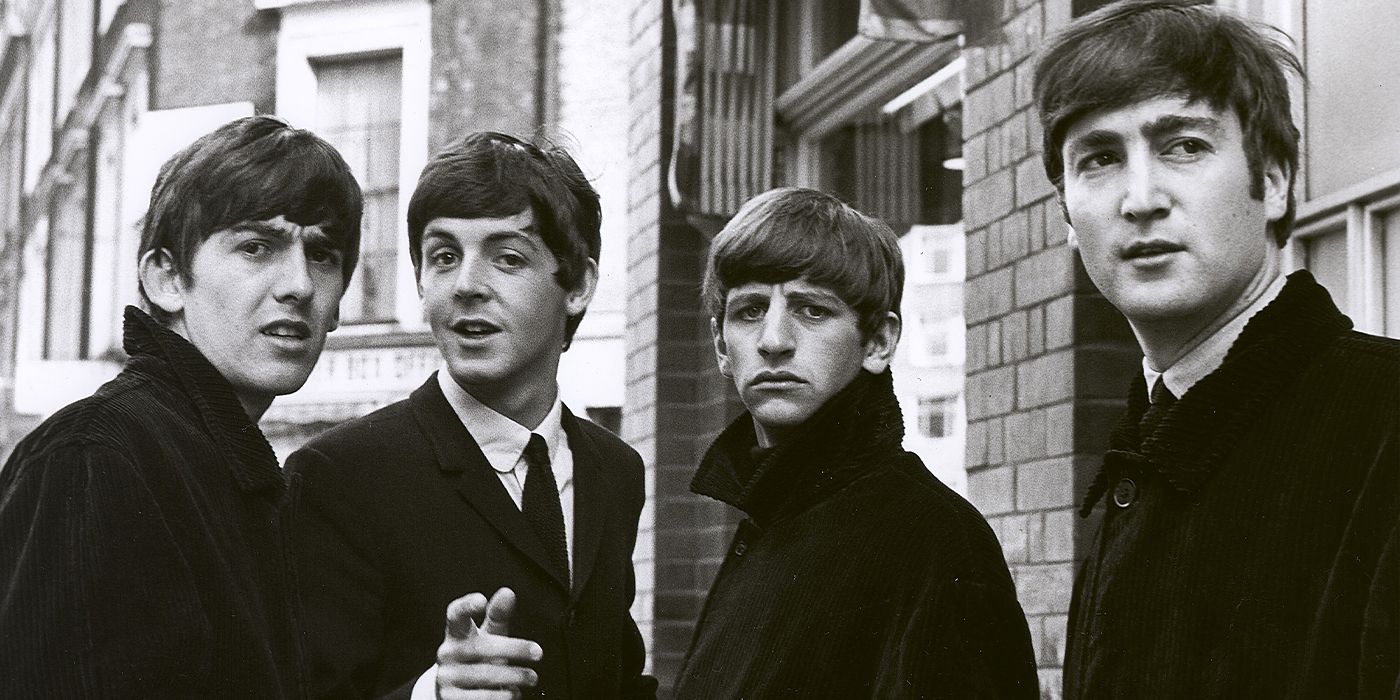
 The Beatles Paul McCartney, John Lennon, George Harrison and Ringo Starr.Images via Fabrice DEMESSENCE/DALLE/startraksphoto.com
 By
Fiona MacPherson-Amador
Published 1 hour ago
Curious from birth, Fiona is a music writer, researcher, and cultural theorist based in the UK. She studied her Bachelor of Music in London, specializing in audiovisual practices, and progressed to a Master’s in Arts and Culture from the University of Groningen in the Netherlands. Her MA research focused on the societal impact of sound within urban communities and how the narratives of art can contribute to their shaping and commentary.
Sign in to your Collider account
Summary
Generate a summary of this story
follow
Follow
followed
Followed
Like
Like
Thread
Log in
Here is a fact-based summary of the story contents:
Try something different:
Show me the facts
Explain it like I’m 5
Give me a lighthearted recap
By
Fiona MacPherson-Amador
Published 1 hour ago
Curious from birth, Fiona is a music writer, researcher, and cultural theorist based in the UK. She studied her Bachelor of Music in London, specializing in audiovisual practices, and progressed to a Master’s in Arts and Culture from the University of Groningen in the Netherlands. Her MA research focused on the societal impact of sound within urban communities and how the narratives of art can contribute to their shaping and commentary.
Sign in to your Collider account
Summary
Generate a summary of this story
follow
Follow
followed
Followed
Like
Like
Thread
Log in
Here is a fact-based summary of the story contents:
Try something different:
Show me the facts
Explain it like I’m 5
Give me a lighthearted recap
Disney Plus is bringing back a newly restored version of "The Beatles Anthology" on November 26, offering a highly-awaited retrospective look at the band through beautifully sharpened images. First released in the 1990s, the Apple Corps documentary explores the “life and times of the most influential and beloved band of all time.” It has now been beautifully restored, complete with a brand-new ninth episode featuring previously unreleased footage of George Harrison, Ringo Starr, and Paul McCartney.
The archival interviews were a perfect opportunity to revisit the most mythologized period of The Beatles, when they stopped touring in 1966. Cultural rhetoric often claims this era marked a rise in internal tensions for The Beatles, but the sixth episode shines light on a more nuanced truth. Whilst tension was certainly present, it wasn’t always amongst themselves. It often stemmed from the machine of fame itself, a force that could best be reckoned with when tackled in a united front.
The Collapse of Touring For The Beatles
The Beatles decided to stop touring after their show in Candlestick Park, San Francisco, on August 29, 1966. The decision was not a light one and stemmed from a variety of reasons, but two stuck out. The first was their safety. After John Lennon made the notorious comment that The Beatles were “more popular than Jesus,” the band were facing legitimate and serious threats. The Beatles Anthology shows footage in the sixth episode of a KKK member proudly announcing threats to the band, and how hatred of The Beatles grew so deep that even children were filmed burning their records.
Lennon later attempted to defend his actions by claiming, "I wasn't knocking [religion] or putting it down, I was just saying it for the fact.” Ringo Starr made a poignant point later in the episode by reinforcing the fact that whichever one of The Beatles said anything publicly, the other three had to deal with it, which “they did with love.” Any criticism that the band experienced was always ultimately targeted at them as a single entity. They had no choice but to stick together, because they were the only ones who knew what the others were going through.
 Related
57 Years Ago, the Beatles Delivered What Is Arguably Their Best Album of All Time
Related
57 Years Ago, the Beatles Delivered What Is Arguably Their Best Album of All Time
A bold move that changed everything for the Fab Four.
Posts 16 By Fiona MacPherson-Amador Nov 7, 2025Despite the riff-raff over Lennon’s comment, many fans remained loyal to The Beatles. The shows, though sometimes losing out on small numbers of ticket sales, were still enormously populated by manic fans screaming for their icons. This was, of course, a rather daunting prospect for just four young men. George Harrison recalls in the Anthology that “Even going back to ’65, that’s when I was saying ‘I don’t want to do this anymore, I don't like this.’ You know those ticky-tape parades that they were trying to do. It was nice to be popular, but when you saw the size of it, it was just ridiculous. It was dangerous.” Paul McCartney added to this by saying that “It was lovely that they liked us, but we couldn’t hear to play. So the only place we could develop was the studio.” This was ultimately the second, and most musically logical, reason for The Beatles to focus on the studio. When they returned from touring in September 1966, they individually did their own thing, getting some breathing room. When returning to the studio going into 1967, they were all asked individually on camera by journalists if they wanted to be soloists. They all denied the prospect of splitting up, even if they had solo prospects.
'Sgt Pepper' and Rumblings of Fragmentation
The first major project The Beatles started on when they returned in 1967 was Sgt Pepper’s Lonely Hearts Club Band. The preface, if you like, to this was Lennon’s “Strawberry Fields Forever,” and McCartney’s “Penny Lane,” which set the musical, narrative, and conceptual tone for the record. At this time, The Beatles were essentially losing touch with reality in the mania that was an unfathomable scale of fame. It has to be considered that, for them, each of the other three band members was a reason why their lives were becoming out of touch, unraveling, and ultimately, scary. As difficult as this is, they were each also the only ones who understood the true effects of it, creating their own emotional and musical safety net.
This notion of almost alienation is summed up well by the “Penny Lane” music video. Amongst other videos, it’s shown between interview segments to break down the dialogue and acts as a moment of respiration to catch up on the information shared. It’s also just great fun to watch a great video. In the “Penny Lane” video, The Beatles begin on the street, but stray further away on horseback until they reach a field in which they drink tea, served like royalty. No other residents or buildings of Liverpool remain but themselves and their instruments. It represents how far they were from their beginnings and a normal world. It’s completely surreal, but it was their sense of reality.
Ringo said that “it was a relief” when “Penny Lane” didn’t get to number 1, and that “it took the pressure off” The Beatles. The song’s chart performance meant it was dropped from Sgt Pepper’s. The implication of commercial floundering released the band to experiment freely, ironically leading to one of the greatest-selling records of all time.
 Related
John Lennon Considered This Iconic Beatles Album To Be the Worst Album of All Time
Related
John Lennon Considered This Iconic Beatles Album To Be the Worst Album of All Time
“I would never even dream of writing something like that.”
Posts By Fiona MacPherson-Amador Nov 20, 2025It’s well-known among dedicated Beatle fans that Sgt Pepper’s wasn’t a favorite for Lennon or Harrison due to ideas that "It doesn't go anywhere” and its “assembly line” recording. But producer George Martin proudly reminisced that Sgt Pepper’s was linked to “The freedom of sex and the freedom of soft drugs like marijuana. I suppose it was all a bit exciting. I think it did reflect its time.” So, even if each band member had differing musical ideas about how Sgt Pepper’s was made and whether they liked it or not, they were still in a unified cultural position as the band that was defining the decade. The Beatles did all work on it together to solidify their evolution into sophisticated musicians. Their unified status as a successful band meant that they could share their opinions readily and confidently in public, as they were each confident and legitimate in their own individual positions. These open discussions, whether they were positive or negative about the musical product, came from a place of mutual respect and understanding. And what was always the driving force of each comment? The music. McCartney, subtly but intentionally, threw in a comment that “I was a big fan of John’s, you’ve got to remember that.” Firstly, it’s very sweet, but mainly a wake-up call that each Beatle had to eventually say on record that they liked each other's music. It was always there.
Acceptance and “All You Need Is Love”
The episode closed with The Beatles’ live television broadcast of “All You Need Is Love” for Our World. The Anthology colorizes the performance, showing it in all its joy and glory. What the Anthology also does particularly well is share the different versions of The Beatles experience that each band member has.
They each have varying recollections of facts and figures, and it's rather humorous. At the end of the day, there will never be one solid reality about The Beatles’ story, but they have a fair voice in the series. “All You Need Is Love” is the perfect way to show that. Ultimately, 1967 saw The Beatles adjust to their wildly abnormal lives, with the main coping mechanism to strip things back to the core and see that love is all you need.
Follow Followed Like Share Facebook X WhatsApp Threads Bluesky LinkedIn Reddit Flipboard Copy link Email Close Thread Sign in to your Collider accountWe want to hear from you! Share your opinions in the thread below and remember to keep it respectful.
Be the first to post Images Attachment(s) Please respect our community guidelines. No links, inappropriate language, or spam.Your comment has not been saved
Send confirmation emailThis thread is open for discussion.
Be the first to post your thoughts.
- Terms
- Privacy
- Feedback
 3 days ago
3 Rock Songs That Need to Be On Your Playlist Thanksgiving Week
 14 hours ago
'Stranger Things' Season 5 Vol. 1 Review: Netflix's Hit Sci-Fi Series Returns to Set Up an Explosive Ending
 11 hours ago
The 10 Greatest Horror Movies That Are 10/10, No Notes
 14 hours ago
The 10 Greatest Miniseries Worth Watching Over and Over
What To Watch
 July 20, 2025
The 72 Best Movies on Netflix Right Now
Trending Now
July 20, 2025
The 72 Best Movies on Netflix Right Now
Trending Now
 The 10 Greatest Sci-Fi Shows Worth Watching Over and Over
 Noah Hawley’s ‘Far Cry’ Series Could Be the Prestige TV Game-Changer Video Game Adaptations Need
 The 10 Greatest Pop-Punk Songs of the 2000s, Ranked