
- Home
- Personal Finance
- Careers
- College
If you're overwhelmed by financial planning, a long list of to-dos won't help. Find clarity by focusing on three steps, built around a guiding theme that reflects what's most important to you.
 By
Stephen B. Dunbar III, JD, CLU
published
21 February 2026
in Features
By
Stephen B. Dunbar III, JD, CLU
published
21 February 2026
in Features
When you purchase through links on our site, we may earn an affiliate commission. Here’s how it works.
- Copy link
- X
Profit and prosper with the best of Kiplinger's advice on investing, taxes, retirement, personal finance and much more. Delivered daily. Enter your email in the box and click Sign Me Up.
Contact me with news and offers from other Future brands Receive email from us on behalf of our trusted partners or sponsors By submitting your information you agree to the Terms & Conditions and Privacy Policy and are aged 16 or over.You are now subscribed
Your newsletter sign-up was successful
Want to add more newsletters?

Delivered daily
Kiplinger Today
Profit and prosper with the best of Kiplinger's advice on investing, taxes, retirement, personal finance and much more delivered daily. Smart money moves start here.
Signup +
Sent five days a week
Kiplinger A Step Ahead
Get practical help to make better financial decisions in your everyday life, from spending to savings on top deals.
Signup +
Delivered daily
Kiplinger Closing Bell
Get today's biggest financial and investing headlines delivered to your inbox every day the U.S. stock market is open.
Signup +
Sent twice a week
Kiplinger Adviser Intel
Financial pros across the country share best practices and fresh tactics to preserve and grow your wealth.
Signup +
Delivered weekly
Kiplinger Tax Tips
Trim your federal and state tax bills with practical tax-planning and tax-cutting strategies.
Signup +
Sent twice a week
Kiplinger Retirement Tips
Your twice-a-week guide to planning and enjoying a financially secure and richly rewarding retirement
Signup +
Sent bimonthly.
Kiplinger Adviser Angle
Insights for advisers, wealth managers and other financial professionals.
Signup +
Sent twice a week
Kiplinger Investing Weekly
Your twice-a-week roundup of promising stocks, funds, companies and industries you should consider, ones you should avoid, and why.
Signup +
Sent weekly for six weeks
Kiplinger Invest for Retirement
Your step-by-step six-part series on how to invest for retirement, from devising a successful strategy to exactly which investments to choose.
Signup + An account already exists for this email address, please log in. Subscribe to our newsletter

We're almost two months into 2026, but it's never too late to set (or reset) your financial goals. And now we are well past the busy holiday season, it may be easier to think clearly about the "need-to-dos" and "nice-to-haves" to create a financial plan.
The key is to start whenever you're ready and to focus on building a realistic plan you can follow over the next 12 months (or any time frame that makes sense for your life).
One helpful way to begin is by choosing a single word as your guiding theme, instead of a long list. It can be anything — just identify what's most important to you.
From just $107.88 $24.99 for Kiplinger Personal Finance
Become a smarter, better informed investor. Subscribe from just $107.88 $24.99, plus get up to 4 Special Issues
CLICK FOR FREE ISSUE
Sign up for Kiplinger’s Free Newsletters
Profit and prosper with the best of expert advice on investing, taxes, retirement, personal finance and more - straight to your e-mail.
Profit and prosper with the best of expert advice - straight to your e-mail.
Sign upMaybe it's health: This year, you want to get in better shape, improve your mental health and strengthen your financial resilience.
Or perhaps this is the year defined by education as you look to become more financially savvy and save for your children's college expenses.
About Adviser Intel
The author of this article is a participant in Kiplinger's Adviser Intel program, a curated network of trusted financial professionals who share expert insights on wealth building and preservation. Contributors, including fiduciary financial planners, wealth managers, CEOs and attorneys, provide actionable advice about retirement planning, estate planning, tax strategies and more. Experts are invited to contribute and do not pay to be included, so you can trust their advice is honest and valuable.
Whatever your personal goals, keep that theme word in mind. If you don't pick a destination, you're not really going anywhere, so first find that North Star.
But to make real progress toward it, you'll need to make a road map.
To do that, and to guarantee that you end the year further along than you started, identify three concrete steps toward your theme to spread across the year, each one building on the last.
This process will be the same regardless of your goals, but to illustrate it, let's focus on the theme of "retirement" — because it's the most important thing to get ahead on, and the easiest thing to put off for another year.
Step No. 1: Set up an early win
Once you've determined your theme, figure out the easiest step on that journey. If you can guarantee yourself a win here, you'll not only end up with tangible results — you'll have proved to yourself that you're capable of making progress toward your financial goals.
Often, the reason we struggle is that we've become used to letting ourselves down. So make a promise to yourself and keep it. Learn to trust yourself again.
For retirement planning, there are three big considerations:
- How much will I need?
- How will I spend it?
- What legacy can I leave?
Rather than thinking of this as a single, overwhelming goal, spread the steps across those considerations. The first is about clarifying what you're aiming for.
It's tempting to want to focus on reaching your "number" — or the dollar amount you'll need to save to retire. But there's little point in thinking up a number for its own sake. What's most important is thinking about the life you want to live in retirement.
For example:
- Where do you plan to live — in the U.S. or abroad?
- What income sources will be available to you?
- When does it make sense to claim Social Security, knowing that even a few years' delay can meaningfully increase lifetime income?
- What do you think your health will look like?
- What hobbies do you plan to pursue in retirement?
Adjusting your plans in line with the answers to these questions could be your first step.
Step No. 2: Develop an overarching strategy
Your next goal should be a bit more ambitious.
You might already have your map to retirement. But what about through retirement?
Consider the statistic that on Mount Everest, more accidents happen on the way down than they do on the way up. We have oriented our mindset to say that building our nest egg is the hard part. That's true, but spending it down can be equally tough.
Whether you're 35 or 75, it's essential to build an income distribution plan and test it against your estimates of factors, including taxation and living expenses.
As a hypothetical example, let's say you have a retirement account, an investment account and an annuity, which together give you $2 million to draw from.
- How much and from which of those accounts do you withdraw money to live comfortably?
- Are you taking a little from each account every month?
- If you are, what amount should you take?
The decisive factor here is the taxation of your withdrawals. Taking that money from a traditional IRA is the least tax-efficient option, for example, because every dollar is taxed at the ordinary income tax rate.
Paying attention to how your retirement assets are taxed, and spending them strategically, can make a huge difference in how much income you can have in retirement.
You don't want to relax and say, "I've made it because I have $2 million." Getting to that number is only half the journey, so start planning how you will turn your savings into income as efficiently and effectively as possible.
Step No. 3: Make progress on long-term plans
For the third step in your 2026 plan, you want to take on your furthest-reaching goal. In this example, that could be leaving a legacy to your loved ones or a cause that's important to you. This means moving past step two to figure out what assets you can pass on.
Looking for expert tips to grow and preserve your wealth? Sign up for Adviser Intel, our free, twice-weekly newsletter.
You might organize your will and estate planning documents. According to one study, fewer than a quarter of Americans have a will, and a quarter of those who do have never updated it.
Your goal this year might simply be engaging an attorney. From there, you could have everything done within three months — but you have to take that first step.
Tax efficiency can be important here, too.
For example, proceeds from a life insurance policy are not taxed when the death benefit is paid. This makes it a tax-efficient way to pass on wealth.
You should be careful not to spend the cash inside a life insurance policy down to zero and eliminate that benefit because loans and withdrawals from cash value life insurance reduce the policy's cash value and death benefit and increase the chance that the policy may lapse.
There are also investment vehicles that you shouldn't pass on to your heirs.
For example, an IRA can be the least tax-efficient way to pass money on because, as mentioned above, traditional IRAs are taxed as ordinary income by heirs when they seek to access that money.
Finding your financial North Star
"Retirement" is just one example of how you might approach a theme. If you're having trouble coming up with yours, try thinking beyond, "How much money do I have?"
Think:
- "How secure do I feel in my ability to spend it?" ("Security.")
- "Do I have an emergency plan?" ("Emergencies.")
- "Do I have financial reserves?" ("Resilience.")
Answers to questions like these could help clarify your priorities over the next 12 months.
Related Content
- 4 Simple Money Targets to Aim for in 2026 (And How to Hit Them), From a Financial Planner
- Divide and Conquer: Your Annual Financial Plan Made Easy, Courtesy of a Financial Adviser
- How to Manage Money Like a Millionaire (Even If You're Not One Yet)
- 7 Creative Ways to Spend Less and Save More In Retirement, Courtesy of a Financial Pro
- A Financial Expert's Three Steps to Becoming Debt-Free (Even in This Economy)
This article, which has been written by an outside source and is provided as a courtesy by Stephen B. Dunbar III, JD, CLU (AR Insurance Lic. #15714673), Executive Vice President of the Georgia Alabama Gulf Coast Branch of Equitable Advisors LLC, does not offer or constitute, and should not be relied upon, as financial, tax, accounting, or legal advice. Equitable Advisors LLC and its affiliates do not make any representations as to the accuracy, completeness or appropriateness of any part of any content hyperlinked to from this article. Your unique needs, goals and circumstances require the individualized attention of your own tax, legal, and financial professionals whose advice and services will prevail over any information provided in this article. Stephen B. Dunbar III offers securities through Equitable Advisors LLC (NY, NY 212-314-4600), member FINRA, SIPC (Equitable Financial Advisors in MI & TN), offers investment advisory products and services through Equitable Advisors LLC, an SEC-registered investment adviser, and offers annuity and insurance products through Equitable Network LLC (Equitable Network Insurance Agency of California LLC). Financial professionals may transact business and/or respond to inquiries only in state(s) in which they are properly qualified. AGE-8745478.1(01/26)(exp.01/30)
DisclaimerThis article was written by and presents the views of our contributing adviser, not the Kiplinger editorial staff. You can check adviser records with the SEC or with FINRA.
TOPICS Adviser Intel Get Kiplinger Today newsletter — freeContact me with news and offers from other Future brandsReceive email from us on behalf of our trusted partners or sponsorsBy submitting your information you agree to the Terms & Conditions and Privacy Policy and are aged 16 or over.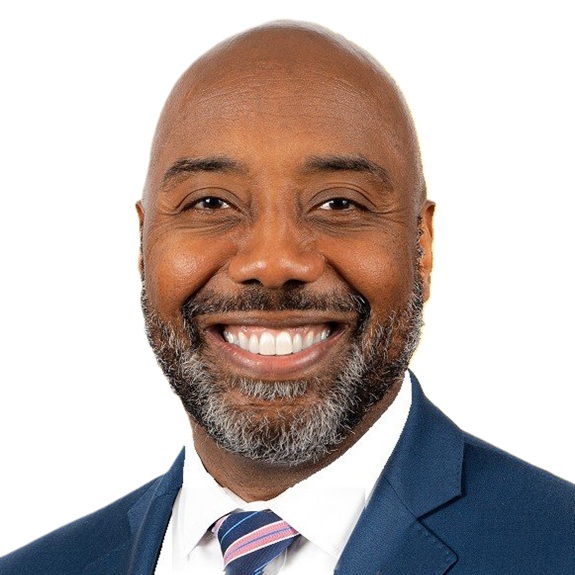 Stephen B. Dunbar III, JD, CLUSocial Links NavigationExecutive VP, Equitable Advisors
Stephen Dunbar, Executive Vice President of Equitable Advisors’ Georgia, Alabama, Gulf Coast Branch, has built a thriving financial services practice where he empowers others to make informed financial decisions and take charge of their future. Dunbar oversees a territory that includes Georgia, Alabama and Florida. He is also committed to the growth and success of more than 70 financial advisers. He is passionate about helping people align their finances with their values, improve financial decision-making and decrease financial stress to build the legacy they want for future generations.
Latest-
 How to Slash Your Taxes on Large Stock or Property Sales
Selling a major asset can result in huge capital gains taxes, but combining direct indexing with tax-loss harvesting can significantly reduce your tax bill.
-
 Why 2026 Is the Year to Reconsider Global Diversification
It's been a while since investors had to stray beyond U.S. stocks to reap rewards. But current risks and opportunities suggest it's time to look abroad again.
-
 Stocks Shrug Off Tariff Ruling, Weak GDP: Stock Market Today
Market participants had plenty of news to sift through on Friday, including updates on inflation and economic growth and a key court ruling.
-
I'm a Wealth Adviser: This Strategy Can Slash Your Taxes on Large Stock or Property Sales
Selling a major asset can result in huge capital gains taxes, but combining direct indexing with tax-loss harvesting can significantly reduce your tax bill.
-
Why 2026 Could Be the Year to Reconsider Global Diversification
It's been a while since investors had to stray beyond U.S. stocks to reap rewards. But current risks and opportunities suggest it's time to look abroad again.
-
Stocks Shrug Off Tariff Ruling, Weak GDP: Stock Market Today
Market participants had plenty of news to sift through on Friday, including updates on inflation and economic growth and a key court ruling.
-
 Is Life Insurance Taxable When It's Paid Out?
You received a big check from your loved one's life insurance policy. Will the IRS be expecting a check from you now?
-
 Before You Go to Costco, Try This Grocery Strategy First
A simple shift in how you plan meals could help you spend and waste less.
-
 10 Things to Know About Decluttering
You’ve spent a lifetime amassing your stuff. Here’s how to get rid of it.
-
 QUIZ: Are You Ready To Retire at 62?
Quiz Are you in a good position to retire at 62? Find out with this quick quiz.
-
 Are You Making These 3 Savings Mistakes?
Avoiding these common mistakes can help you build a foundation of wealth while not leaving thousands of dollars on the table.