- Home
- Taxes
- Income Tax
Here's how taxpayers can amend their already-filed income tax returns amid a potentially looming legal battle on Capitol Hill.
 By
Kate Schubel
published
19 February 2026
in News
By
Kate Schubel
published
19 February 2026
in News
When you purchase through links on our site, we may earn an affiliate commission. Here’s how it works.
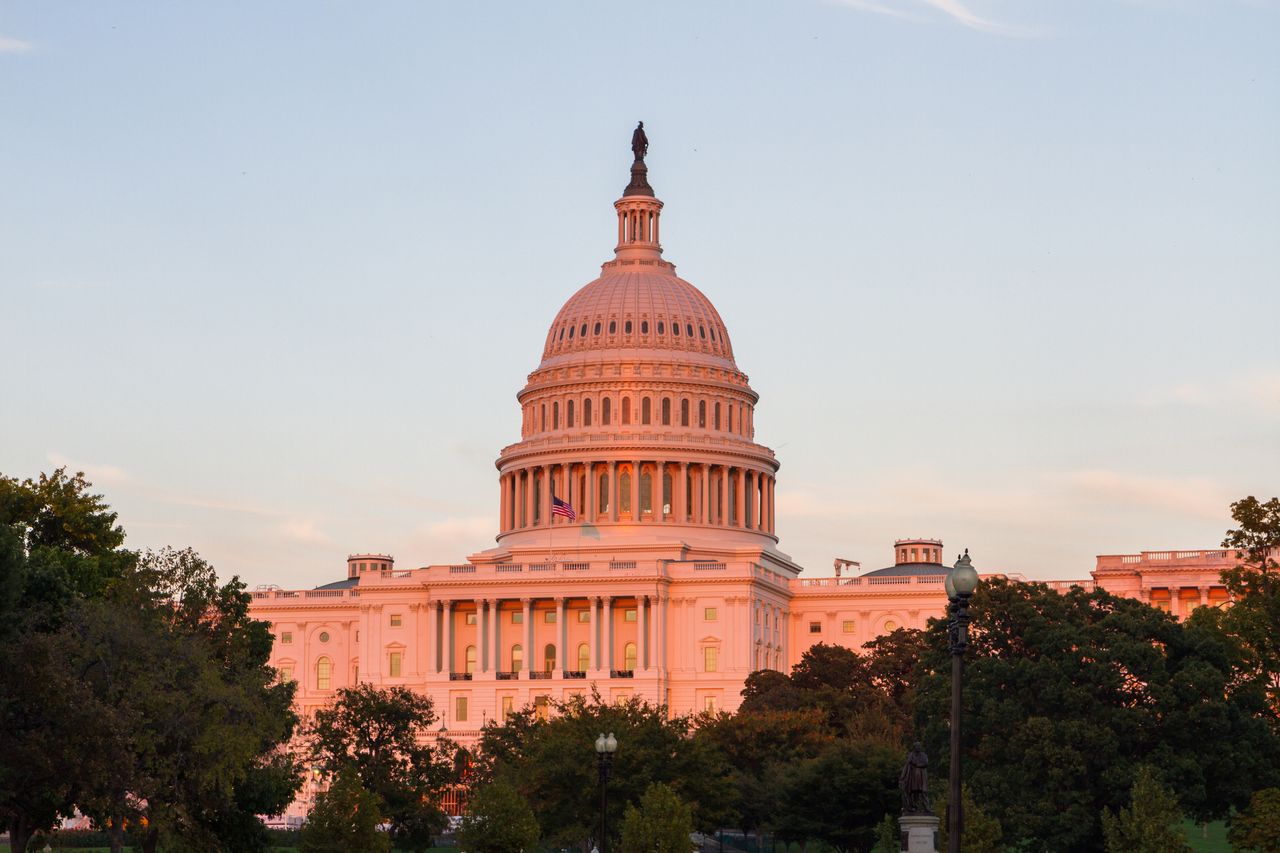
 (Image credit: Getty Images)
- Copy link
- X
Profit and prosper with the best of Kiplinger's advice on investing, taxes, retirement, personal finance and much more. Delivered daily. Enter your email in the box and click Sign Me Up.
Contact me with news and offers from other Future brands Receive email from us on behalf of our trusted partners or sponsors By submitting your information you agree to the Terms & Conditions and Privacy Policy and are aged 16 or over.You are now subscribed
Your newsletter sign-up was successful
Want to add more newsletters?

Delivered daily
Kiplinger Today
Profit and prosper with the best of Kiplinger's advice on investing, taxes, retirement, personal finance and much more delivered daily. Smart money moves start here.
Signup +
Sent five days a week
Kiplinger A Step Ahead
Get practical help to make better financial decisions in your everyday life, from spending to savings on top deals.
Signup +
Delivered daily
Kiplinger Closing Bell
Get today's biggest financial and investing headlines delivered to your inbox every day the U.S. stock market is open.
Signup +
Sent twice a week
Kiplinger Adviser Intel
Financial pros across the country share best practices and fresh tactics to preserve and grow your wealth.
Signup +
Delivered weekly
Kiplinger Tax Tips
Trim your federal and state tax bills with practical tax-planning and tax-cutting strategies.
Signup +
Sent twice a week
Kiplinger Retirement Tips
Your twice-a-week guide to planning and enjoying a financially secure and richly rewarding retirement
Signup +
Sent bimonthly.
Kiplinger Adviser Angle
Insights for advisers, wealth managers and other financial professionals.
Signup +
Sent twice a week
Kiplinger Investing Weekly
Your twice-a-week roundup of promising stocks, funds, companies and industries you should consider, ones you should avoid, and why.
Signup +
Sent weekly for six weeks
Kiplinger Invest for Retirement
Your step-by-step six-part series on how to invest for retirement, from devising a successful strategy to exactly which investments to choose.
Signup + An account already exists for this email address, please log in. Subscribe to our newsletterWhat's worse than filing your taxes once? Having to do it twice. But that may be the startling reality for roughly 42,000 District of Columbia residents who were proactive enough to file their tax returns early this year.
As reported by Kiplinger, the D.C. Council recently enacted an emergency bill to decouple local tax laws from the federal 2025 Trump tax bill. That move would have effectively blocked residents from claiming the $6,000 "senior bonus," the "no tax on tips" deduction, and other new federal tax breaks on their District returns.
However, the United States Congress, which holds final review authority over D.C. laws, has struck back. A joint "disapproval" from both the U.S. House of Representatives and the Senate overturned the city's emergency tax law.
From just $107.88 $24.99 for Kiplinger Personal Finance
Become a smarter, better informed investor. Subscribe from just $107.88 $24.99, plus get up to 4 Special Issues
CLICK FOR FREE ISSUE
Sign up for Kiplinger’s Free Newsletters
Profit and prosper with the best of expert advice on investing, taxes, retirement, personal finance and more - straight to your e-mail.
Profit and prosper with the best of expert advice - straight to your e-mail.
Sign up"It's just a mess, it didn't have to happen," D.C. Council Chairman Phil Mendelson told reporters earlier this month, following a Senate vote to overturn the District's emergency legislation.
Now, "early bird" filers might need to refile their income tax returns to capture local tax relief, and all D.C. filers could be forced to finish their income taxes in the fall.
Bonus deduction for older adults and overtime tax breaks are (almost) final in D.C.
Although the newly enacted Trump tax law sets federal policy, states generally have the right to conform their local tax policies or move away from federal law. The act of "moving away" is known as decoupling.
Facing projected revenue shortfalls, the D.C. council passed an emergency law in November to decouple the city's budget from the federal tax overhaul, citing budgetary concerns amid a then-government shutdown.
By opting out of the federal tax breaks, city officials anticipated using the almost $600 million in tax revenue to create a new local Child Tax Credit and bolster the District's version of the federal Earned Income Tax Credit (EITC).
However, Congress has moved to block the District's decision.
Capitol Hill lawmakers challenged the city's maneuver through House Joint Resolution 142, which explicitly "nullifies [recently passed decoupling] legislation enacted by the District of Columbia," effectively forcing the city to realign its local tax code with the new federal standard.
This intervention is possible because, unlike states that have decoupled, Congress maintains ultimate authority over the nation's capital (more on that later).
So, what happens next?
Since the resolution passed both the U.S. House and Senate, it moved to President Donald Trump's desk, where it was signed.
The resolution has drawn sharp criticism from some officials who argue that the District is being used as a pawn at the expense of taxpayers.
“The truth is, this city has already been under unrelenting assault by this [Trump] administration. The amount of bureaucracy in terms of refiling taxes puts another burden as well.” U.S. Senator Mark Warner (D-Virginia) remarked during Senate floor proceedings in February 2026.
The sentiment was echoed by Mendelson, as reported by WAMU, “There’s nothing fair about what’s going on. All they are doing is causing pain to the District government and to taxpayers.”
Taxpayer impact: Should you submit an amended tax return in D.C.?
The Congressional intervention is set to disrupt a tax filing season that is already in full swing. And the impact won't just be legislative, but a potentially massive technical hurdle for the District’s tax infrastructure.
D.C. Chief Financial Officer Glen Lee outlined the negative consequences of the disapproval resolution in a joint letter to congressional leaders.
"Forms and systems for tax year 2025 will no longer be consistent with District law," Lee wrote. ".... adjustments will likely require several months, which would extend District income tax filing deadlines into fall 2026." The financial impact of the decoupling is not only expected to result in lost revenue but, as Lee explains in the letter, "also generate millions of dollars of additional expenses."
The news comes after the District of Columbia anticipates losing up to $1 billion over the next four years due to the projected loss of 40,000 federal government-related jobs from the Trump administration staffing cuts, according to the D.C. Fiscal Policy Institute. Further erosion of the budgetary outlook could force cuts to public services and may negatively impact overall economic health, according to local officials.
Yet some warn that 2026 filers will bear the brunt of these fiscal shifts first.
"I just can't even imagine what it's like to tell thousands of tax filers, 'Oh, I know you filed, you did what you were supposed to do, but, oops, can you do it again?" D.C. Mayor Muriel Bowser, who is not seeking another term, said at a news conference earlier this month.
D.C. officials say changing local tax policy mid-season forces taxpayers who already filed to re-file, causing significant filing delays, and possibly lowering taxpayer compliance.
What does that mean for taxpayers?
Well, for the more than 42,000 residents who have already filed in D.C., they might now need to do the following since Trump signed the decoupling resolution (to take advantage of any applicable federal tax breaks on their local returns):
- Wait until D.C.'s new tax systems and forms are up and running.
- Use Form D-40 and check the box that it's an amended return.
- Include an explanation of the changes and any required forms that were missed.
- File online through MyTax.DC.gov or mail the completed amended return within 3 years of the original filing date, or 2 years after paying tax (whichever is later).
For the approximate 361,000 D.C. residents expected to file, processing delays could slow down tax refunds, depending on how long it takes the D.C. Office of Tax and Revenue to update applicable forms and systems.
Is a legal battle looming over the Trump tax law?
While the current fight may be in legislative buildings and press conference meetings, it could soon move to the courtroom.
The District of Columbia Home Rule Act of 1973 gives Congress the authority to review and potentially block any bill passed by the D.C. Council. But that block must occur within a specific window — typically 30 days.
That's why Mendelson recently contended that time stopped ticking at 12 pm on February 12, 2026, which was hours before the House and Senate finalized Joint Resolution 142. On that day, Mendelson posted a formal notice declaring that the review period had expired without federal intervention, effectively making the "decoupling" law permanent.
Congress, however, disagrees. Federal lawmakers argue that the Home Rule Act's definition of "days" is more flexible, accounting only for the days when both congressional chambers are in session. This would mean the review period hadn't expired before the resolution was passed.
D.C. officials haven't filed a lawsuit yet. But tax season is in full swing, a new city budget is due in April, and so the D.C. Council has decisions to make soon. Stay tuned.
Read More
- 10 Tax Breaks for Middle-Class Families on Income Taxes
- 3 Popular Tax Breaks Are Gone for Good in 2026
- What Changed in Trump's Tax Bill and How It Affects Your Taxes
- IRS Income Tax Refund Schedule 2026: When Will Your Refund Arrive?
 Kate SchubelTax Writer
Kate is a CPA with experience in audit and technology. As a Tax Writer at Kiplinger, Kate believes that tax and finance news should meet people where they are today, across cultural, educational, and disciplinary backgrounds.
Latest-
 Over 65? Here's What the New $6K 'Senior Deduction' Means for Medicare IRMAA Costs
Tax Breaks A new deduction for people over age 65 has some thinking about Medicare premiums and MAGI strategy.
-
 5 Investing Rules You Can Steal From Millennials
Millennials are reshaping the investing landscape. See how the tech-savvy generation is approaching capital markets – and the strategies you can take from them.
-
 QDRO: The Tool You Need to Avoid a Post-Divorce Administrative Nightmare
Learn why a divorce decree isn’t enough to protect your retirement assets. You need a QDRO to divide the accounts to avoid paying penalties or income tax.
-
Over 65? Here's What the New $6K 'Senior Deduction' Means for Medicare IRMAA Costs
Tax Breaks A new deduction for people over age 65 has some thinking about Medicare premiums and MAGI strategy.
-
 For More Flexible Giving, Consider Combining a Charitable Remainder Trust With a Donor-Advised Fund
If a charitable remainder trust puts too many constraints on your family's charitable giving, consider combining it with a donor-advised fund for more control.
-
 The Illinois 'Cliff Tax': A Single Dollar Could Cost Families Hundreds of Thousands
Illinois' estate tax "threshold" (rather than "exemption") can surprise families, but proactive planning can help preserve more for heirs and charitable causes.
-
 How to Open Your Kid's $1,000 Trump Account
Tax Breaks Filing income taxes in 2026? You won't want to miss Form 4547 to claim a $1,000 Trump Account for your child.
-
 In Arkansas and Illinois, Groceries Just Got Cheaper, But Not By Much
Food Prices Arkansas and Illinois are the most recent states to repeal sales tax on groceries. Will it really help shoppers with their food bills?
-
 7 Bad Tax Habits to Kick Right Now
Tax Tips Ditch these seven common habits to sidestep IRS red flags for a smoother, faster 2026 income tax filing.
-
 New Plan Could End Surprise Taxes on Social Security 'Back Pay'
Social Security Taxes on Social Security benefits are stirring debate again, as recent changes could affect how some retirees file their returns this tax season.
-
 Living in One State, Working in Another: How to Avoid a Tax Season Headache
State Tax Living and working in two states can take a heavy toll on your paycheck and give you a headache come tax time. Here's what to know.