- News
- UK
- Crime
Officers also hint that top executives at Post Office and Fujitsu may face investigation
Jane DaltonTuesday 02 December 2025 20:42 GMT
 ClosePost Office scandal report ‘shows full scale of horror unleashed on victims’
For free real time breaking news alerts sent straight to your inbox sign up to our breaking news emails
Sign up to our free breaking news emails
Sign up to our free breaking news emails
Email*SIGN UPI would like to be emailed about offers, events and updates from The Independent. Read our Privacy notice
Detectives investigating the Post Office scandal have called on more sub-postmasters to come forward after it was revealed that signed non-disclosure agreements, also known as gagging orders, had been scrapped.
Post Office bosses have told police that the agreements preventing victims from speaking about their experiences are no longer enforceable.
Police say it means people who were wrongly accused due to faulty systems may now reveal what happened to them without fear of repercussions.
At the same time, they have raised the prospect of top executives at the Post Office and Fujitsu – whose Horizon IT system was at fault – facing investigation.
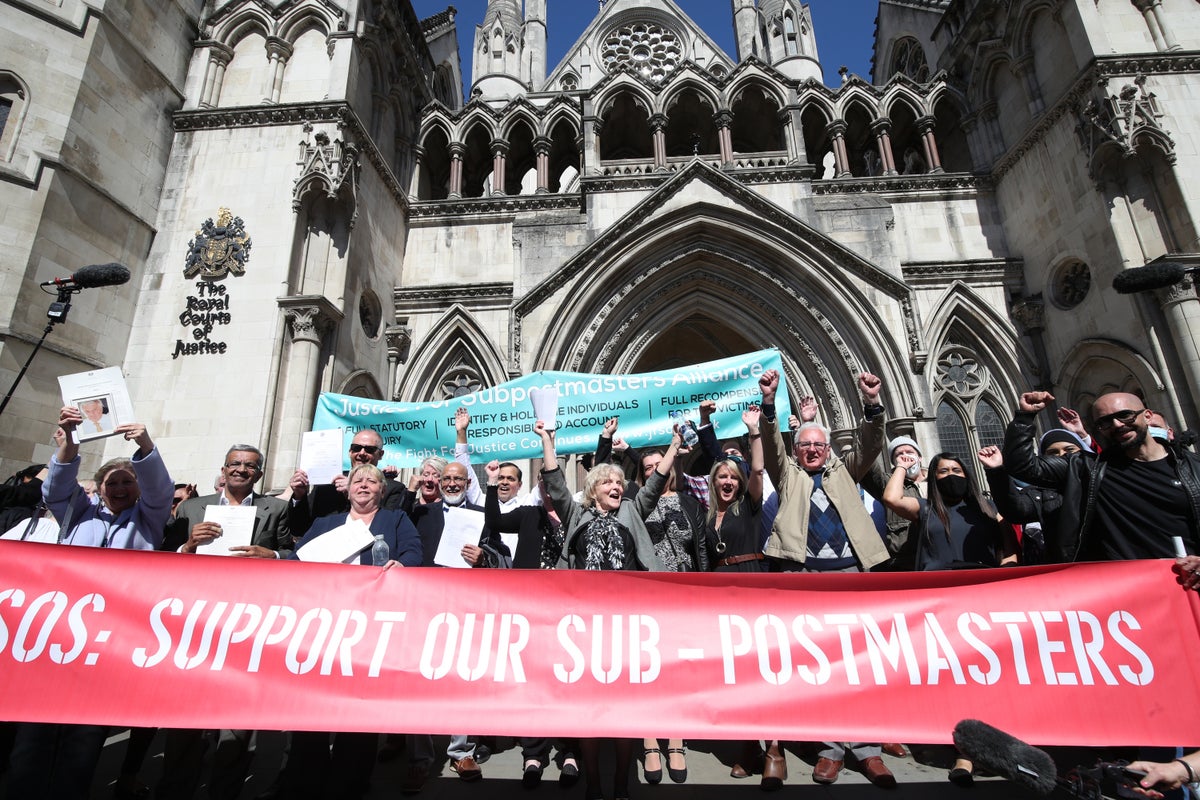
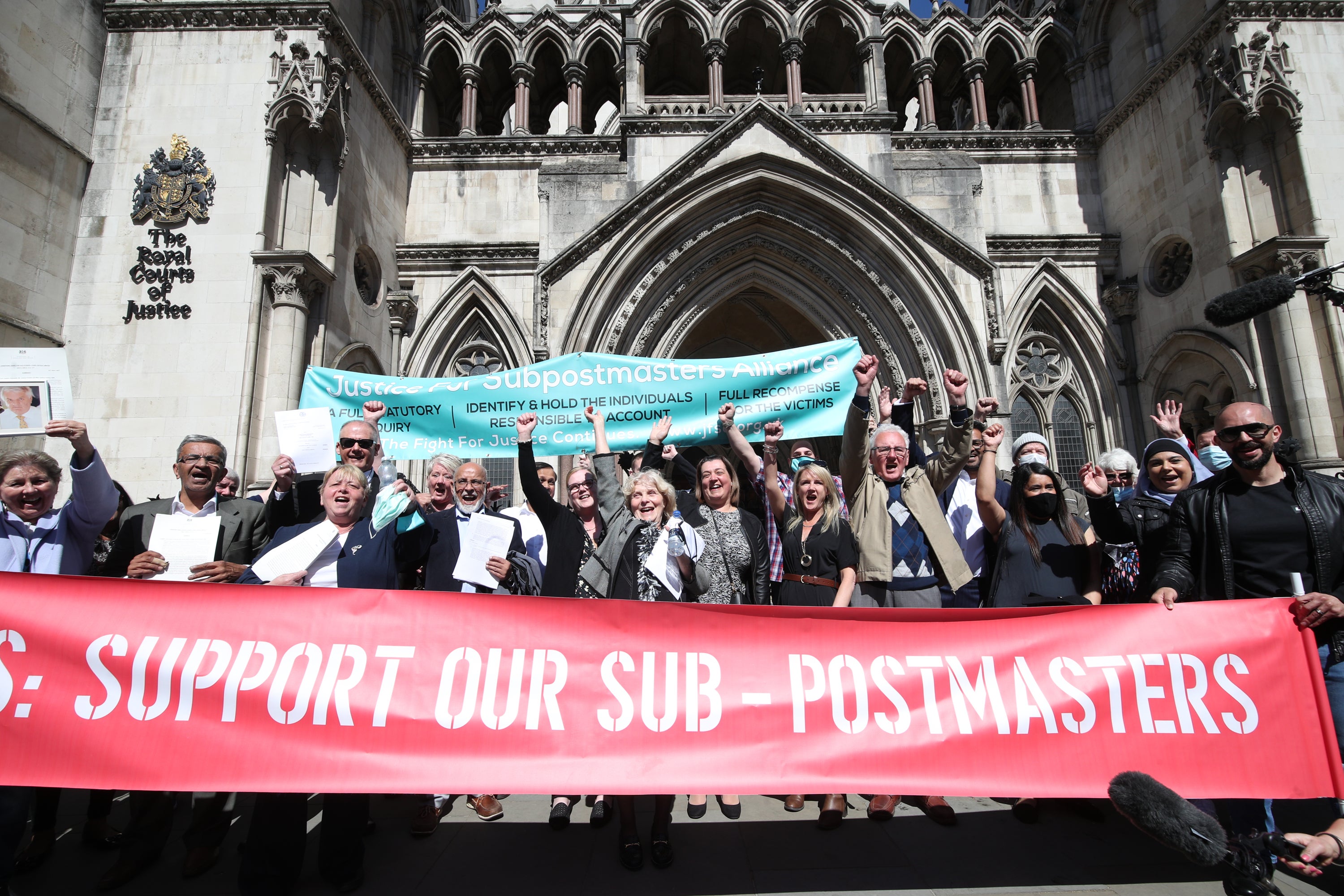 open image in galleryFormer post office workers celebrate outside the Royal Courts of Justice, London, after having their convictions overturned by the Court of Appeal (PA) (PA Archive)
Officers say they do not know how many sub-postmasters signed confidentiality agreements but it’s estimated 10,000 could have suffered in the scandal, when the software wrongly showed money was missing from branch accounts.
It’s thought a significant proportion of those may have signed non-disclosure agreements (NDAs).
Up to 1,000 sub-postmasters were prosecuted and 236 were sent to prison before the extent of the scandal came to light.
Commander Stephen Clayman, in charge of the investigation, Operation Olympos, told a briefing on Tuesday that some victims may have suffered trauma but it was important they spoke to police.
“We know there will be victims out there who have had to effectively suffer in silence, not allowed to speak, thinking they can't speak out, not getting any support.
“It's really important we do hear from them.
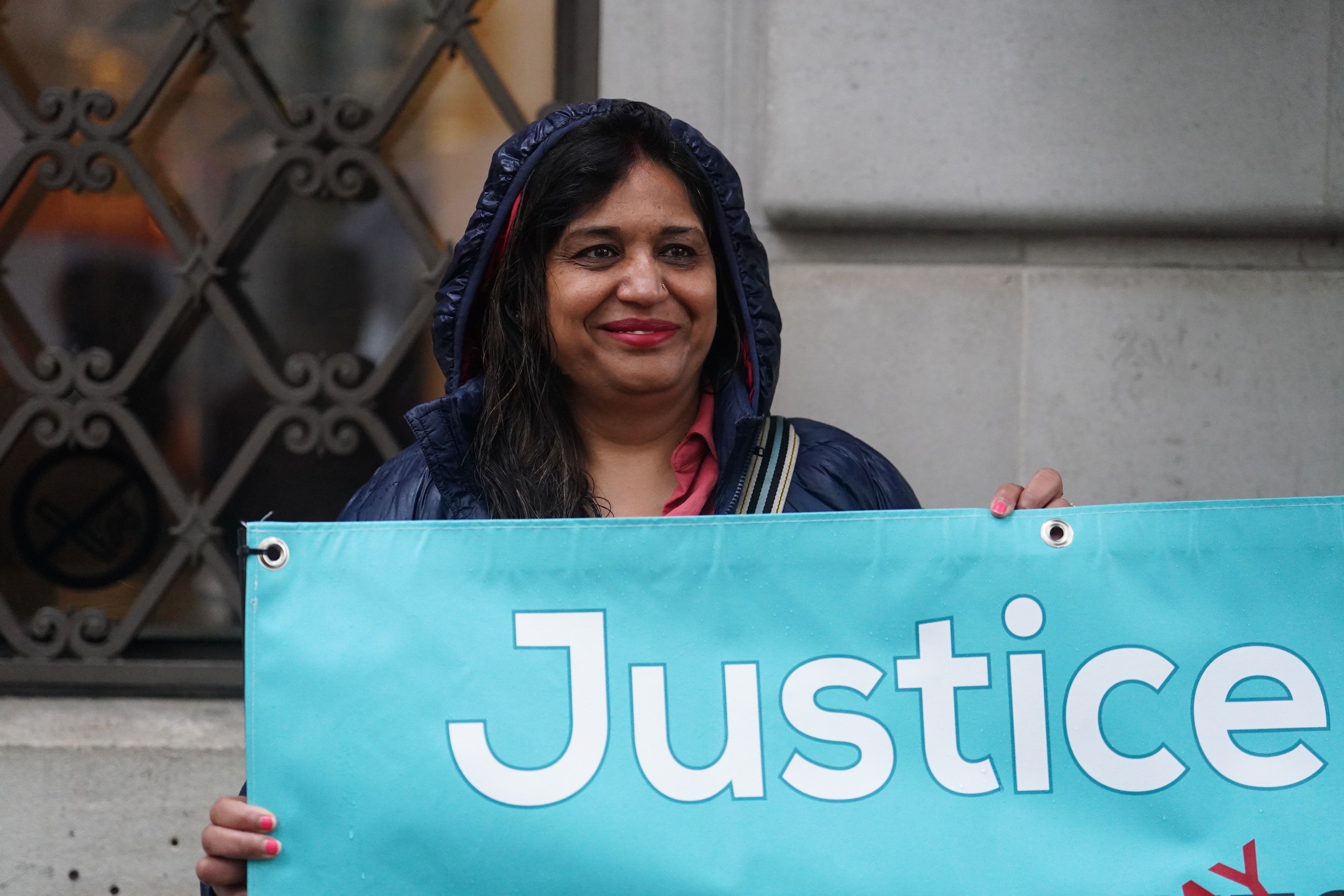 open image in gallerySubpostmistress Seema Misra was given a 15-month prison sentence in November 2010 when she was eight weeks pregnant (Jordan Pettitt/PA) (PA Wire)
“Some people don't want to engage. They've probably had enough of it. They have been traumatised by it, and may not wish to talk. It's really quite challenging.”
On Monday, it was revealed that eight people had been identified officially as suspects, five of whom have been interviewed under caution.
A further 53 people have been identified as “persons of interest” in the investigation.
Police have not disclosed suspects’ names.
But they said the next phase of their investigation would look at executives and senior decision-makers.
“Everyone's in play in terms of the sorts of people involved in this, from investigators, managers, lawyers… whoever, up to board level on both companies, we have everyone in sight, and we always say we'll go where the evidence takes us in terms of who that may be,” said Mr Clayman.
The police said on Monday they were seeking advice from the Crown Prosecution Service on corporate and gross negligence manslaughter charges.
On Tuesday, Mr Clayman and senior investigating officer Mick Norman also revealed they had asked the Home Office for more money to keep their probe going.
This year, the Home Office grant was £1.8m and the rest of the £10m cost of the investigation came from forces but they can no longer afford to do so, the officers said.
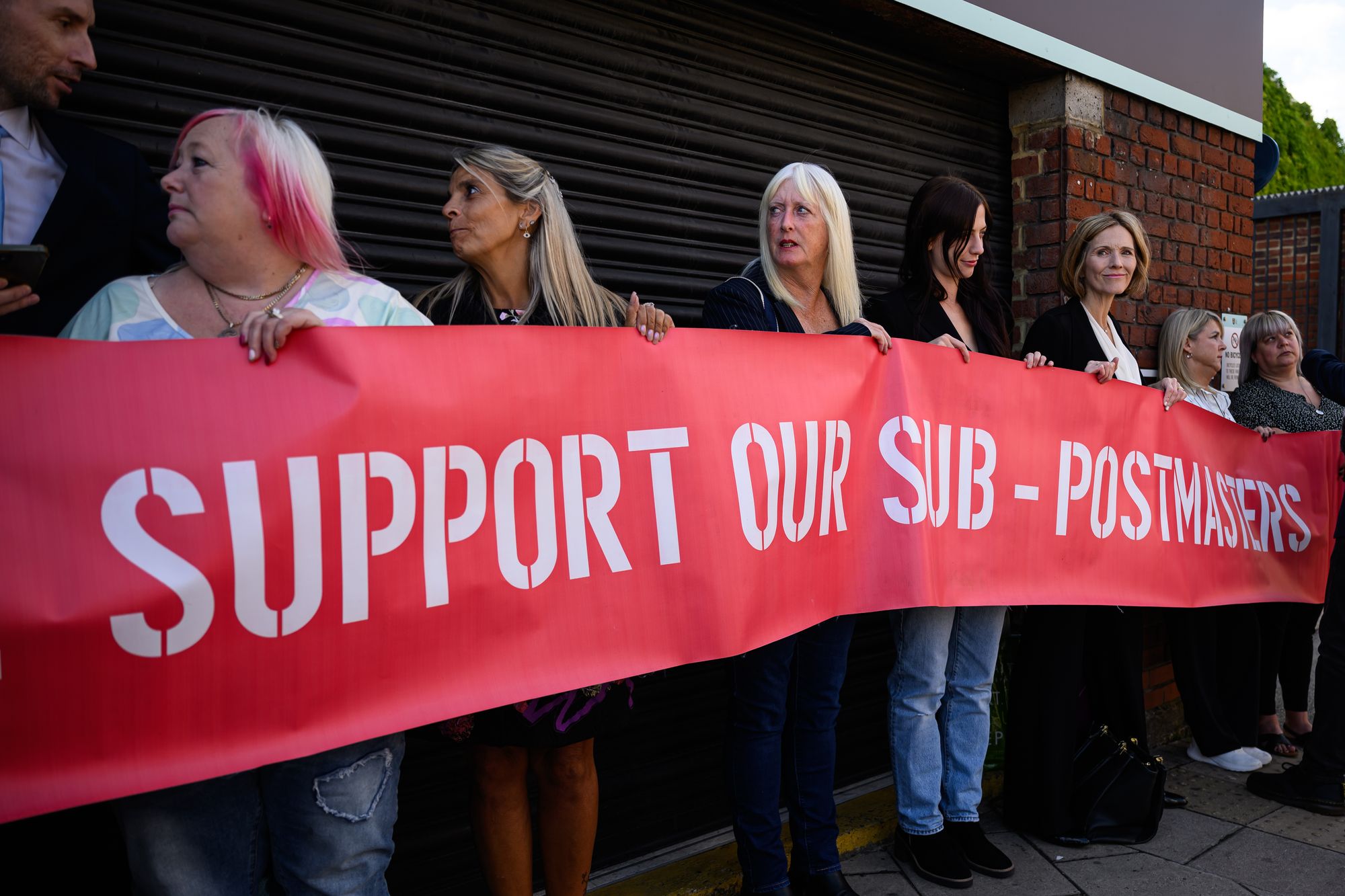 open image in galleryMore than 900 sub-postmasters were wrongly prosecuted and 236 were sent to prison (Getty Images)
Without government cash, the operation could face delays, they warned.
They said they hoped decisions on charging would be made by late 2027.
Police are under pressure to press charges but said they wanted their probe to be accurate.
“We have to keep this as tight as we can, for everybody's sake, particularly the victims,” Mr Clayman said.
“Many have lived through this for far too long, so it's a really tricky balance to to achieve, and we're desperately trying to make sure the strategy as it is remains sound.”
He defended what appears to many to be the slow pace of the investigation.
“The danger is we shortcut and then what happens is you can run into problems, particularly with disclosure, which is a central aspect of what we're investigating, so we've got to make sure we don't make mistakes in that area,” he said.
The public inquiry chairman Sir Wyn Williams revealed this year that at least 59 people involved had contemplated suicide, with a “real possibility” that 13 people took their own lives as a result of their experiences.