- Voices
- The Independent View
Editorial: The lord chancellor is right to adopt urgent measures to tackle a court backlog that is ruining lives and depriving so many of justice – but even if it takes years, the general presumption of a basic right to trial by jury must be restored
Tuesday 02 December 2025 20:09 GMTComments
 CloseDavid Lammy announces ‘swift courts’ in justice reform
The best of Voices delivered to your inbox every week - from controversial columns to expert analysis
Sign up for our free weekly Voices newsletter for expert opinion and columns
Sign up to our free weekly Voices newsletter
Email*SIGN UPI would like to be emailed about offers, events and updates from The Independent. Read our Privacy notice
Cabinet feedback” seems to be the euphemism of the day, at least so far as David Lammy’s sweeping reforms to the criminal court system in England and Wales go.
One can only imagine the formal and informal pressure that was exerted on the lord chancellor when his colleagues discovered, via leaks and, presumably, Whitehall gossip, that a shake-up of the legal system, which would signal the beginning of the end for trial by jury, was supposedly being considered.
Mr Lammy has instead announced the creation of new “swift courts”, which will see a judge decide verdicts in thousands of cases, scrapping jury trials for “either way” cases, including those for assault, burglary and drug dealing. This is one government U-turn that is to be warmly welcomed.
Despite the country’s all-too-apparent economic problems and the perma-crises in the public services, Britain cannot have sunk so low as to deprive its citizens of a human right they have enjoyed for 800 years, and in times far tougher than today. It was not, after all, restricted so much even in wartime and, aside from the Covid pandemic, the only part of the United Kingdom where it has been more routinely denied was in Northern Ireland for a brief, and disastrous, period for terrorism offences during the height of the Troubles.
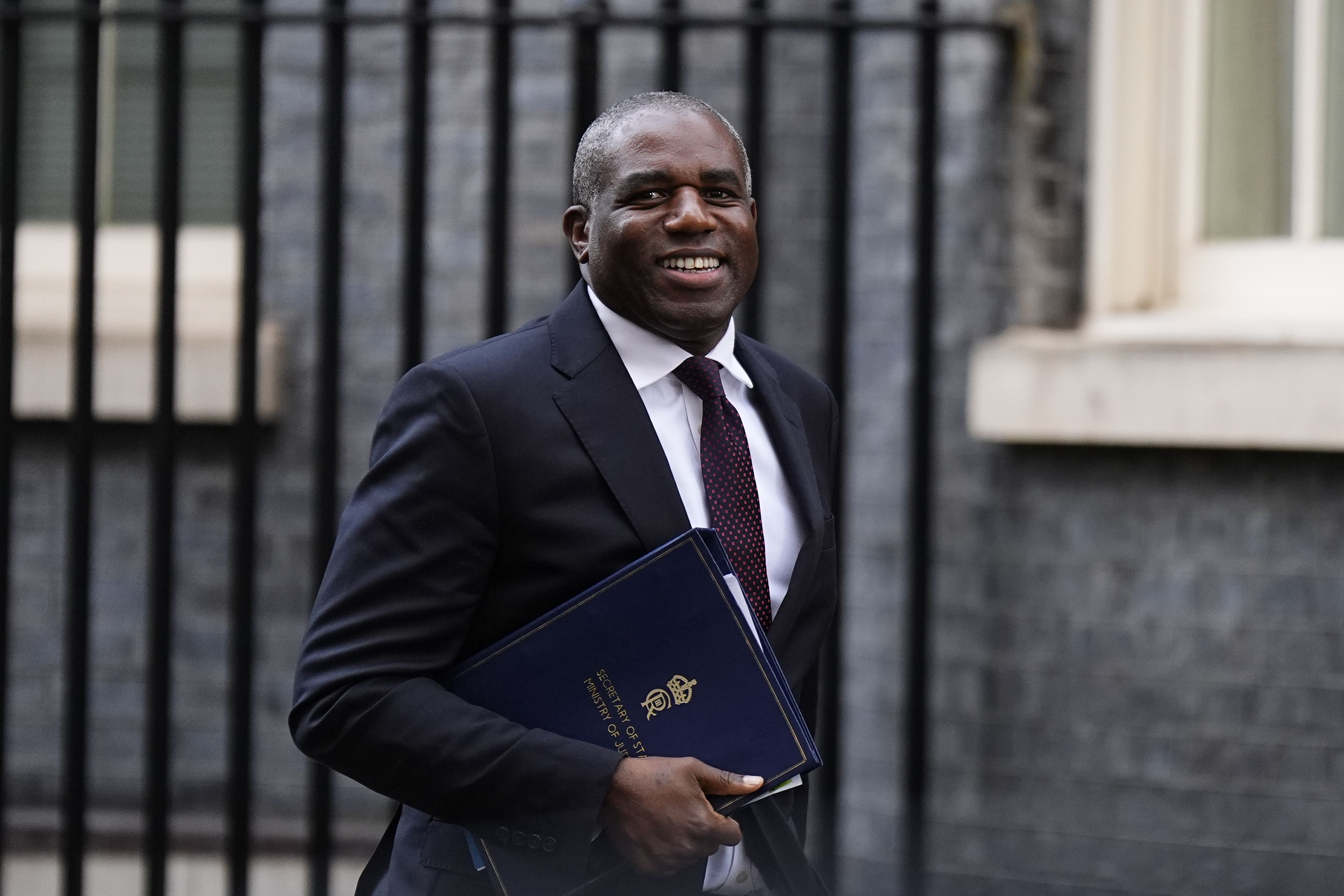 One danger that David Lammy must reassure public and parliament about is any sense that jury trial as a democratic backstop is about to end (PA)
More pertinently, Mr Lammy and his colleagues in the justice department are perfectly correct to place another well-respected principle of fairness on the judicial scales – that “justice delayed is justice denied”. It cannot be right that victims of rape, for example, should need to wait four or five years to see their cases heard – and too many drop out of the system because of the agony of that delay.
The courts, like the prisons, have relied to an extraordinary extent on paper systems, and those will often be more prone to human error than a digital system, as well as being more costly and less efficient. Modernisation has become the most urgent of tasks. It would certainly help relieve Mr Lammy of the duty of defending the accidental release of random convicts.
The story does, though, raise some questions about Mr Lammy’s judgement. It would have been far better for him to have accepted the reform agenda originally handed to him after careful study by Sir Brian Leveson, a highly distinguished judge additionally endowed with a keen and rare sense of the art of the possible.
We are now more or less back where Sir Brian’s review recommended, with modest reforms to the system that balance justice and cost with new courts fitting between the magistrates and the crown courts.
Mr Lammy calls his version “swift courts”, which at least captures the purpose of them. After all, it was never sensible even in the time of King John to make jury trial automatic for the most trivial of offences, and most transgressions are competently dealt with by magistrates alone.
On balance, there may be no alternative to having judge-only trials for particularly technical and lengthy fraud and financial offences. It is and always has been a question of balance. In all events, the present system of appeals remains intact.
Cases where the potential outcome is close, and those with a “public interest”, or political aspect, also need to be protected by a jury: incitement, protest, human rights and terror spring to mind.
Thus, one danger that Mr Lammy must reassure the public and parliament about is any sense that jury trial as a democratic backstop is about to end. There are many celebrated historical cases over the centuries that have entrenched the rights of juries not to convict even in cases where the evidence and a judge’s summing-up point in that direction.
In the enlightened words of one judge back in the 17th century, and now instructionally displayed at the Old Bailey: “Jurors, you have an absolute right to acquit a defendant according to your conscience.” In recent years, we have seen one jury refuse to convict members of Palestine Action on charges of criminal damage to a weapons factory, forcing a retrial; and an instance where climate protesters who had vandalised the premises of JP Morgan in London were acquitted.
In such cases, a jury trial should be available, and especially given the danger that a judge-only trial would lead to accusations of political bias and undermine the independence of the judiciary.
Mr Lammy should also try more generally to ensure that these new restrictions on the right to be tried by one’s fellow citizens are temporary, and for the soft courts to be eventually wound up. In the Commons, he rejected that, said they were permanent (illogically, given the thrust of his arguments), and he said no to adding a “sunset clause” to the legislation. This may well prove a mistake if cross-party dissatisfaction grows and coalesces around this idea.
Even if it takes years, while the backlog in the courts is cleared and the right to prompt justice restored, the general presumption of a basic right to trial by jury has to be re-established. The present situation should be treated as abnormal. In serious, sensitive, “political” and borderline cases, juries are an essential safeguard against overreach by a power-hungry executive and/or a politically compromised judiciary – and they will be for another 800 years, at the least.
More about
David LammyjurycourtLord ChancellorJoin our commenting forum
Join thought-provoking conversations, follow other Independent readers and see their replies
Comments