- Home
Edition
Africa Australia Brasil Canada Canada (français) España Europe France Global Indonesia New Zealand United Kingdom United States Edition:
Global
Edition:
Global
- Africa
- Australia
- Brasil
- Canada
- Canada (français)
- España
- Europe
- France
- Indonesia
- New Zealand
- United Kingdom
- United States
Academic rigour, journalistic flair
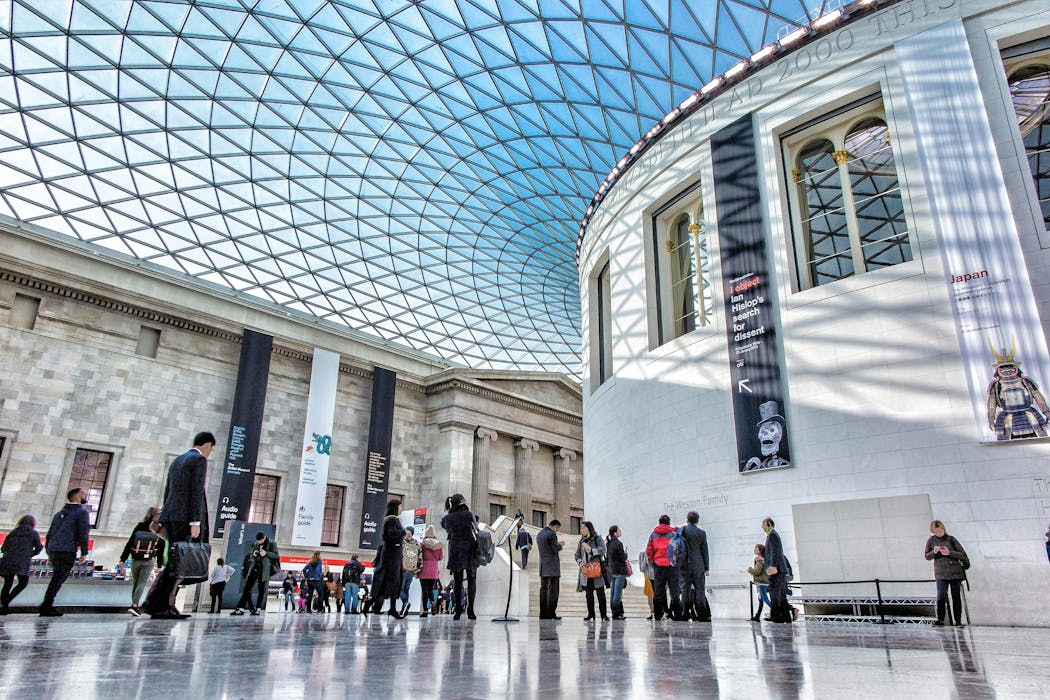
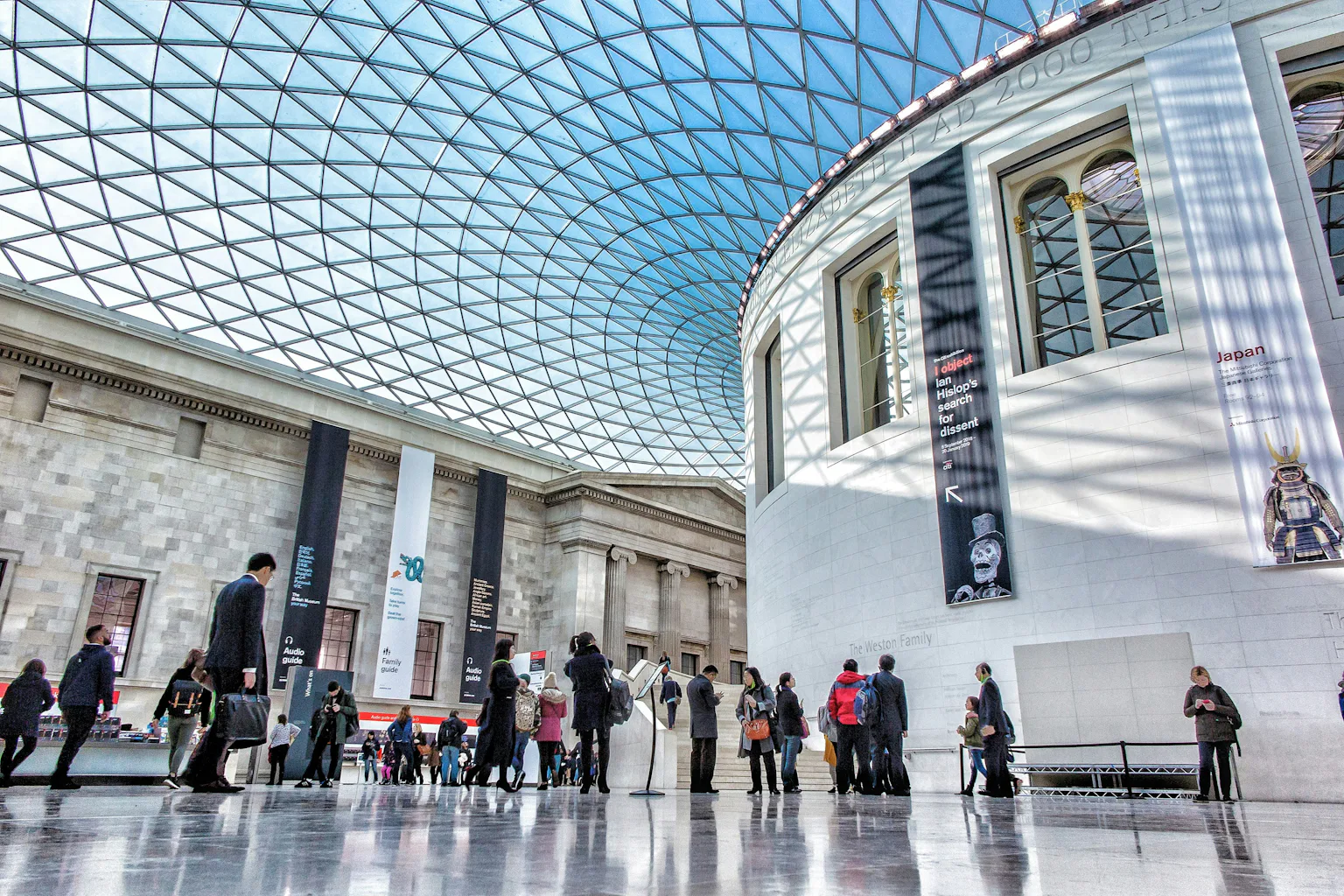 The British Museum has long faced controversy over its sponsors.
Nicolas Lysandrou/Unsplash
Why British Museum has ended 15-year Japan Tobacco deal – and what it means for future partnerships
Published: December 2, 2025 6.31pm GMT
Allen Gallagher, Duncan Thomas, Sophie Braznell, University of Bath
The British Museum has long faced controversy over its sponsors.
Nicolas Lysandrou/Unsplash
Why British Museum has ended 15-year Japan Tobacco deal – and what it means for future partnerships
Published: December 2, 2025 6.31pm GMT
Allen Gallagher, Duncan Thomas, Sophie Braznell, University of Bath
Authors
-
 Allen Gallagher
Postdoctoral Research Fellow, Department of Health, University of Bath
-
Duncan Thomas
Policy and Knowledge Exchange Lead, Department for Health, University of Bath
-
Sophie Braznell
Research Associate, Department for Health, University of Bath
Disclosure statement
Allen Gallagher receives funding from Bloomberg Philanthropies as part of the Bloomberg Initiative to Reduce Tobacco Use (www.bloomberg.org).
Duncan Thomas receives funding from Bloomberg Philanthropies as part of the Bloomberg Initiative to Reduce Tobacco Use (www.bloomberg.org).
Sophie Braznell receives funding from Bloomberg Philanthropies as part of the Bloomberg Initiative to Reduce Tobacco Use (www.bloomberg.org).
Partners

University of Bath provides funding as a member of The Conversation UK.
View all partners
DOI
https://doi.org/10.64628/AB.r937yawn5
https://theconversation.com/why-british-museum-has-ended-15-year-japan-tobacco-deal-and-what-it-means-for-future-partnerships-270598 https://theconversation.com/why-british-museum-has-ended-15-year-japan-tobacco-deal-and-what-it-means-for-future-partnerships-270598 Link copied Share articleShare article
Copy link Email Bluesky Facebook WhatsApp Messenger LinkedIn X (Twitter)Print article
The British Museum has ended its controversial 15-year sponsorship with Japan Tobacco International (JTI).
The sponsorship has attracted a lot of criticism in that time. In 2016, 1,000 public health experts wrote an open letter calling for London’s cultural institutions, including the British Museum, to end “morally unacceptable” sponsorship from tobacco sponsors.
Despite this, as reported in both 2023 and 2025 by our Tobacco Control Research Group at the University of Bath, the British Museum had continued to have a close relationship with JTI.
It is therefore welcome news that the UK government has finally intervened to end the partnership. It comes following a freedom of information request from the research and campaign organisation Culture Unstained. This revealed that the Department for Health had raised concerns about the partnership earlier this year to the Department for Digital, Culture, Media & Sport, the government department that funds the British Museum. As a result, the museum’s trustees decided not to continue the partnership upon its expiration in September.
This is long overdue. Many other cultural institutions in the UK have already ceased entering into agreements with such companies, given the immense damage tobacco products do to public health.
Tate, for example, stopped accepting all sponsorship from tobacco companies in 1991. The National Gallery, National Portrait Gallery and Victoria and Albert Museum each gradually did the same, leaving The British Museum as the only major UK national art museum still accepting money from a tobacco company.
The British Museum’s director, Nicholas Cullinan, previously argued there needed to be “very good, clear reasons for turning down money that would help keep the British Museum free to the public”.
Ties to a harmful industry
Corporate social responsibility (CSR) became a popular concept in the 1950s. It was originally interpreted as a positive development whereby companies committed resources to further societal gain instead of company profit. By the 1960s, however, more critical interpretations had emerged.
CSR began to be seen as “fundamentally subversive” by business researchers, and now it is commonly interpreted as a mechanism for large corporations to legitimise and consolidate power. For health-harming industries such as tobacco, CSR campaigns can help them “clean” their image by claiming to be investing in society, while simultaneously causing extensive public health harms.
Indeed, sponsoring cultural institutions is a well-documented tobacco industry tactic. Among public health practitioners and researchers, it’s widely seen as part of the industry’s efforts to improve its public image and achieve policy influence.
Viewed in this light, the British Museum’s sponsorship from JTI could be viewed as a deliberate effort by a harmful company to improve its own reputation by exploiting the reputation of a UK cultural institution.
 The British Museum’s director, Nicholas Cullinan has argued there needs to be ‘very good, clear reasons for turning down money that would help keep the British Museum free to the public’.
Xinhua/Alamy
The British Museum’s director, Nicholas Cullinan has argued there needs to be ‘very good, clear reasons for turning down money that would help keep the British Museum free to the public’.
Xinhua/Alamy
Government funding of the British Museum during its tobacco sponsorship contradicts the world’s first public health treaty. The World Health Organization framework convention on tobacco control was adopted in 2003 and has been signed by over 182 countries and the EU as of 2025.
It aims to protect populations from the harms of tobacco through various measures to reduce tobacco consumption, such as preventing people from starting the habit and protecting them from the harm of secondhand smoke.
Article 5.3 of the treaty aims to protect policymaking from the vested interests of the tobacco industry, given the “fundamental and irreconcilable” conflict between the industry’s commercial interests and public health.
This article and its implementation guidelines stipulate that parties should aim to limit interactions with the tobacco industry. This includes rejecting all partnerships with tobacco companies and curbing their CSR activities.
The government’s financial support of the British Museum, while the museum received JTI sponsorship, was therefore problematic.
The future of sponsorship
Unfortunately, despite the welcome British Museum developments, the tobacco industry continues its connections to other UK cultural institutions. Both the London Philharmonic Orchestra and the Royal Academy of Arts continue to accept JTI sponsorship. Hopefully, the British Museum case will draw the attention of other institutions, encouraging them to follow suit.
Tobacco industry sponsorship of the British Museum has hopefully now become a thing of the past. However, it should be noted that the museum continues to accept sponsorship from other health-harming industries. Its ten-year partnership with oil producer BP, for example, has also come under scrutiny. As with the JTI sponsorship, the British Museum appears behind the curve. Other institutions like the Royal Opera House, National Portrait Gallery and Tate galleries have already cut ties with BP.
Time will tell whether the end of the JTI sponsorship will encourage other cultural institutions to reject tobacco industry sponsorship. We need to remain alert and vigilant regarding current and future partnerships entered into by the British Museum and other UK cultural institutions.

This article is part of our State of the Arts series. These articles tackle the challenges of the arts and heritage industry – and celebrate the wins, too.
- Sponsorship
- British Museum
- Give me perspective
- State of the Arts
Events
Jobs
-
 Senior Lecturer, Clinical Psychology
-
University Lecturer in Early Childhood Education
-
Case Specialist, Student Information and Regulatory Reporting
-
Lecturer in Paramedicine
-
Associate Lecturer, Social Work
 Senior Lecturer, Clinical Psychology
 University Lecturer in Early Childhood Education
 Case Specialist, Student Information and Regulatory Reporting
 Lecturer in Paramedicine
 Associate Lecturer, Social Work
- Editorial Policies
- Community standards
- Republishing guidelines
- Analytics
- Our feeds
- Get newsletter
- Who we are
- Our charter
- Our team
- Partners and funders
- Resource for media
- Contact us
-
-
-
-
Copyright © 2010–2025, The Conversation