- Home
Edition
Africa Australia Brasil Canada Canada (français) España Europe France Global Indonesia New Zealand United Kingdom United States Edition:
Global
Edition:
Global
- Africa
- Australia
- Brasil
- Canada
- Canada (français)
- España
- Europe
- France
- Indonesia
- New Zealand
- United Kingdom
- United States
Academic rigour, journalistic flair
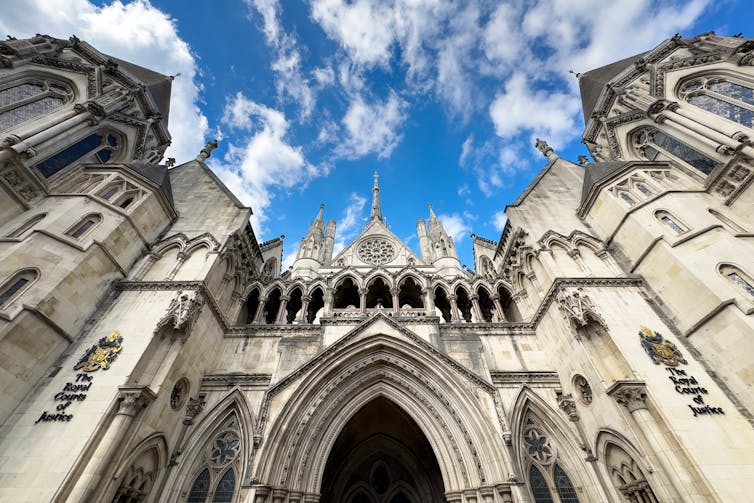
 Imageplotter/Alamy
Jury trials: what the UK government’s plan to limit them would mean for victims, defendants and courts
Published: December 2, 2025 6.31pm GMT
Daniel Alge, Brunel University of London
Imageplotter/Alamy
Jury trials: what the UK government’s plan to limit them would mean for victims, defendants and courts
Published: December 2, 2025 6.31pm GMT
Daniel Alge, Brunel University of London
Author
-
 Daniel Alge
Senior Lecturer in Criminology & Criminal Justice, Brunel University of London
Disclosure statement
Daniel Alge does not work for, consult, own shares in or receive funding from any company or organisation that would benefit from this article, and has disclosed no relevant affiliations beyond their academic appointment.
Partners

Brunel University of London provides funding as a member of The Conversation UK.
View all partners
DOI
https://doi.org/10.64628/AB.wthruskvx
https://theconversation.com/jury-trials-what-the-uk-governments-plan-to-limit-them-would-mean-for-victims-defendants-and-courts-270873 https://theconversation.com/jury-trials-what-the-uk-governments-plan-to-limit-them-would-mean-for-victims-defendants-and-courts-270873 Link copied Share articleShare article
Copy link Email Bluesky Facebook WhatsApp Messenger LinkedIn X (Twitter)Print article
Justice secretary David Lammy has announced one of the most significant changes to criminal justice in England and Wales in decades, by scrapping the use of jury trials for most offences that carry a likely jail sentence of less than three years.
Under the proposals, only the most serious offences such as murder, robbery and rape would continue to be tried by a jury. Most other cases would be heard by a judge alone. The reforms will also include creating new “swift courts” within the crown court division.
The government says judge-alone trials will take 20% less time than jury trials. Currently, cases can take an average of 332 days from charge to completion.
The criminal courts are undoubtedly under extraordinary pressure, compounded by cuts to public funding and the impact of the COVID-19 pandemic. There is currently a record backlog of over 78,000 crown court cases.
Yet the right to be tried by one’s peers has deep roots in the legal tradition of England and Wales. Its origins trace back to Magna Carta in 1215, which promised that no one would lose their liberty or property without “the lawful judgement of his peers and the law of the land”.
The judge and legal philosopher Lord Devlin described trial by jury as “the lamp that shows that freedom lives”. It is a symbolic cornerstone of justice in England and Wales.
These proposals go far beyond the recommendations put forward in Brian Leveson’s independent review of the criminal courts, published in July 2025. Leveson proposed trial by judge alone where the defendant requested it, or in particularly lengthy and complex trials. But Lammy’s proposals appear to be a watering down of leaked MoJ plans to restrict the use of jury trials to only “public interest” cases with sentences of over five years.
In practical terms, jury trials already form only a small part of the system, accounting for around 2% of all criminal cases. Ministry of Justice data shows that most criminal cases are resolved in the magistrates’ courts, in which three magistrates (who are volunteer lay people rather than professional judges), determine guilt as well as sentence.
Although magistrates deal with less serious offending, they currently have the power to imprison offenders for up to 12 months for a single offence, a power which, Lammy announced, would be increased to 18 months. Of those cases which are dealt with by the crown court, around 60% of defendants plead guilty, removing the need for a trial.
 The vast majority of criminal cases never reach a jury trial.
Jane Rix/Shutterstock
The vast majority of criminal cases never reach a jury trial.
Jane Rix/Shutterstock
Some might therefore regard juries as symbolically important, but an unnecessary burden on a struggling court system. While there are valid concerns about aspects of jury decision making, research has found that juries do generally make fair decisions.
There is limited research on judge-only trials, in part because they are relatively rare. Even in jurisdictions where juries are not used, judges more often sit in panels of three or more. There are concerns that judge-only trials risk exacerbating judicial bias.
Perhaps just as importantly, juries provide a form of lay participation that helps ensure public confidence in the fairness of verdicts.
Juries can act as a democratic check on official power. There have been cases, for example in protest-related trials, where juries have interpreted the law in ways that reflect broader community standards. Such instances are a reminder that the legitimacy of criminal justice depends on public consent.
The court backlog
The evidence suggests that jury trials are not the primary cause of the current backlog. Crown court backlogs began rising sharply in 2017, driven by years of budget reductions, court closures, maintenance backlogs and limits on the number of days courts were permitted to sit. However, the backlog has not fallen below 35,000 since 2000.
The pandemic brought unprecedented disruption into an already fragile system as many hearings were postponed and the transition to remote hearings caused delays. By late 2023, there were around 68,000 outstanding crown court cases, already the highest on record, and experts consistently identified lack of capacity as the central issue.
Given that jury trials make up such a small proportion of criminal cases, reducing them cannot, on basic numerical grounds, meaningfully reduce a backlog of this scale. The government has stated that restricting jury trials would save £31 million, just 0.2% of the MoJ budget.
It could, however, create new problems, including increased appeals, challenges on grounds of judicial bias and reduced public confidence in the outcome of trials.
Read more: Could England and Wales introduce jury-free trials? Here's how they work in other countries
The Institute for Government has warned that such changes could increase the risk of wrongful convictions and further erode trust in the justice system.
There is no doubt that long waits can be profoundly distressing for victims as well as defendants and witnesses. But victims’ interests also include trust in the process and confidence that decisions about guilt reflect a broad social judgement, not just the view of a single official.
This does not mean that the jury system is perfect or that reform is unnecessary. Leveson’s review of the courts suggested targeted changes, such as judge-only trials in highly complex fraud cases, or hybrid panels of judges and magistrates for certain intermediate offences. It also called for significant improvements in digital case management and infrastructure – investments that could address underlying inefficiencies more directly.
Restricting jury trials might appear to offer a fast route to clearing backlogs, but the data suggests that delays stem from wider capacity constraints, not the workings of juries themselves. England and Wales already rely overwhelmingly on magistrates’ courts and guilty pleas to handle most cases.
If the government is serious about improving outcomes for both victims and defendants, it should invest in the capacity of the courts, rather than remove one of the few remaining avenues for public participation in the criminal justice system.
- UK courts
- Jury trial
- Ministry of Justice
- David Lammy
Events
Jobs
-
 Senior Lecturer, Clinical Psychology
-
University Lecturer in Early Childhood Education
-
Case Specialist, Student Information and Regulatory Reporting
-
Lecturer in Paramedicine
-
Associate Lecturer, Social Work
 Senior Lecturer, Clinical Psychology
 University Lecturer in Early Childhood Education
 Case Specialist, Student Information and Regulatory Reporting
 Lecturer in Paramedicine
 Associate Lecturer, Social Work
- Editorial Policies
- Community standards
- Republishing guidelines
- Analytics
- Our feeds
- Get newsletter
- Who we are
- Our charter
- Our team
- Partners and funders
- Resource for media
- Contact us
-
-
-
-
Copyright © 2010–2025, The Conversation