The Independent's journalism is supported by our readers. When you purchase through links on our site, we may earn commission.
- Lifestyle
Instead of weekly injections like humans receive, the cats in the study will get small injectable implants, slightly larger than a microchip, that release the drug gradually over six months
Erin KellerIn OhioTuesday 02 December 2025 17:16 GMTComments
 CloseWHO Endorses Weight Loss Drugs To Combat Obesity Crisis.
Sign up to our free Living Well email for advice on living a happier, healthier and longer life
Live your life healthier and happier with our free weekly Living Well newsletter
Live your life healthier and happier with our free weekly Living Well newsletter
Email*SIGN UPI would like to be emailed about offers, events and updates from The Independent. Read our Privacy notice
Many people might be looking to shift a few pounds in the New Year - and their pets could be included in their efforts.
Okava Pharmaceuticals, a biopharmaceutical company based in San Francisco, is expected to announce on Tuesday that it has launched a pilot study testing a GLP-1 drug in obese cats, the New York Times reports.
Unlike humans who receive weekly injections of Ozempic, Wegovy, or Mounjaro – drugs originally developed for diabetes but widely used for weight loss – the cats in Okava’s study will get a small implant under the skin, just slightly larger than a microchip.
The device is designed to slowly release the medication over a period of up to six months, offering a low-maintenance alternative that researchers hope could help tackle rising rates of obesity in pets.
Pet owners’ awareness of their pets’ weight appears to be rising. In 2024, just 55 percent of cat owners and 51 percent of dog owners said their pets had an ideal body condition, down from 2023, according to the Association for Pet Obesity Prevention.
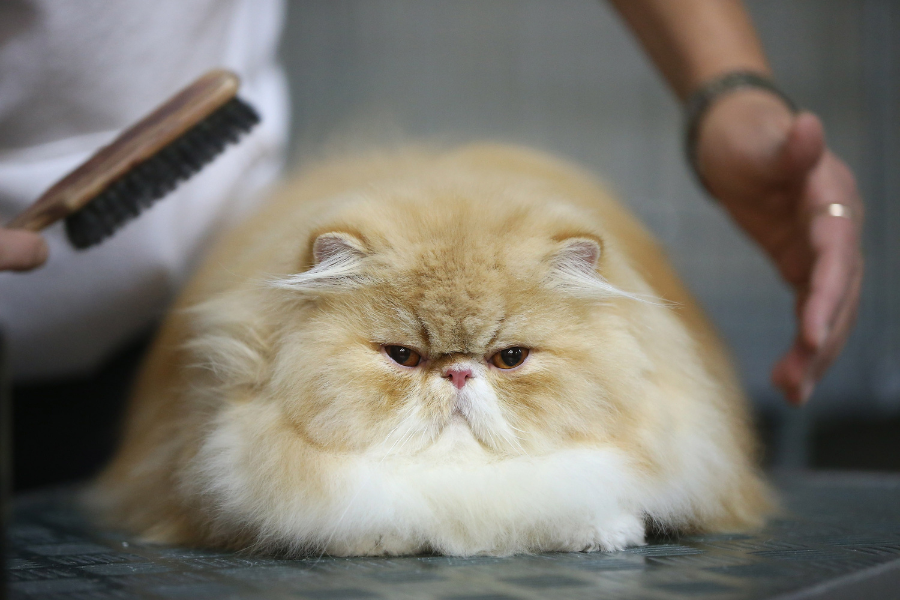 open image in galleryOkava Pharmaceuticals will reportedly announce a pilot study testing a GLP-1 drug in obese cats on Tuesday (Getty Images)
Meanwhile, more owners recognized their cats (33 percent) and dogs (35 percent) as overweight or obese, up from 28 percent and 17 percent, respectively, from the previous year.
Okava hopes to price its GLP-1 implant at $100 a month or less, making it comparable to high-end pet food, and potentially saving owners money if it helps prevent or manage diabetes.
However, the cost may still be prohibitive for some, and not all pet owners may want the drug.
Diabetic pets often require twice-daily insulin injections, a costly and labor-intensive treatment, and many are euthanized within a year.
Other experts point to Slentrol, an older appetite-suppressing dog medication, as an example. While effective, many owners disliked its effect because feeding their pets is a primary way they show affection, Dr. Maryanne Murphy, a veterinary nutritionist at the University of Tennessee, told the NYT.
 open image in gallerySome 35 percent of dog owners in America say their pet is obese. (Getty/iStock)
“Diabetes is technically completely treatable, and we are doing such a lousy job treating it,” Dr. Chen Gilor, a veterinarian at the University of Florida, who is leading the study, told NYT, also calling the implant “magic.”
Some veterinarians have begun using human GLP-1 drugs off-label for diabetic cats, but the high cost and limited effectiveness, especially for advanced cases, remain challenges, according to Dr. Andrew Bugbee, a veterinary endocrinologist at Texas A&M.
Targeting prediabetic, obese pets with pet-specific, affordable formulations may be a more effective strategy, he said.
Results from the study are expected next summer, and if successful, the study could open a new frontier for GLP-1 drugs in veterinary care.
More about
StudyCatsdrugDiabetesWeight LossDrugsPetsJoin our commenting forum
Join thought-provoking conversations, follow other Independent readers and see their replies
Comments