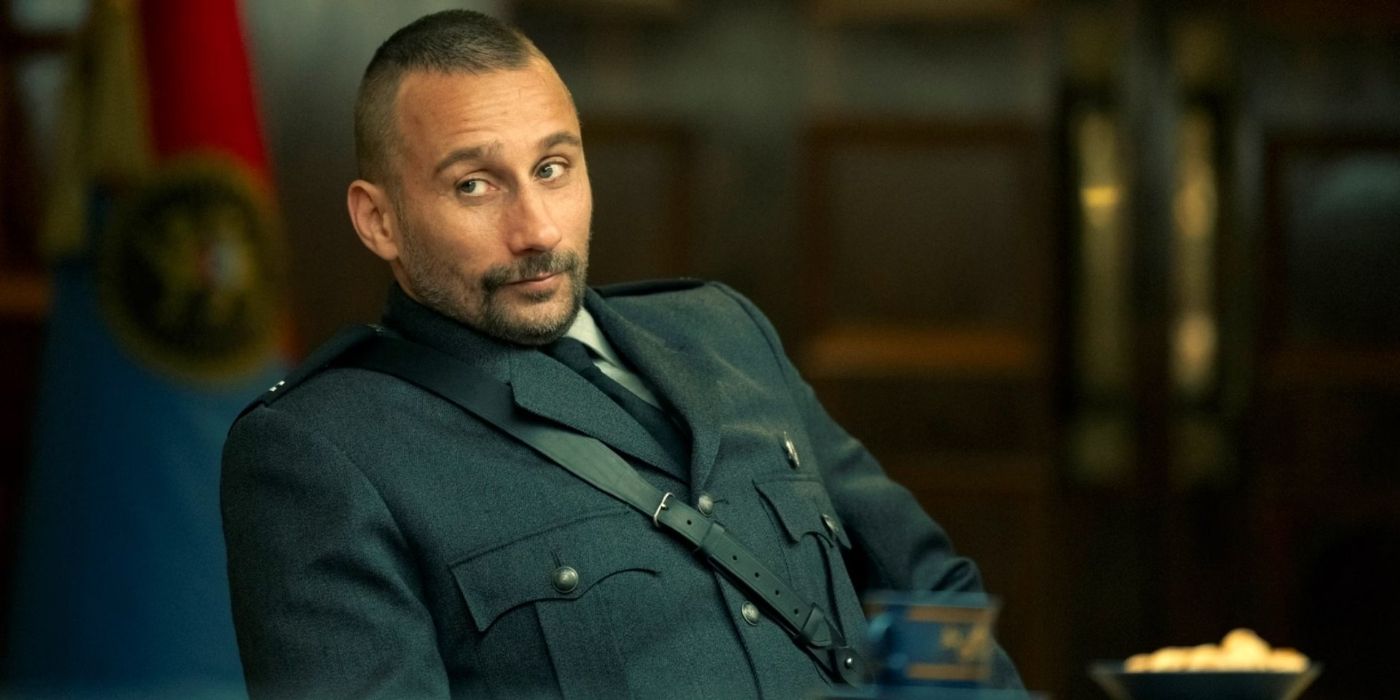
Gary Pedersen
 (Bloomberg) -- Torbjörn Törnqvist spent three decades building Gunvor Group into one of the world’s largest energy traders — from early days exporting fuel from post-Soviet Russia, to today’s sprawling global business that trades enough oil every day to supply the UK and France combined.
On Monday, the 72-year-old Swede announced an abrupt departure from the company he cofounded in a dramatic move to contain the fallout after the US Treasury Department called Gunvor “the Kremlin’s puppet” last month — an allegation that was made without presenting evidence but which evoked longstanding questions about the trader’s past ties to Moscow, despite its repeated denials.
Most Read from Bloomberg
-
Steve Cohen, Bally’s, Genting Picked to Run Casinos in NYC
-
Europe’s Largest Capital Without a Subway Is Finally Getting One
Now, as its new leader, Gunvor has turned to a relative outsider: a veteran American oil trader it hired only last year.
Gary Pedersen, who previously ran Gunvor’s business in the Americas, cut his teeth trading gasoline at Koch Inc., where he worked for two decades, and most recently did a stint at hedge fund Millennium Management before joining Gunvor. Current and former colleagues describe the one-time Iowa State linebacker as a down-to-earth manager who prowls the trading floor and is willing to listen to ideas — even the risky ones — but places a high emphasis on access to sophisticated market analysis.
In an interview on Monday, Pedersen, 56, said Gunvor’s new shareholder structure — the majority stake is being acquired by about 60 current employees — means that traders will have greater incentive to find new opportunities for profit. Investments in the US will remain a big focus for the company, he said, including in oil, natural gas and power.
“Everybody’s going to feel the ownership: think like an owner and act like an owner,” he said. “I’m going to work across the desks and co-ordinate with them on those opportunities as they come up.”
Gunvor’s also had a “much stronger” second half of 2025, he said, after the company and many of its rivals struggled to navigate sharp, headline-driven price swings in prices earlier in the year.
Gunvor and Pedersen emphasized that the leadership transition was long planned, and formed part of the discussions when he was hired. Still, the new CEO’s US credentials and experience may help to reassure the US administration that Gunvor really has achieved the “definitive reset” it touted in announcing Törnqvist’s sudden departure. The management buyout is being financed in part by a loan from Törnqvist, which means a connection to the company will continue even after his exit.
Story continuesThe Treasury’s announcement last month that it would block Gunvor’s deal to buy the international assets of Lukoil PJSC sent shockwaves through the industry. Commodity traders rely on massive bank credit lines to fund their dealings, and Bloomberg reported shortly afterward that Spain’s Banco Santander SA had pulled funding commitments from Gunvor after the US Treasury comments, but that its other lenders remained supportive.
Pedersen declined to comment on the deliberations that influenced the timing of the announcement of Törnqvist’s departure, noting only that it was “the right time for him and the right time for the company.”
In its statement, Gunvor simply said that: “misperceptions about its past have become an impossible distraction.”
Windfall Profits
Gunvor hasn’t disclosed financial terms of the management buyout, but Törnqvist’s 86% stake likely means that he exits the company as one of the biggest financial winners of the energy crisis wrought by Russia’s invasion of Ukraine, which generated windfall profits for the companies that buy, sell and ship commodities around the world.
And his departure marks the end of an era for a trader who has often epitomized his industry’s willingness to take risks and go where others won’t in search of profit.
Torbjörn TörnqvistPhotographer: Walaa Alshaer/Bloomberg Born in Stockholm, Törnqvist started in the industry in the late 1970s at what was then British Petroleum. He founded Gunvor in its current form in 2000 with Russian trader Gennady Timchenko, but the firm’s big break came a few years later when it was offered a major role in helping to keep huge volumes of Russian oil flowing to the world after the government seized the oil fields of Yukos Oil.
“I understood this was the chance of a lifetime,” Törnqvist told Bloomberg reporters Javier Blas and Jack Farchy, as recounted in their book .
A decade later, the company’s Russian ties were already causing challenges. In 2014, the US sanctioned Timchenko for his relationship with President Vladimir Putin. It also said that Putin had investments in Gunvor and “may have access to Gunvor funds.” Gunvor denied any links with the Kremlin or Putin, and Törnqvist bought out Timchenko’s 44% stake.
By then, the company also shifted its focus away from Russia, Törnqvist said: “Our future, from a trading point, lies elsewhere,” he told Bloomberg at the time.
In recent years, the CEO has steered Gunvor through a bribery investigation, as well as the wild market moves sparked by Europe’s energy crisis and Russia’s invasion of Ukraine — which helped drive unprecedented profits for the company and its peers, while straining its liquidity at times.
In 2022, Bloomberg reported that Törnqvist held early stage talks with the Abu Dhabi National Oil Co. about the potential sale of part or all of Gunvor, though the talks eventually stalled.
The company has poured some of its windfall profits into buying fixed assets, and grown its business in the US, particularly in LNG trading. But it’s also maintained a legacy of being willing to do deals that others might shy away from: in 2024, Gunvor helped finance Gabon’s purchase of oil assets from Carlyle Group just months after a military coup in the country.
Most recently, the company’s plan to buy Lukoil’s international assets represented a hugely ambitious play that would have transformed Gunvor’s business and catapulted it into the big leagues of oil production, in addition to adding a sprawling network of gas stations across the US, Europe and Turkey.
Instead, it drew the ire of the US government, focusing attention on questions about Gunvor’s historical ties to Russia, forcing the company to abandon the deal and ultimately accelerating Törnqvist’s departure. While succession has been an ongoing question, the CEO has previously expressed a desire that his family retain control of the trading house, and in 2023 appointed his son to the board.
At Gunvor, Törnqvist is known for a hands-on management style, leading control of deal negotiations and in-depth discussions on trades. During the pandemic when oil prices were in freefall and soon to turn negative, Törnqvist marshaled his oil trading desks to hold back from buying until the very last minute.
“I would warn my traders — you will see numbers you didn’t think was possible,” he said of the time “Don’t. Buy. Anything.”
Slimmed Down
Pedersen is described by former and current colleagues as a well-liked and easy going trader with a reputation for consistent profits.
During his time at Koch, Pedersen lived and worked in Rotterdam, Singapore, London and Geneva, holding managing director roles in each location. He worked at Millennium as a senior portfolio manager for cross-barrel oil products since 2022, and signed on to join Gunvor last year, before starting in the job in April.
In the interview, he said the role at Gunvor appealed to him for the opportunity to combine his experience in both physical energy and derivatives. Pedersen was hired to expand the US business, but said that the conversation with Törnqvist from the outset included discussions about “the future, his succession plans.”
In the agreement announced Monday, the management group will buy his entire stake in a deal funded through a mix of their own equity and a loan from Törnqvist that will be repaid annually to his family foundation for a period of up to 10 years.
Pedersen said he envisages a slimmed down management team, and there will be a cap on individual shareholdings — the level has yet to be agreed on but it will not exceed 10%.
He reiterated the opportunities the company sees in the US: “We’re going to continue focusing on our upstream capabilities both in gas and crude; We’ve got a desire to develop into the power business, we’re growing our metals capabilities over there as we speak.”
(Updates with comments on financial performance in seventh paragraph.)
Most Read from Bloomberg Businessweek
-
The AI Industry Is Built on a Big Unproven Assumption
-
Trump’s Assault on the WHO Is Forcing Radical Reform
-
Pulte’s Move to Fix Credit Scores Is Bad News for Homebuyers
-
Target Needs More Than a Vibe Shift to Turn Its Business Around
-
Why Tariff Uncertainty Means You Might Save Big on Black Friday
©2025 Bloomberg L.P.
Terms and Privacy Policy Privacy Dashboard More Info